President Trump's repeated attempts to end the conflict with Iran have hit a wall. The limited U.S. airstrike campaign failed to shift Tehran's calculus, and his aggressive rhetoric threatening to erase Iran from the map had little effect. Diplomatic breakthroughs have repeatedly stalled, leaving the administration searching for a new lever.
Now, Trump is pivoting to a full-court economic press, coupling crippling sanctions with a U.S. naval blockade in the Strait of Hormuz, aiming to choke off Iran's oil revenue and force its leadership back to negotiations. The strategy, however, has drawn skepticism from regional experts who question whether it can deliver the decisive breakthrough the White House seeks.
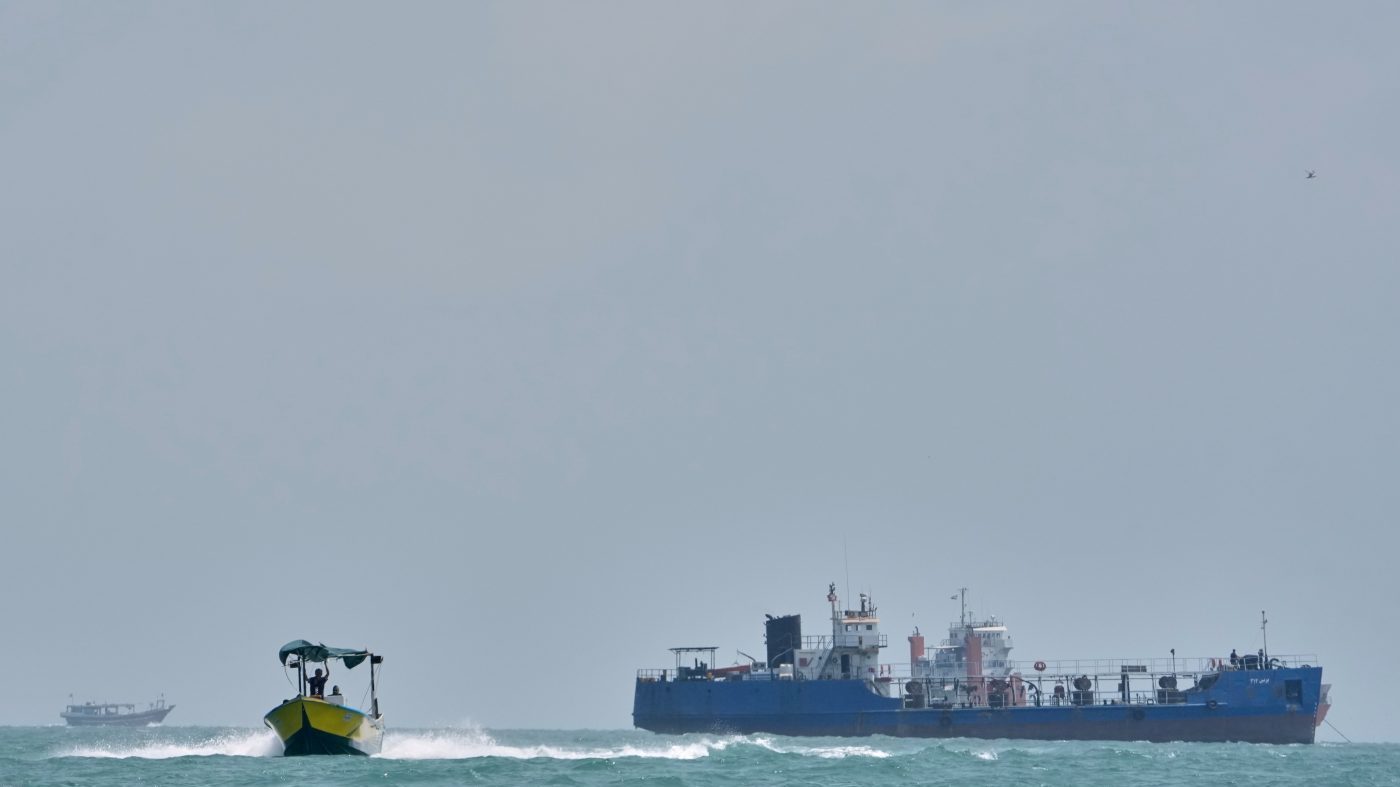
William Wechsler, a former Deputy Assistant Secretary of Defense for Special Operations and Combating Terrorism, now at the Atlantic Council, argues that the administration is running out of viable options. "The only option that the president has now is to do the option that he's done, which is just to try to buy time on this," he said. Wechsler warned that any deal resembling the June memorandum of understanding would be a "disaster," but he also noted the blockade's limits: Iranians are asserting control over the strait, potentially to impose tolls, and believe they can outlast Trump given their authoritarian resilience and his electoral pressures.
The White House, however, points to early signs of success. A Pentagon assessment cited by The Hill found that the first phase of the blockade, from April 13 to June 18, cost Iran roughly $4.8 billion in lost oil revenue. The administration argues that Iran's economy is already reeling from inflation, reduced energy exports, and mounting poverty, making it vulnerable to further pressure.
But analysts caution that Tehran's tolerance for pain is higher than Washington's. Janatan Sayeh, a research analyst at the Foundation for Defense of Democracies (FDD), describes the administration's approach as "reactive" rather than proactive. "Now, the mindset here is one way or another, building leverage or pressure is going to get behavior change, and that in itself I think might be a miscalculation, given that we've seen how the Islamic Republic works. They would sabotage the entire country before compromising," Sayeh said.
Sayeh sees a potential opening, however, if the economic squeeze reignites domestic unrest. He suggests the U.S. could pursue a two-track strategy: one targeting regime insiders unhappy with the leadership, and another supporting mass protests. Yet he admits the administration lacks a clear plan to capitalize on such momentum. "If there's going to be uprisings again, what is the strategy to one way or another support this momentum that would be as a direct consequence of the maximum pressure campaign and the economy building up? So if you're really pushing the country towards that avenue, how are you going to react to it would be two pillars, and I currently don't see an avenue for him to capitalize on each," he said.
Jonathan Ruhe, a fellow at the Jewish Institute for National Security of America (JINSA), is more blunt, calling the economic warfare strategy "an admission of failure" with "no real prospects for success." He argues that the Iranian regime is comfortable with Trump focusing on sanctions and blockade, believing they can wait him out. "The Iranian regime is more than happy for Trump to focus just on sanctions and blockade. They certainly feel they can ride that out, and their clock in that sense, has more time on it than Trump's own clock," Ruhe said.
The blockade's economic impact is not one-sided. Sayeh notes that Iran could retaliate by throttling the Strait of Hormuz, spiking global oil prices and creating political headaches for Trump. Meanwhile, Trump remains defiant, claiming on Truth Social that the U.S. has "total control" over the strait and describing the blockade as "A WALL OF STEEL." He dismissed Iran's military capabilities and declared the country "shot" with soaring inflation.
As the administration doubles down on economic pressure, the question remains whether it can break Iran's resolve or merely prolong a stalemate. With Tehran's leadership in flux and Trump's approval ratings sliding, the stakes are high for both sides. The coming months will test whether economic warfare can achieve what military strikes and threats could not.