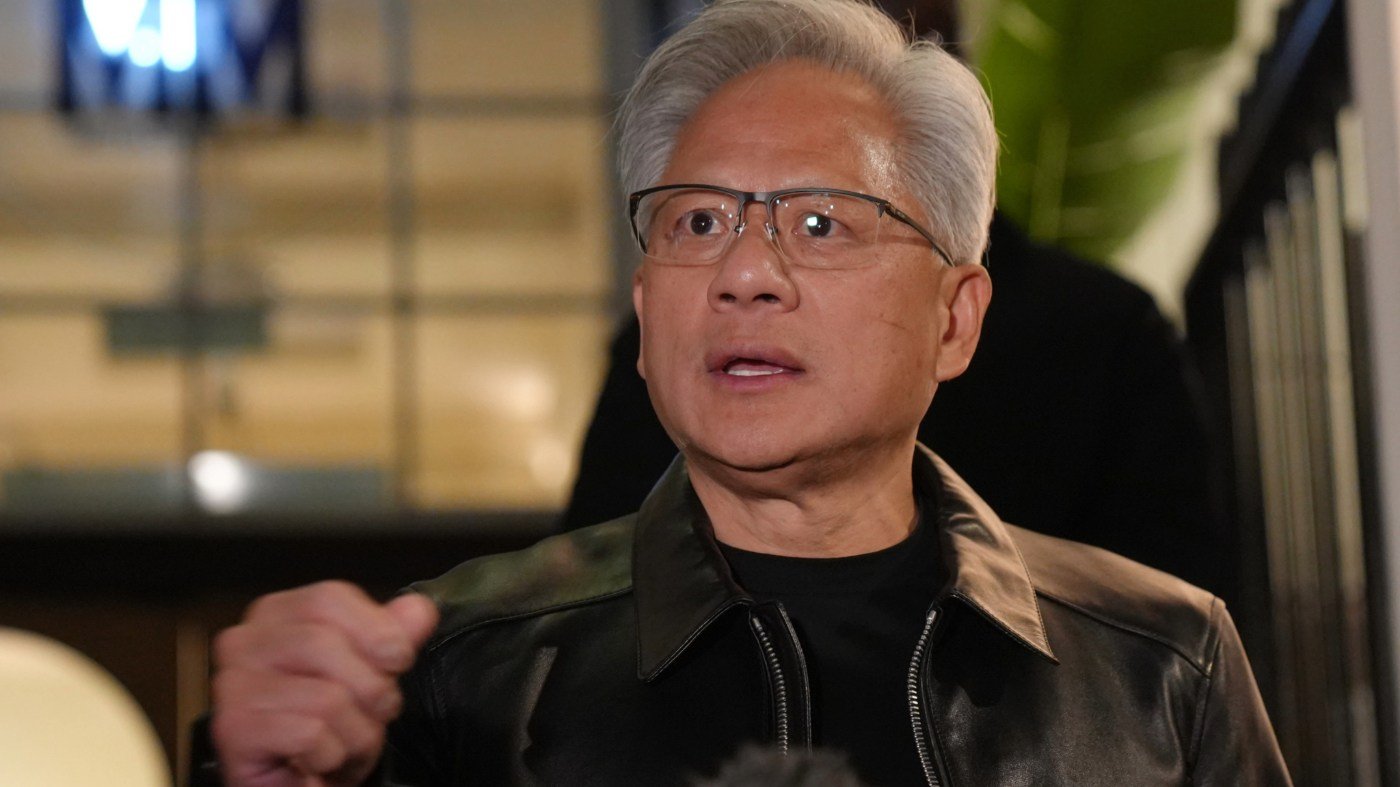
The revelation that Nvidia CEO Jensen Huang had an affair with a woman suspected of being a Chinese intelligence operative has sent shockwaves through the business and political worlds. Nvidia's board has launched an independent investigation, and the FBI is reportedly examining the matter. But the implications extend far beyond one executive's personal conduct.
Nvidia's advanced chips are at the center of the global artificial intelligence race, and China has been aggressively seeking to acquire this technology, which Washington has tried to keep out of its hands. Huang is a pivotal figure in the technological competition between the world's two most powerful nations, with direct access to President Trump and considerable influence over American technology policy.

The New York Times reports that U.S. intelligence officials believe Alice Huang, also known as Huang Le, was recruited by Chinese intelligence to gather information about Jensen Huang. She was an executive at Singapore-based Megaspeed, a major Nvidia customer accused of shipping chips to China despite export restrictions. China denies the espionage allegations, and Nvidia has disputed suggestions that its dealings compromised sensitive information.
What makes this story especially troubling is the breadth of intelligence that could be obtained through such a relationship. Espionage is not simply about stealing classified documents or proprietary technology. A conversation about what President Trump said privately concerning China, an observation about disagreements within his administration, or advanced knowledge of Nvidia's negotiating positions could be enormously valuable to Beijing. And that information need not be deliberately disclosed; intelligence officers are trained to build relationships, cultivate trust, and elicit information that targets might not even recognize as sensitive.
The alleged operation bears the hallmarks of a "honeypot," where romantic or sexual relationships are exploited for intelligence purposes. China has a history of such operations against American targets. Christine Fang, a suspected Chinese intelligence operative, cultivated relationships with American politicians, including former Rep. Eric Swalwell (D-Calif.), and also reportedly had intimate relationships with two Midwestern mayors.
There is an important distinction between Chinese intelligence services and their American counterparts. Unlike Chinese intelligence officers, American case officers are prohibited from using sexual relationships or blackmail to recruit and manipulate intelligence targets. U.S. officers undergo extensive security vetting, including polygraph examinations, and can face serious disciplinary consequences for violating these restrictions. Chinese intelligence services, by contrast, have demonstrated a willingness to use seduction and coercion to obtain information and influence their targets.
For those of us who conduct corporate investigations, the broader pattern is familiar. China has used its intelligence services, business relationships, and industrial policies to obtain American technology and commercial secrets for decades. During the late 2000s and much of the 2010s, foreign companies entering certain Chinese industries faced joint venture requirements that could expose valuable intellectual property to local partners. Our investigations helped American companies understand how inadequate due diligence on executives appointed by Chinese partners left them vulnerable to intellectual property theft.
There have been enormous consequences. Sinovel, a major Chinese wind turbine manufacturer, recruited an employee of American Superconductor who helped it obtain proprietary software and source code. A federal court found that the American company suffered more than $550 million in losses.
But the Huang affair illustrates an even more consequential vulnerability. America's top executives increasingly occupy positions of national security significance without having the training or protection afforded to government officials. Huang's conversations with senior policymakers, his knowledge of the global semiconductor industry, and his ability to influence decisions about advanced technology make him an extraordinarily valuable intelligence target. The same is true of executives in artificial intelligence, aerospace, defense, biotechnology, and other industries critical to American national security.
Corporate security programs must evolve accordingly. Too many companies still approach security primarily as a matter of protecting facilities, preventing cyberattacks, and responding to physical threats. Those responsibilities remain essential, but they are no longer sufficient. Security teams need to pay greater attention to insider threats, including the cultivation of executives and employees by foreign intelligence services, suspicious business relationships, conflicts of interest, and attempts to obtain sensitive information through trusted personal contacts. Executive protection must include counterintelligence awareness, not simply physical security. Boards and senior management should understand that a company's greatest vulnerabilities may involve people rather than technology.
Washington is also reconsidering its approach. Former CIA Deputy Director David Cohen has argued that American intelligence should be more willing to collect and share economic intelligence that could benefit U.S. companies. Meanwhile, The Washington Post recently reported that the Pentagon is considering a clandestine program focused on China, potentially deploying intelligence officers posing as businesspeople to gather economic intelligence. Such initiatives may help the United States compete more aggressively in the economic espionage arena, but they also underscore the escalating stakes in the technological rivalry between Washington and Beijing. As the trade balance with China becomes a focal point ahead of the Trump-Xi summit, the Huang affair serves as a stark reminder that the front lines of this competition run through boardrooms and bedrooms alike.