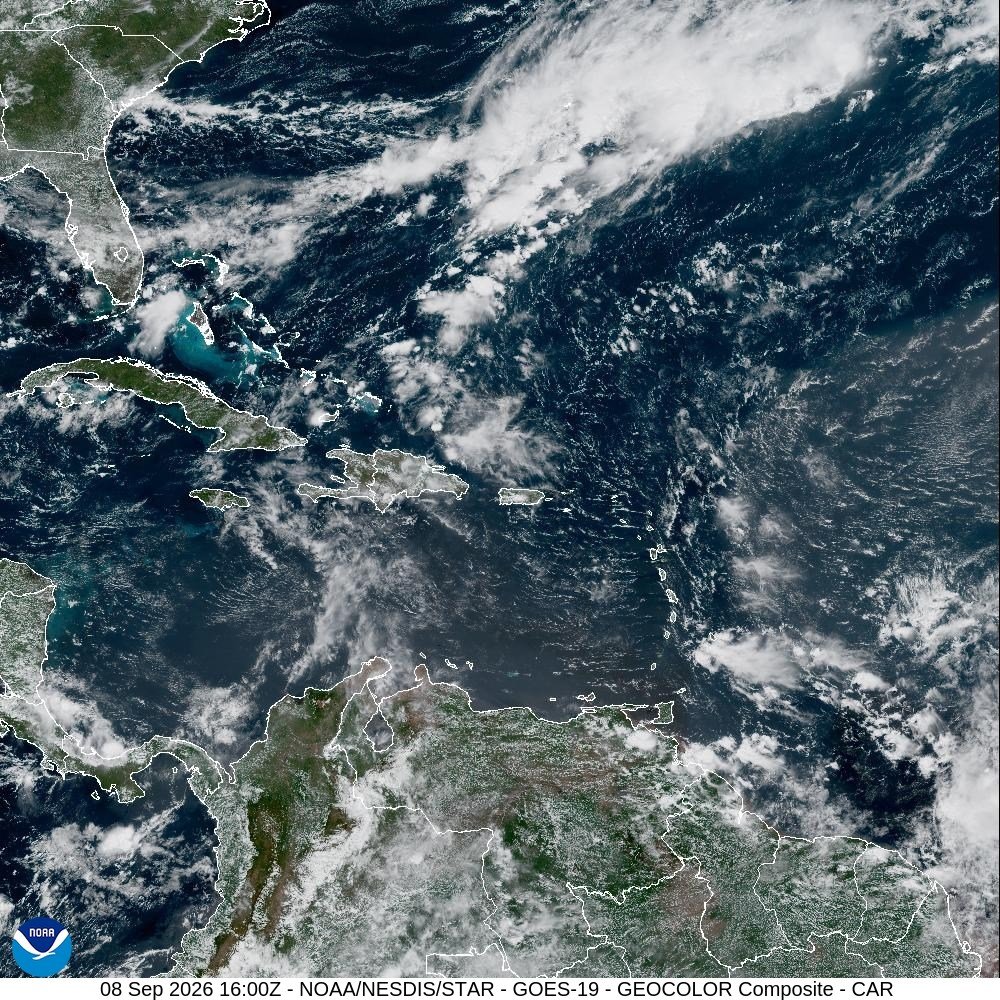
New satellite evidence indicates that the Atlantic Meridional Overturning Circulation (AMOC)—the system of ocean currents that carries warm water from the Caribbean to the North Atlantic—has been losing strength, a development that could bring more severe winter weather to the Eastern Seaboard and Midwest.
Researchers at the University of Reading in the UK found that the amount of heat the AMOC transports northward has dropped by 18% over the past four decades. This decline in heat flux is a key indicator that the currents are slowing, according to the study, which is currently under peer review.

In a separate analysis, ocean buoys deployed across the Atlantic measured water pressure changes and revealed a 10% reduction in AMOC strength between 2004 and 2026. Together, these findings provide what one independent scientist described as “some of the strongest evidence so far that the AMOC has weakened over the last 40 years.”
The AMOC acts like a conveyor belt, pulling warm surface water from the tropics toward the northern Atlantic, where it releases heat into the atmosphere before sinking and returning south. This process keeps winter temperatures in the northern United States and Europe milder than they would otherwise be at those latitudes.
A slowdown means less heat reaches the North Atlantic, which could disrupt weather patterns. Climate models have long predicted that a weaker AMOC would lead to colder, harsher winters in the eastern U.S. and parts of Europe, while also affecting sea levels and precipitation patterns.
The new data adds to a growing body of research suggesting the AMOC is more fragile than previously thought. Some scientists worry that continued weakening could push the system toward a tipping point, with potentially abrupt and irreversible consequences for global climate.
While the study has not yet been formally peer-reviewed, its findings align with earlier observations and model projections. The independent scientist, who was not involved in the research, emphasized the significance of the satellite and buoy data in confirming long-term trends.
For policymakers and the public, the implications are broad. More extreme winter weather could strain infrastructure and energy grids, while shifts in ocean circulation could affect fisheries and marine ecosystems. The issue also intersects with cabinet-level attention to climate policy and broader debates over environmental regulation.
As the AMOC continues to weaken, the need for adaptive strategies grows. Scientists stress that reducing greenhouse gas emissions remains the most effective way to slow the trend, but they also call for preparations to manage the impacts of a changing ocean system.