Russia and Ukraine have reached a preliminary agreement on a large-scale exchange of prisoners of war, following two days of US-mediated negotiations in Abu Dhabi. The breakthrough was announced by Rustem Umerov, head of Ukraine's Foreign Intelligence Service, who said on social platform X that negotiators are returning to their capitals to finalize the details.
Umerov noted that while there are opportunities to continue the negotiation process, significant differences remain and a great deal of difficult work lies ahead. The prisoner swap was also confirmed by Vladimir Medinsky, head of Russia's negotiating delegation, who told Russian state TV that the future security architecture of Europe was a central point in the talks.

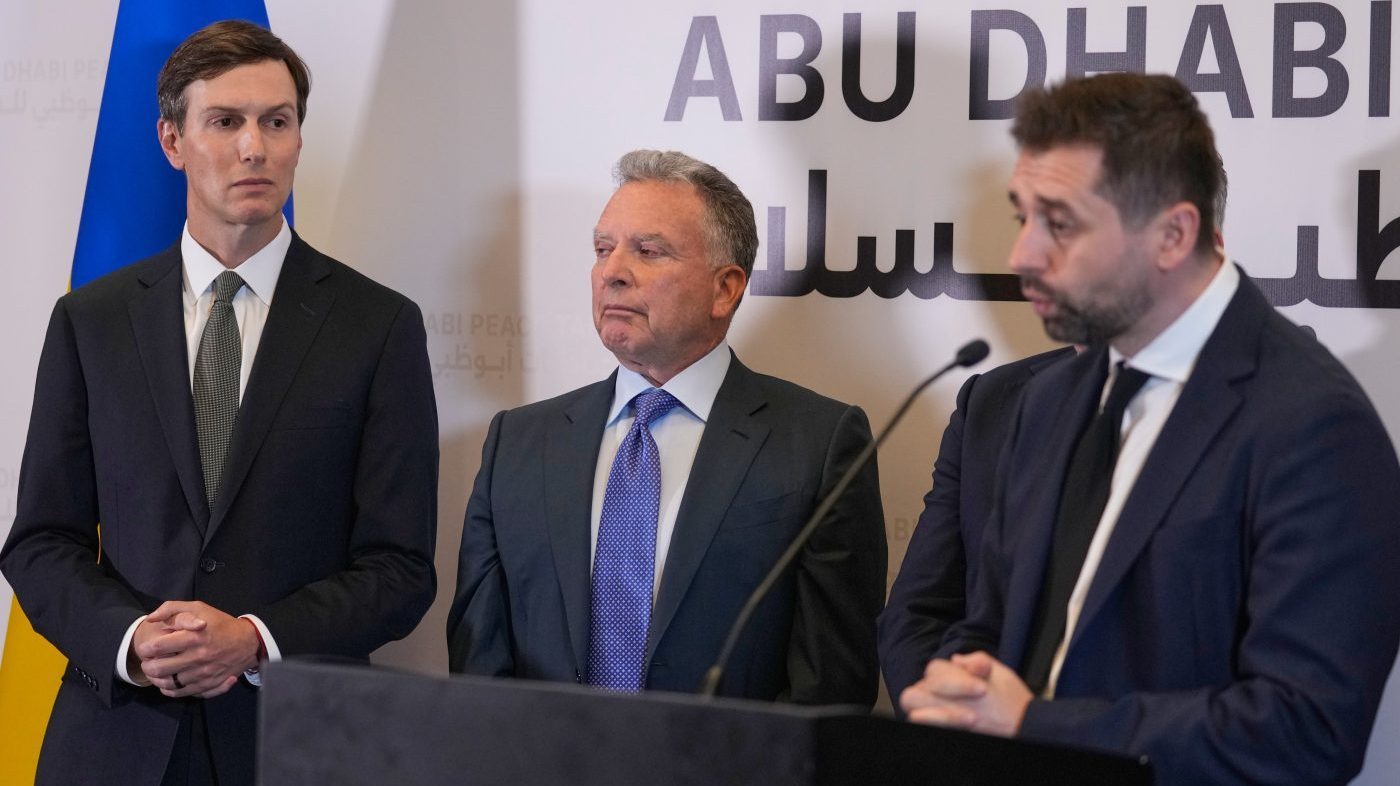
The US team was led by President Trump's top envoys for peace missions: his son-in-law Jared Kushner and his business partner and close friend Steve Witkoff. These talks marked the first direct negotiations between Russia and Ukraine in nine months.
Following the Abu Dhabi talks, Kushner and Witkoff are set to travel to Moscow to meet with Russian President Vladimir Putin to review the topics discussed, and then proceed to Dublin to meet with Ukrainian President Volodymyr Zelensky. Kushner said one of the goals of the Moscow meetings is to explore whether European representatives can be added to the negotiation format.
Kushner noted that he and Witkoff had convened with representatives from the European Union, NATO, the United Kingdom, Italy, Germany, and France ahead of the Ukraine-Russia talks. Describing those discussions as "substantive" and "tough," Kushner added, "Some areas we see places where we can find compromises, others we need to have more discussions, but I think this was a good first step."
Kushner and Witkoff are pushing for a comprehensive deal that outlines the post-war scenario for both sides, security guarantees for Ukraine, and a security architecture in Europe that takes into account Russia's concerns. They argue that confidence in post-war security would allow for decisions on Ukrainian territorial concessions. "We also discussed the hard issues... the territorial issues, which will be the hardest. But we do believe that as we discuss these other issues, we'll find a pathway to settle them all at the same time," Kushner said at a press conference after the talks.
However, skeptics of Moscow's demands view the discussions on European security architecture as a Russian talking point to justify their full-scale invasion of Ukraine in February 2022, which they blame on NATO's eastward expansion. Kaja Kallas, the EU's top foreign policy official, said on Monday after a G7 foreign ministers meeting, "We have a European security architecture in place. I've counted at least 30 international agreements where Russia has undertaken obligations, to respect sovereignty and territorial integrity... our problem is, is that Russia is not keeping to those agreements." She added, "The only one that is breaching that security architecture is Russia. That's why we have to make sure that in those talks there are clear concessions from the Russian side, otherwise we'll just see more of these attacks."
The prisoner swap agreement is a rare positive development in the conflict, which has seen little diplomatic progress in recent months. The talks in Abu Dhabi were part of a broader US effort to mediate between the two sides, with Trump's envoys also involved in other high-stakes negotiations, including US-Iran discussions and efforts to overcome personal animosity between Zelensky and Putin. The upcoming meetings in Moscow and Dublin will be crucial in determining whether the momentum from Abu Dhabi can be sustained.