U.S. households are bracing for a 7.1% jump in home heating costs this winter, according to fresh projections from the National Energy Assistance Directors Association (NEADA). The average household is expected to spend $1,002 on heating, up $66 from last year, as rising oil prices—spurred by the ongoing war in Iran—add to the financial strain on American families.
The cost-of-living squeeze is already a dominant political issue. Nearly nine in ten midterm voters told NBC News that the cost of living was a “crucial” or “major” factor in their congressional vote, a sentiment that helped Democrats reclaim control of both chambers of Congress.

Households that rely on heating oil will feel the brunt of the increase. NEADA projects those families will pay an average of $2,977 this winter—a staggering 70.2% increase from last year. That far outpaces the expected hikes for electricity (6%) and propane (5%). Natural gas costs, by contrast, are projected to remain roughly flat, with utility gas service prices declining for a third consecutive month in October, according to the Bureau of Labor Statistics (BLS).
Electricity prices, meanwhile, saw their largest monthly rise since April, climbing 0.9% in October, the BLS reported.
“The situation in the Strait of Hormuz remains highly volatile, and continued uncertainty about global oil supplies makes it difficult to predict where prices will go,” said Mark Wolfe, NEADA’s executive director. He added that it is “prudent to assume” oil heating prices will “remain elevated” throughout the winter.
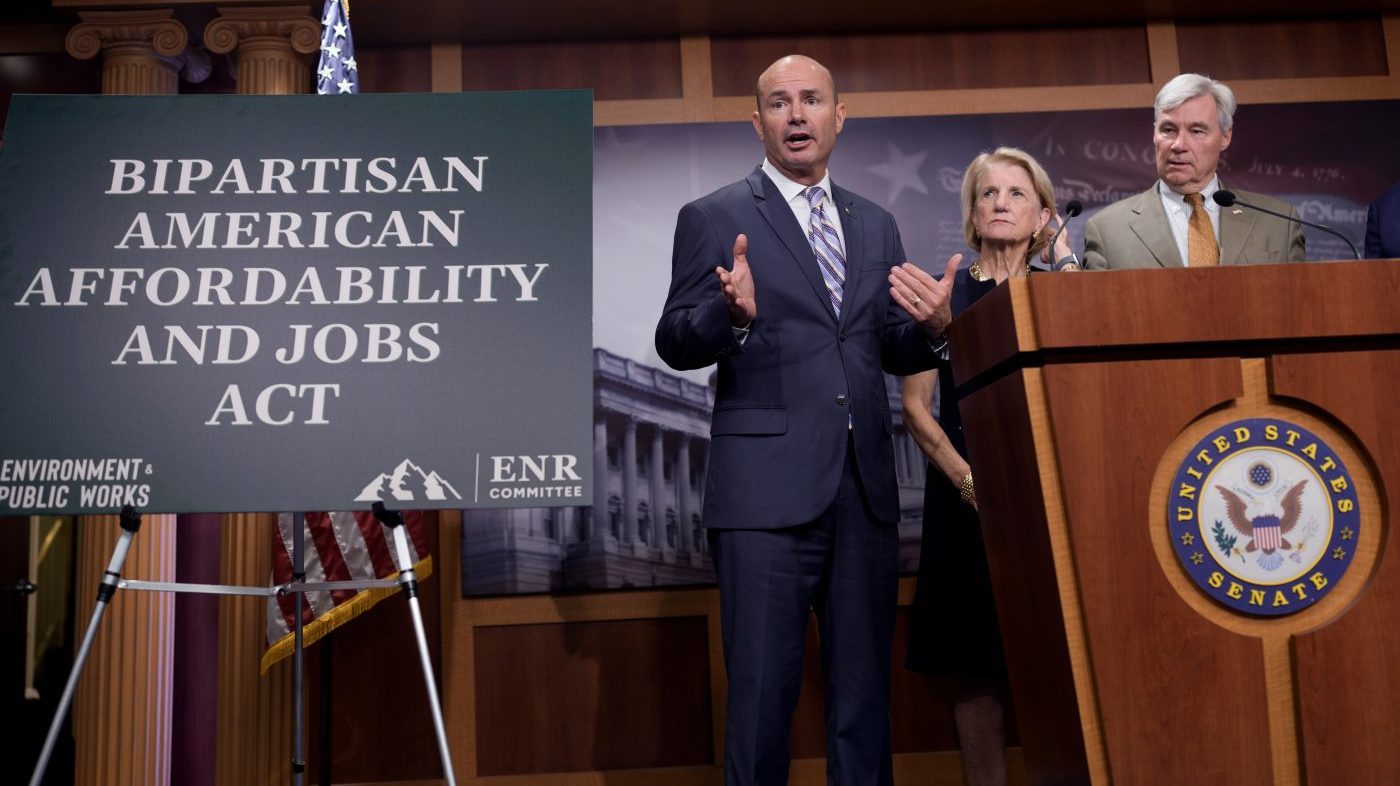
On Capitol Hill, lawmakers are debating legislative fixes. Supporters of a bipartisan infrastructure and energy permitting reform bill argue it would lower utility costs by accelerating project construction. The Senate advanced the Bipartisan American Affordability and Jobs Act (BAAJA) in a procedural vote Tuesday. Sen. Martin Heinrich (D-N.M.) wrote on X that the bill would “deliver billions of dollars in electricity bill savings for families.”
But the measure faces pushback from key Democrats. A spokesperson for House Democratic Leader Hakeem Jeffries (N.Y.) told Politico the bill “falls short,” and the Congressional Progressive Caucus (CPC) opposes it, arguing it “contains provisions that would undermine Tribal sovereignty and roll back key environmental laws, such as the National Environmental Policy Act, the Clean Water Act, the Endangered Species Act, and the National Historic Preservation Act.”
As the winter months approach, the combination of higher heating bills and political gridlock on energy policy is likely to keep the cost of living at the forefront of public debate. With the midterm elections now in the rearview mirror, lawmakers face mounting pressure to deliver tangible relief to constituents struggling with energy costs.