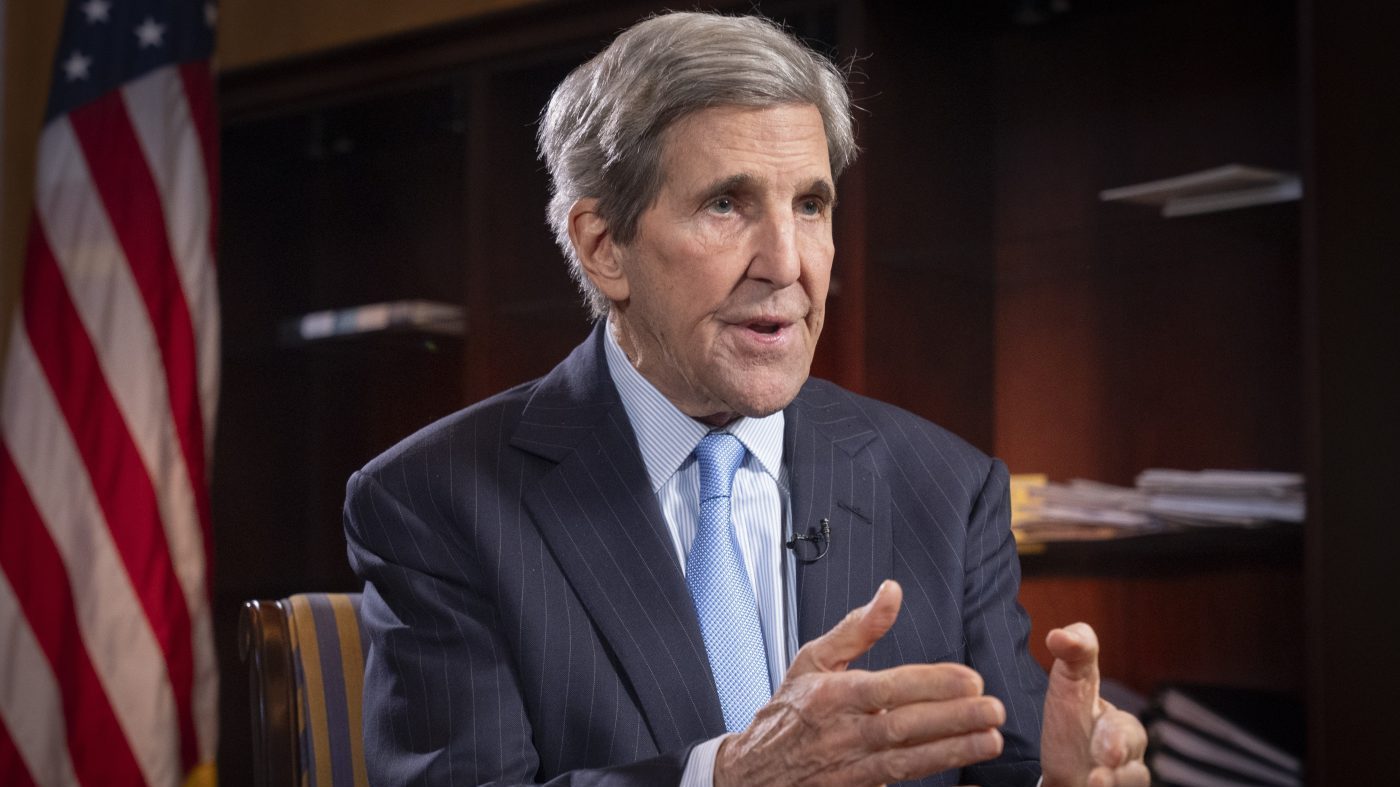
Former Secretary of State John Kerry issued a stark warning in an interview published Tuesday, asserting that China has established a commanding lead in clean energy technology while other nations struggle to keep pace. “The only country that has hugely accelerated is China. The rest of the world is stumbling along while Mother Nature is sending us more powerful signals every week, every day,” Kerry told The Guardian.
Kerry, who served as Secretary of State during the Obama administration and later as President Biden’s special envoy for climate, spoke as global leaders convene in Turkey for the COP31 United Nations Climate Summit. China’s expanding footprint in the clean energy sector has intensified debate over whether it will take on a more prominent role in international climate negotiations.
According to the International Energy Agency, China—already the world’s largest greenhouse gas emitter—has also become the top producer of clean energy technology. Its clean-tech exports surpassed $220 billion in 2025, and the country controls roughly 85 percent of global solar supply chain production and 80 percent of lithium-ion battery production capacity.
Kerry emphasized that economic considerations, not just environmental ones, are driving the global energy transition. “They’ll see where the market is going, and they will recognize where the cheaper alternatives are. Even they can read a spreadsheet and understand where costs are exorbitant and where you have a better deal,” he said, referring to countries weighing clean energy investments. “Right now, renewables together with storage, together with some transitional gas, is cheaper and more effective, than just going with fossil fuels.”
He also pointed to the ongoing war in Iran and disruptions to shipping through the Strait of Hormuz as factors pushing countries to reduce their reliance on imported fuels. “China realized suddenly they had way too much dependency on oil and gas from other places, and they decided they needed to be independent,” Kerry said. “Other countries, since the war in Iran, and since the Strait of Hormuz has been interrupted, have made a similar decision, and they’re moving independently.”
The geopolitical and economic stakes are reflected in legislative efforts in Washington, where lawmakers are debating measures to streamline energy infrastructure and bolster domestic production. Recent proposals, such as a bipartisan Senate energy permitting bill, aim to accelerate the buildout of clean energy projects. However, environmental groups have pushed back against some provisions, arguing they could undermine protections.
As China cements its dominance in solar, batteries, and other clean technologies, the United States and its allies face mounting pressure to respond. The outcome of the COP31 summit and subsequent policy decisions could determine whether they can close the gap or cede the clean energy market to Beijing.