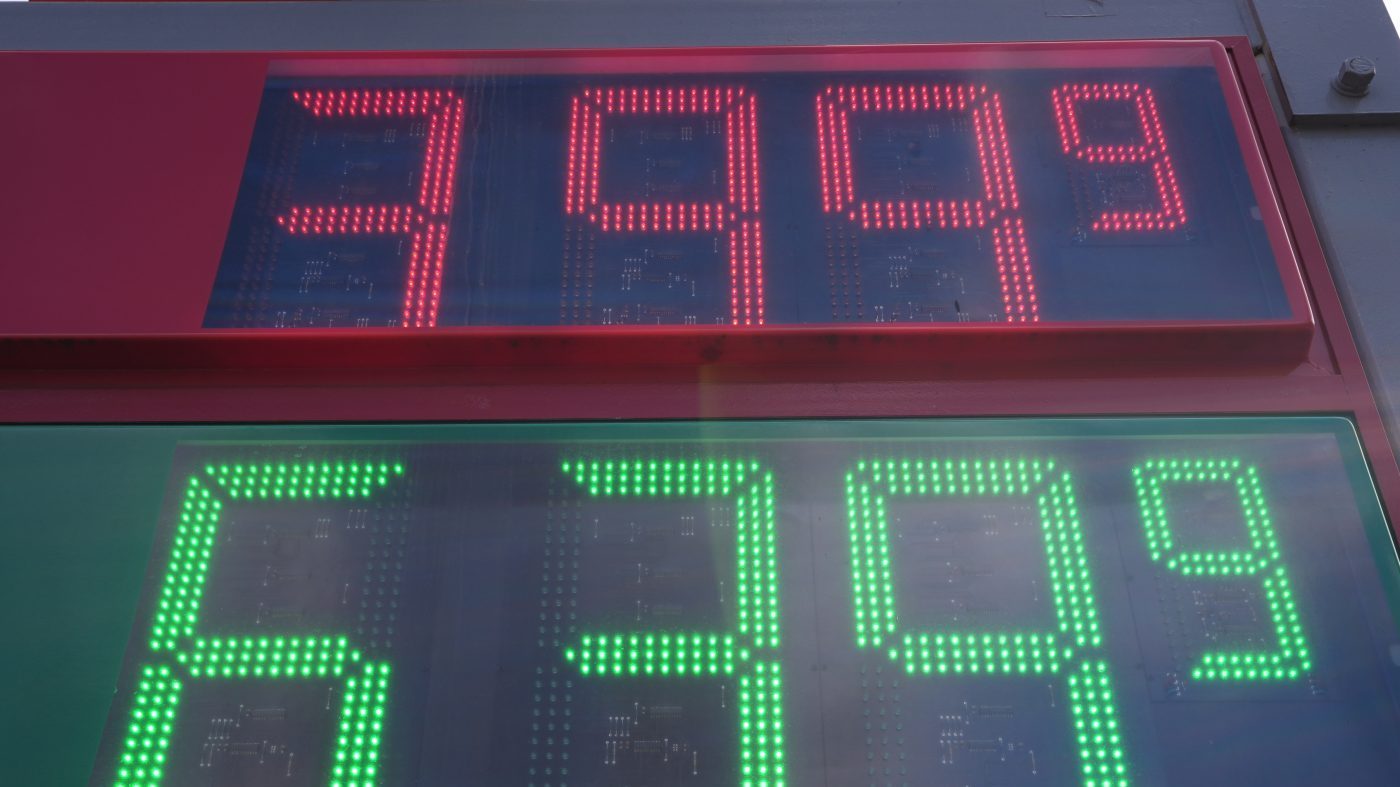
The national average price for a gallon of gasoline slipped below the $4 mark on Tuesday for the first time in nearly four months, as the Iran conflict showed signs of winding down and Democrats took control of Congress in last week's midterms.
According to AAA, the average price at the pump hit $3.98 per gallon, ending a 114-day streak of prices above $4. However, the relief is uneven: most of the Northeast (excluding Rhode Island) and much of the West still see prices above $4, while states like Nevada, California, and Hawaii are hovering near $6 a gallon. The South, by contrast, has seen prices fall below $3.70 in many areas.
The decline follows a sharp drop in oil futures, with Brent crude falling 13% last week—its steepest weekly decline since April 2020—and another 5% on Monday. By Tuesday, oil was trading just under $90 a barrel, its lowest level since late August.
Market analysts attribute the cooling prices to two factors: President Trump's statement that he has no immediate plan to renew strikes on Iran, and the Democrats' sweeping midterm victories, which investors bet will curb Trump's most economically disruptive policies, including the conflict. As NBC News reported, the market is betting that a Democratic Congress will act as a check on the administration.
The Iran war, which began on Feb. 28 when Tehran effectively shut down the Strait of Hormuz—a waterway carrying roughly 20% of the world's oil—sent prices skyrocketing. The resulting energy shortage was a major factor in the unpopularity of the conflict, with Trump, Vice President Vance, Secretary of State Marco Rubio, and other officials acknowledging it likely contributed to Republican losses at the ballot box.
On Monday, Trump met with Qatari Prime Minister Sheikh Mohammed bin Abdulrahman Al Thani, a key interlocutor with Iran, and downplayed the likelihood of renewed strikes. "Iran militarily is effectively over," Trump told reporters, adding that the U.S. naval and land blockades amount to a "status quo." He also said the conflict was "ending quickly, but we want to take care of people that have been very good to us over the years," a reference to regional partners like Qatar.
Despite the easing, tensions remain. Iranian Foreign Minister Abbas Araghchi on Sunday gave the U.S. an ultimatum, saying Tehran had submitted a two-day proposal to end the conflict or "choose war, and see our alert and battle-hardened Warriors rain down hell." The U.S. reportedly launched defensive strikes against Iran shortly before and after the midterms.
The political fallout from the war is still being felt, as Democrats tout their gains and push for a new direction. Meanwhile, energy officials promise relief as production ramps up, but the path forward remains uncertain.
For now, drivers are seeing some relief at the pump, but the situation remains fluid. The coming weeks will show whether the price drop is a lasting trend or a temporary reprieve.