Defense Secretary Pete Hegseth on Monday issued a sweeping directive to overhaul the U.S. military's professional education system, refocusing curricula on warfighting skills. The move comes as he faces growing impeachment threats from Capitol Hill over the ongoing Iran conflict.
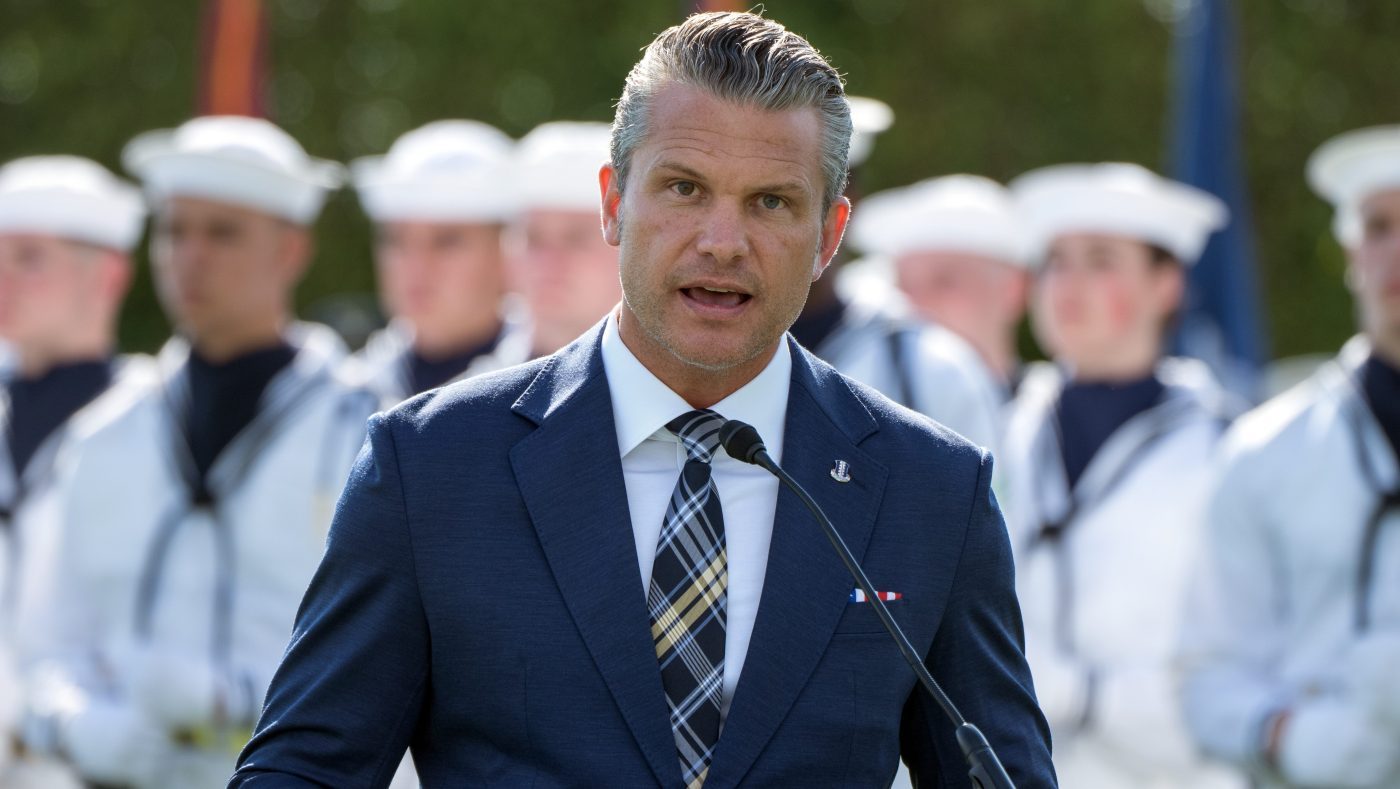
In a speech at the Naval War College, Hegseth declared that the primary question for military educators must be whether their programs produce leaders capable of achieving victory. "When a commandant approves a curriculum, the essential question before them is not, 'Is this intellectually fashionable?'" he said. "The only question that matters to the American republic is this: Will it help us achieve victory?"
The accompanying memo, signed by Hegseth and released the same day, outlines 33 reforms and directives aimed at the Senior Service Colleges and Intermediate Level Education institutions, effective immediately. He argues that professional military education (PME) has "stagnated" and drifted from its core purpose, trading "combat readiness for theory" and indulging "ideological distractions over practical warfighting."
"The fundamental purpose of the Armed Forces of the United States is to fight and win our Nation's wars. There is no substitute for victory," Hegseth writes. He adds that institutions will be evaluated by a singular standard: "Does this program forge leaders who will win America's wars?" and that anything not contributing directly to lethality, readiness, and strategic victory has "no place in this Department."
This initiative is the latest step in Hegseth's broader effort to reshape military higher education, which has already included freezing tenure-track appointments for civilian faculty at service academies, ending military attendance at several elite civilian universities, and removing hundreds of books from the Naval Academy library. War colleges, distinct from service academies, provide professional education to senior officers, Pentagon civilians, and international partners, focusing on strategy and joint operations.
The timing is politically charged. Rep. Thomas Massie (R-Ky.) is set to reintroduce impeachment articles against Hegseth on Monday afternoon, citing his role in the deeply unpopular Iran war. House Minority Leader Hakeem Jeffries (D-N.Y.), who is likely to become Speaker in January, has said he is a "hard yes" on impeachment, a position that aligns with growing Democratic support for the effort. While President Trump has publicly backed Hegseth, he has reportedly been privately consulting advisers about his defense secretary's standing.
Hegseth has dismissed the impeachment push, posting a video last week that called Massie's articles "sham articles of impeachment" authored by a "disgruntled, defeated congressman."
Under the new directive, institutions must refocus their mission statements on "achieving decisive military victory in combat" and require mandatory end-of-course wargames or comprehensive exams, heavily weighted toward final grades, to test mastery of national security and joint warfighting material. The memo also mandates that the majority of full-time faculty have direct military or defense experience, with new civilian hires placed on three-year, performance-based contracts evaluated on teaching and research.
Additionally, the memo establishes a "warfighter chair" at each senior service college, filled by a recently deployed colonel or lieutenant colonel, to ensure real-time combat lessons are integrated into the curriculum. As Hegseth concludes, "Incremental adjustments will not achieve this transformation. Effective immediately, all directed reform tasks detailed in the attached implementation directive will be executed across commands and institutions."