Mocha, a name familiar to coffee lovers worldwide, is more than a flavor—it's a Yemeni port city with a storied history. For three centuries, it was the gateway for coffee beans from Ethiopia's Kaffa Province, spreading to Turkish coffeehouses and eventually to Vienna, where legend credits a spy with opening the first café using beans left by Ottoman forces. Today, Mocha's strategic significance has shifted from commerce to conflict.
Houthi seizure of Mocha
On September 10, Houthi militiamen captured Mocha after Yemeni government troops withdrew. The militants, backed by Iran, then advanced toward the Bab al-Mandab strait—a critical maritime chokepoint linking the Red Sea to the Indian Ocean. Using electronic warfare and Iranian assistance, they impersonated government commanders over the radio to trick defenders into retreating. Tehran's parliament speaker celebrated the offensive, even as Iranian officials denied controlling the Houthis while acknowledging the operation served Iran's interests by raising oil prices and increasing Washington's costs.

Bassem Eid, a Palestinian human rights activist, rejects the label of a mere civil war. He argues that a proxy force armed, funded, and directed by Tehran is an extension of Iran's regional ambitions.
Attack on Riyadh
On October 10, a missile struck a passenger terminal at Riyadh's King Khalid International Airport, killing at least 12 people and wounding 309, including an American citizen. It was the fourth strike in five days on the airport, which remained closed for over a week. Secretary of State Marco Rubio confirmed the American death and condemned the attack by "the terrorist Houthis," which "took numerous innocent lives, including an American citizen."
This attack came after Houthi spokesman ordered all airlines out of Saudi airspace, except for Mecca and Medina, effectively dictating the Kingdom's aviation access. Major carriers—Lufthansa, Air France-KLM, Qatar Airways, Etihad, Air India, and Cathay Pacific—suspended service to Riyadh, and the FAA advised American carriers to exercise caution through mid-December. Delta postponed its Atlanta-Riyadh launch to March.
Iran's shifting strategy
Why Yemen now? Israel has severely weakened Iran's other proxies—Hamas and Hezbollah—after the October 7, 2023 invasion that killed 1,200 in Israel and took 250 hostages. Israel's subsequent campaigns gutted Hamas and, in September 2024, destroyed Hezbollah's command structure with targeted strikes. With those fronts diminished, Iran has pivoted to the Arabian Peninsula.
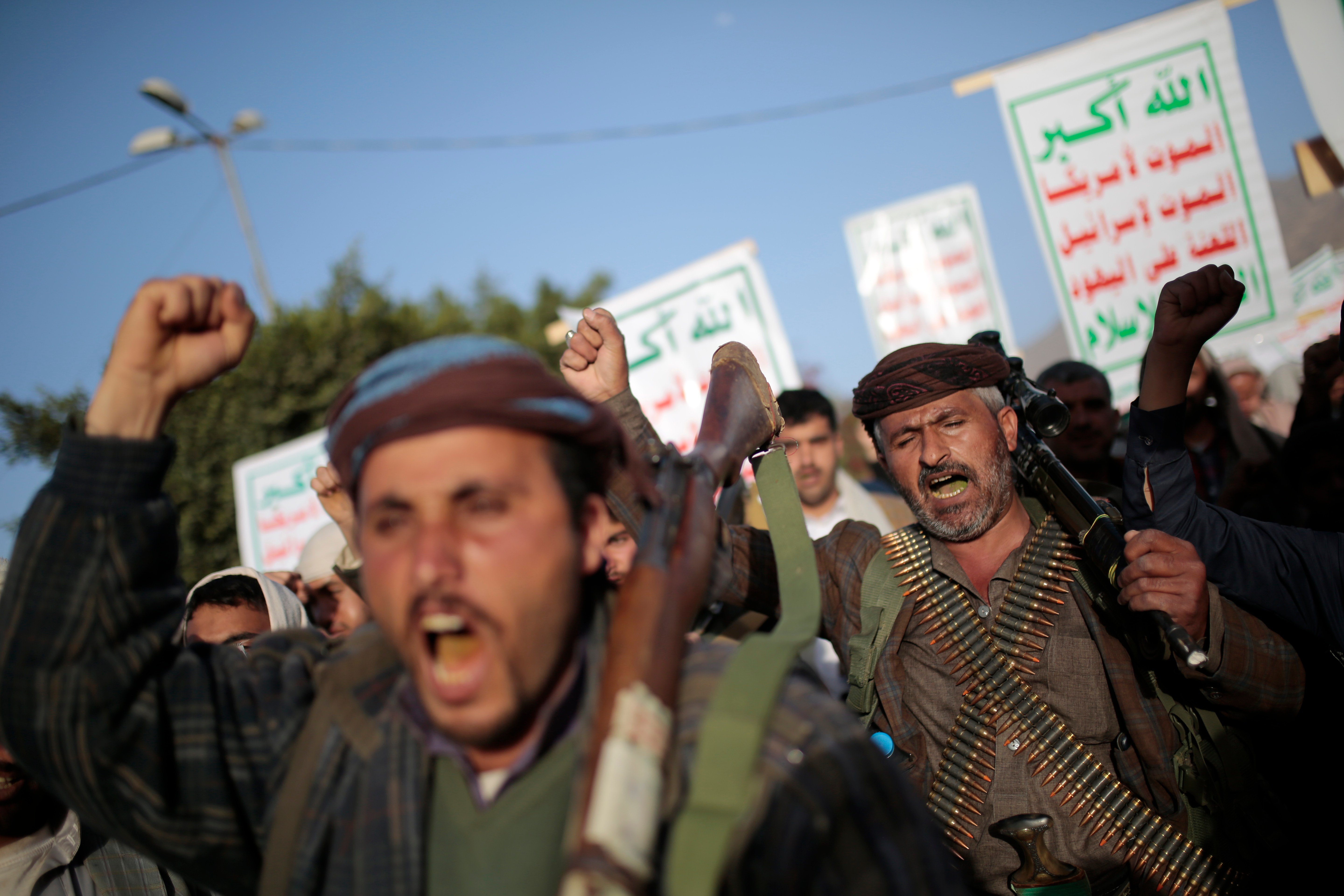
This is part of Iran's decades-long shadow war against America, as President Trump noted on the 35th anniversary of the Beirut barracks bombing: Iran founded Hezbollah and still funds it. The Houthi banner—"God is great. Death to America. Death to Israel. A curse upon the Jews. Victory to Islam"—reflects that ideology.
Iran now threatens two critical chokepoints: the Strait of Hormuz and the Bab al-Mandab, potentially strangling global oil shipments. The failure of Saudi Arabia and the U.S. to coordinate a response has allowed this escalation. Yemen is not a sideshow; it is Iran's chosen front for regional conquest, and only America can close it.