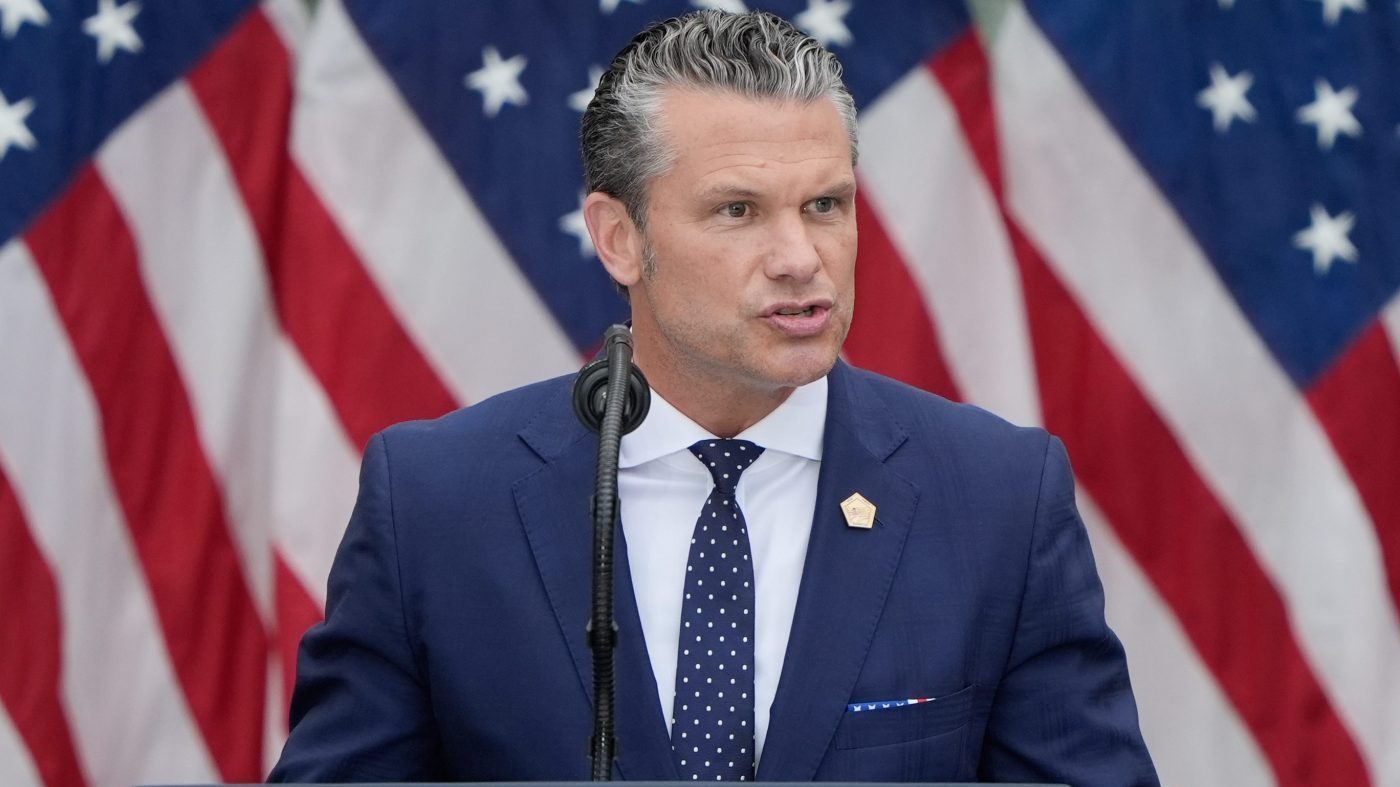
Defense Secretary Pete Hegseth is delivering remarks at the Naval War College in Newport, R.I., on Monday, stepping into the spotlight just as his political future hangs in the balance. The address comes amid intensifying scrutiny over the administration's handling of the war in Iran and growing calls from Democrats for his removal.
Hegseth's appearance at the military institution is scheduled to begin at 11 a.m. EST, and his remarks are being closely watched for any signals about his standing within the Trump administration. The defense chief has become a lightning rod for criticism, with some administration officials privately blaming him for the Republican Party's sweeping losses in the midterm elections.

The impeachment effort against Hegseth was already underway before Election Day, but it is now gaining momentum as Democrats prepare to take control of Congress in January. House Minority Leader Hakeem Jeffries has endorsed the push, and Democratic leaders are exploring multiple avenues to constrain the administration's military actions, including using the power of the purse and potential impeachment proceedings.
President Donald Trump, however, has publicly stood by Hegseth. Last week, Trump said he has "every intention" of keeping Hegseth in his Cabinet, despite the mounting concerns about his leadership. The president's endorsement has not silenced critics, but it has reinforced the administration's resolve to maintain its current defense posture.
The political dynamics are complicated. Democrats, emboldened by their midterm sweep, are vowing to counter the administration's policies on multiple fronts, from tariffs to military engagement. But their ability to actually halt the Iran war is limited by the reality of a presidential veto, as noted in recent analyses of the upcoming legislative battles.
For Hegseth, the Naval War College speech is an opportunity to articulate his vision for the military and to defend his record. Yet the backdrop of impeachment threats and internal dissent makes the event more than a routine address. It is a test of his political durability and his ability to navigate a volatile political landscape.
Republicans, too, are showing signs of unease. House Oversight Committee Chairman James Comer has acknowledged that the GOP has "a lot of questions" about Hegseth's performance, signaling that even within his own party, support is not unconditional. The defense secretary's future may ultimately hinge on how he handles the coming weeks, as Democrats prepare to wield their new majority.
As the live stream of his remarks goes out, observers are parsing every word for hints of resignation, defiance, or strategy. The stakes are high: the outcome of this political battle could reshape the Pentagon's leadership and the administration's approach to foreign policy in a second term.