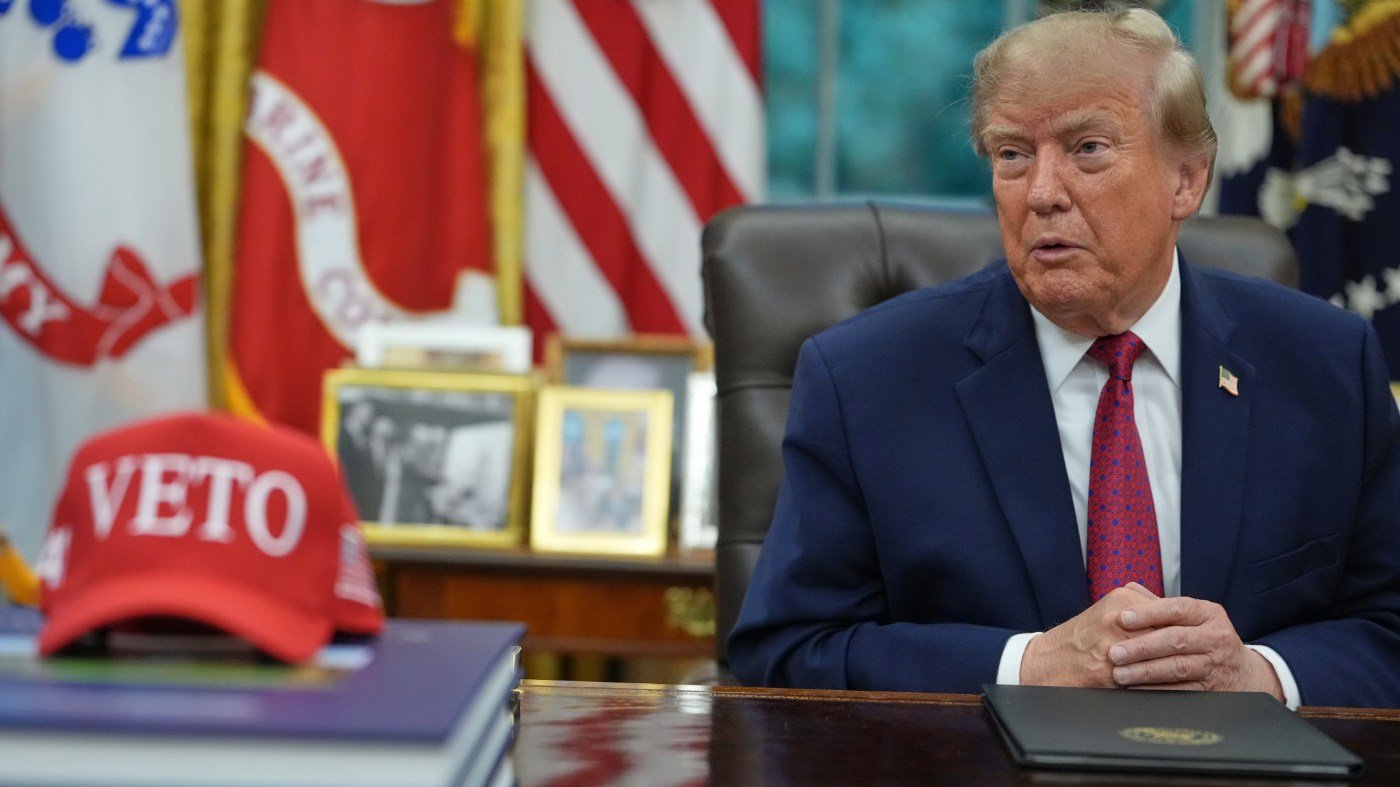
President Trump's political nightmare materialized last Tuesday as Democrats delivered a resounding rebuke, stripping the GOP of congressional majorities and sweeping statehouses. The scale of the defeat—Democrats are projected to hold 56 Senate seats and 259 House seats—was beyond even the most optimistic Democratic forecasts. For a president who thrives on dominance, the loss is a psychological blow, prompting comparisons to Ebenezer Scrooge's ghostly visitation in Dickens's A Christmas Carol. But unlike Scrooge, Trump shows no sign of a midnight conversion.
The question now is whether Trump will emulate Scrooge's transformation, embracing cooperation with the incoming Democratic Congress to address voters' concerns, or whether he will retreat into a bunker of vetoes and executive orders. Early indicators point decisively to the latter. His appointment of Stephen Miller as chief of staff—replacing the more pragmatic Susie Wiles—signals a hardline approach. And his public display of a red "VETO" cap is a not-so-subtle promise of legislative gridlock.
This path, however, is fraught with risk. A rational president might see the midterm results as a signal to moderate, but Trump's history suggests he will double down, blaming the party's losses on disloyal Republicans and the media. He may also seek to purge the GOP, installing loyalists like Miller to ensure fealty. The midterm loss sets the stage for executive aggression, as Trump wields the veto pen and executive orders to circumvent Congress.
Democrats, meanwhile, face a daunting challenge. They won on a wave of voter anger over rising costs, the tariffs that have driven up prices, the unpopular war with Iran, and the Trump family's alleged corruption. But they now must translate that anger into actionable policy. So far, their proposals to reduce costs and lower prices remain vague. Passing legislation will require presidential approval, which appears unlikely given Trump's stance.
The Senate GOP is seething at Trump, with some members eyeing a 2028 pivot. But for now, they remain wary of crossing a president who still commands a loyal base. Trump's claims that MAGA can survive without him are seen as an attempt to maintain influence, but the party's future is uncertain.
Will Democrats fall into the trap of repeatedly sending bills to the White House only to see them vetoed? Some strategists argue they should, to highlight Trump's obstructionism. Others suggest focusing on investigations and oversight, using the threat of impeachment as leverage. But with a 67-vote threshold for conviction in the Senate, impeachment is a remote possibility. The impeachment threats have already begun, but they may be more about messaging than removal.
For Trump, the next two years will be about consolidating power and punishing enemies. He may continue to rule by fiat, but over time, the rift with allies like Vice President Vance over the Iran war could widen. Trump's fatigue among voters is real, and if the economy worsens or the war drags on, even his base may waver.
Ultimately, the ghost of Christmas future may be Trump's own political demise. If Republicans in the Senate eventually turn against him—perhaps after a particularly egregious scandal—the 67 votes needed to convict could materialize. But that is a long shot. More likely, Trump will remain a disruptive force, leaving the country to endure two years of gridlock and confrontation.
The voters have spoken, but whether Trump hears them is another matter. Scrooge changed his ways; Trump seems intent on doubling down. The coming months will reveal whether he is a political Scrooge or a Grinch who steals Christmas from the American people.