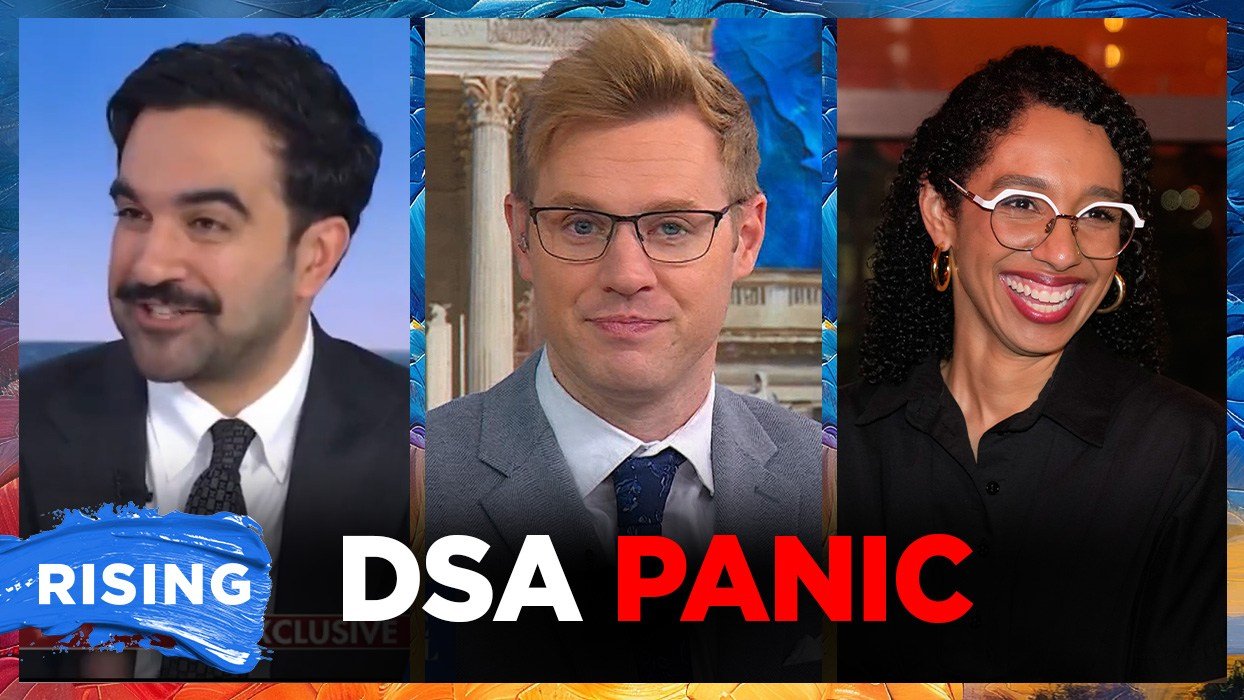
The Democratic Party's capture of Congress has immediately exposed a deep ideological rift, as newly elected far-left members signal they will not quietly fall in line behind House Minority Leader Hakeem Jeffries and Senate Minority Leader Chuck Schumer. The two leaders, viewed by the party's progressive wing as insufficiently radical, now face a coordinated push from the Democratic Socialists of America (DSA) and its allies to reshape the party's agenda.
While Schumer's position in the Senate is less immediately threatened, Jeffries must navigate a House caucus that includes vocal socialists like Alexandria Ocasio-Cortez and two newly elected DSA-backed lawmakers, Darializa Avila Chevalier and Claire Valdez. At Valdez's primary victory party, left-wing activists reportedly pointed at an image of Jeffries and chanted, "You're next," signaling their intent to challenge his leadership.

Jeffries has responded, but not by engaging with their policy demands. In a CNN interview, he criticized the gathering for lacking diversity, saying, "It was very interesting to me, as observed by others that there was almost zero diversity in that crowd." The remark has drawn sharp rebukes from critics who see it as a cynical deflection rather than a substantive rebuttal.
Political commentators argue that Jeffries' approach is a strategic misstep. "You can't beat the left by saying they're not diverse enough," said one analyst. "Appealing to wokeness is even less popular than socialism. This is the wrong strategy." The criticism underscores a broader anxiety among centrist Democrats about how to handle a resurgent socialist faction that is unafraid to challenge the establishment.
The stakes are high. Jeffries' path to the Speaker's gavel depends on uniting a fractious caucus, but his willingness to engage with socialist ideas—such as Medicare for All, abolishing borders, and prison reform—remains unclear. Critics suggest he should confront these proposals directly, pointing to the failures of socialist experiments abroad, rather than resorting to identity-based attacks.
New York City Mayor Zohran Mamdani, a prominent progressive, has declined to say whether the socialist left should challenge the party's leadership, but he is clearly enthusiastic about the possibility. According to Axios, Mamdani aims to play a kingmaker role in the 2028 presidential race, pushing for a candidate who either comes from or pledges loyalty to the far-left. For now, the immediate battleground is the Speakership election, where the socialist bloc could hold significant leverage.
As the Democratic majority prepares to take control, the internal struggle between moderates and socialists is set to define the party's legislative agenda. Jeffries' ability to assert authority—by either persuading or marginalizing the left—will be a critical test of his leadership. The outcome could determine whether the party can govern effectively or descend into internecine warfare.
For more on the broader implications of the Democratic majority, see Democrats' midterm sweep sets stage for leadership clashes. The coming weeks will reveal whether Jeffries can bridge the gap or whether the socialists will force a confrontation that could destabilize the party's agenda.