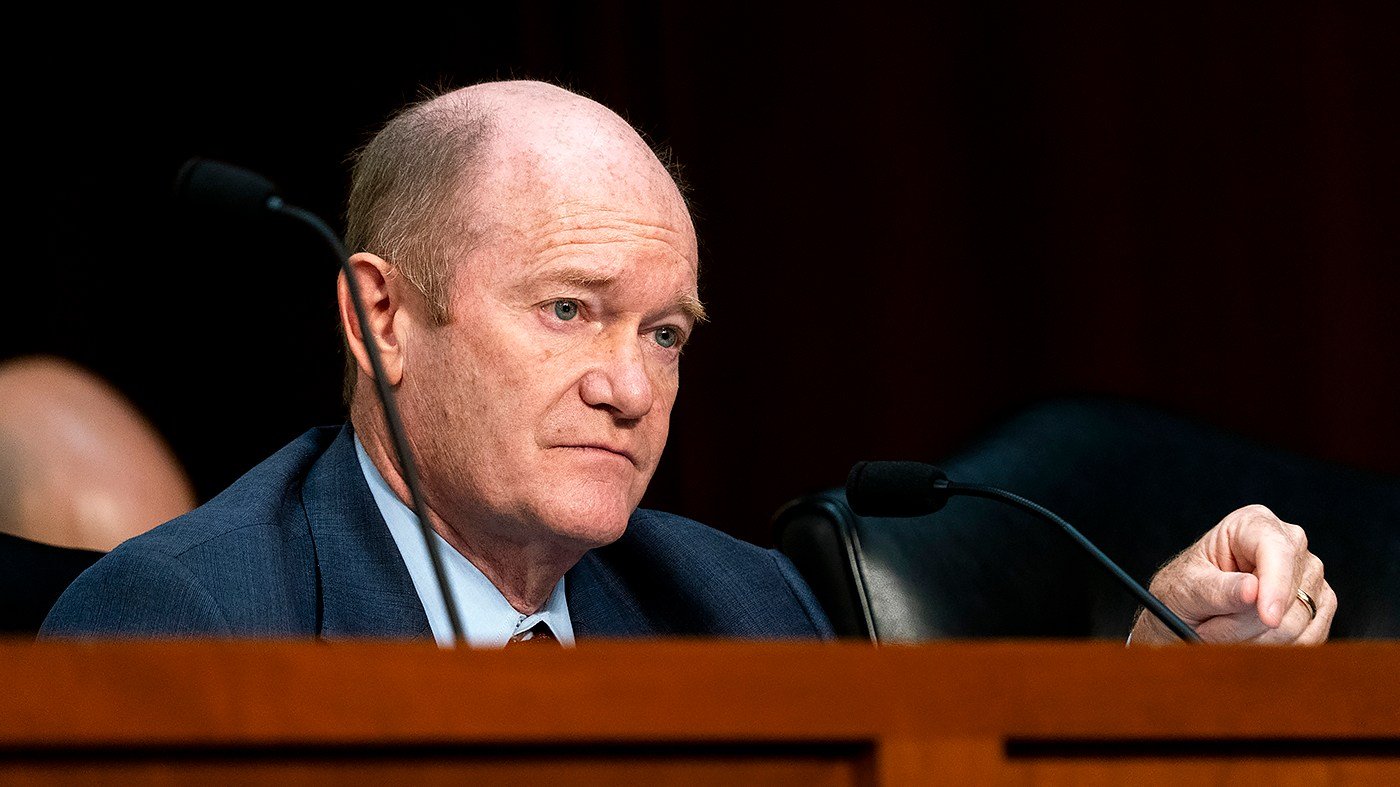
Sen. Chris Coons (D-Del.) on Monday urged an investigation into Nvidia CEO Jensen Huang following reports that Huang had an affair with a woman suspected of being a Chinese spy. Coons, a member of the Senate Foreign Relations Committee, said on X that he is "pushing to investigate Jensen Huang and Nvidia to determine whether our national security was compromised."
Coons also demanded transparency about the ties between Silicon Valley executives and the Trump administration. "We need answers about the relationship between AI billionaires and the Trump administration, who's making these decisions, and who's really got their hand on the wheel," he wrote.
The call for scrutiny comes after Nvidia's board announced Sunday it would open its own probe into reports that Huang was "the target of a foreign intelligence effort." The board said it had "no reason to believe that either national security or NVIDIA secrets" were compromised by Huang's relationship with Alice Huang, an executive at Megaspeed who is accused of espionage. The board's action is detailed in the board's decision to investigate.
The allegations stem from a New York Times report late last month that U.S. spy agencies found Alice Huang illegally smuggled advanced AI chips into China while she and Jensen Huang developed a "close relationship." Both Nvidia and its CEO initially denied the report, but Jensen Huang reportedly acknowledged Sunday that he was "unfaithful" to his wife. In a memo to employees, he apologized, saying there was "no excuse for what I did," according to Bloomberg. More on the CEO's admission can be found in Huang's admission and board probe.
President Trump, who views Huang as a close ally and previously allowed Nvidia to sell certain AI chips to China, said he had not discussed the allegations with Huang. "I just know he's a fine person, but you never know what is going on," Trump told reporters late Sunday. "I'm sure. I hope everything's fine. He's done such an incredible job, and so I would certainly hope he's a fine person, in my opinion." The president's comments are covered in Trump's defense of Huang.
Last Wednesday, the Republican chairs of the House Select Committee on China, the House Foreign Affairs Committee, and the House Permanent Select Committee on Intelligence sent a letter to Jensen Huang requesting his appearance at a closed-door meeting on Nov. 18. "Recent reports raise significant national security concerns regarding the PRC's access to sensitive U.S. technology and information," the lawmakers wrote, adding that it is "vital that Congress determines the extent to which U.S. national security has been placed at risk." They specifically asked Huang to address Nvidia's "security protocols against foreign adversary espionage and your interactions with … Alice Huang."
Escalating Scrutiny in Washington
The bipartisan pressure on Nvidia and its CEO reflects growing unease in Congress over the intersection of artificial intelligence, national security, and foreign influence. Coons' call for an investigation adds a prominent Democratic voice to the chorus of lawmakers demanding answers. As the debate over AI safety and export controls intensifies, the outcome of these probes could shape future legislation and oversight. Democrats have been crafting a broader strategy to counter Trump's foreign policy, as seen in Democrats' foreign policy counter-strategy.
Nvidia, a linchpin in the global AI chip market, has faced increasing scrutiny over its business dealings with China. The company's board has said it will cooperate fully with any government inquiries. Meanwhile, Jensen Huang's personal life has become a focal point of the controversy, with the CEO expressing remorse for his actions.
As the investigations move forward, questions remain about whether the relationship posed a genuine security threat and what it reveals about the influence of tech billionaires in Washington. With Trump's defense of Huang and Coons' demands for accountability, the affair has quickly evolved into a political flashpoint that could have lasting implications for U.S. tech policy and national security.