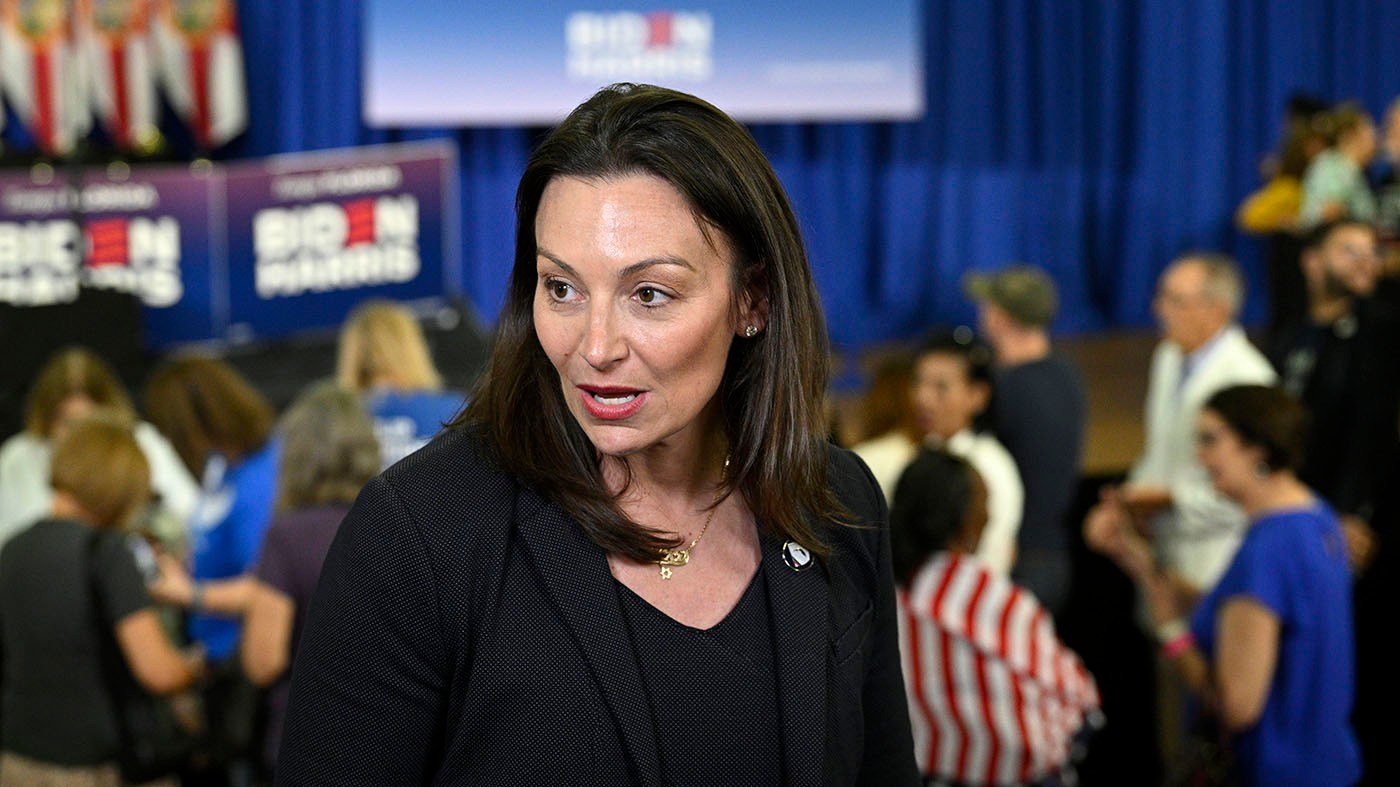
Florida once again proved to be a graveyard for Democratic ambitions on election night, as the party's nationwide wave crashed against the state's hardened Republican shoreline. But state party chair Nikki Fried is spinning the results as a sign of life, not a death knell.
Fried, in an interview with The Hill, argued that the party's performance in the midterms shows Florida is closer to becoming competitive than national Democrats assume. While gubernatorial candidate David Jolly and Senate nominee Angie Nixon fell short, Fried pointed to significant down-ballot gains, including flipping 16 state House seats and one state Senate seat, breaking the GOP's supermajority in the lower chamber. She also noted that Democrats are on track to hold all four congressional seats that were redrawn to favor Republicans.
“We created all of this by our sheer grit,” Fried said, adding that conversations with national operatives have centered on the potential for victory if more resources were committed. “Yes we could win. … Imagine if we put a little more into Florida.”
From battleground to redoubt
Florida's political transformation over the past two decades has been dramatic. Once the ultimate presidential battleground—famously decided by hanging chads in 2000—the state has shifted from purple to deep red. In 2020, Democrats held a narrow voter registration edge of about 97,000; six years later, Republicans lead by more than 1.5 million.
Yet Democrats have clawed back in recent cycles. The party has touted an 8% increase in turnout from 2020 to 2024 and has made inroads in local races, including school boards and county commissions. A notable highlight was Miami-Dade County Mayor Daniella Levine Cava's decisive reelection in 2024. This spring, Democrats also flipped two state House seats in special elections, including one covering President Trump's Mar-a-Lago resort.
Signs of a purple undercurrent
Last week's results offered further evidence of that undercurrent. Miami-Dade, which Trump carried by 11 points in 2024, swung back to Democrats: Jolly won the county by about 7 points, and Nixon beat Republican Sen. Ashley Moody there by nearly 56,000 votes. Statewide, Jolly lost by only about 1 point, while Moody bested Nixon by almost 3 points.
Fernand Amandi, a senior adviser to the Jolly campaign, said the close margins were frustrating. “Florida is not Utah, Wyoming or Montana. We've shown—even this century—that it can be won, but it requires a permanent campaign infrastructure,” he said. “Democrats have ceded Florida, and they're going to continue paying the price if they don't engage in earnest. The message for national Democrats is invest or die.”
Candidate quality matters
Some centrist strategists argue that candidate quality was a key factor. Matt Bennett of Third Way, a center-left think tank, said Nixon's nomination was a liability. “Angie Nixon was a uniquely bad candidate. She joined the DSA … it's tough to think of a worse thing to do. Socialism is not popular in Florida.”
Third Way's postelection analysis found that moderate Senate candidates flipped six Republican-held seats and defended another in Georgia, outperforming Vice President Harris's 2024 margins in those states by an average of 21 points. “It's pretty evident that good moderate candidates do better in states like Florida,” Bennett said, adding that on election night Florida was “the lone orphan left behind” in an otherwise Democratic wave.
Democratic strategist Steve Schale, who ran Obama's Florida operation, echoed that sentiment, stressing the need to win crossover voters. “You have to be able to win crossover voters,” he said.
Despite the losses, Fried and other state Democrats argue that the party's gains—particularly in legislative races and in Miami-Dade—show a viable path forward. They are calling on the national party to invest in a permanent infrastructure rather than treating Florida as a lost cause. As Amandi put it, “Florida is the lab for MAGA,” and Democrats ignore it at their peril.
The debate over Florida's future is likely to intensify as Democrats look ahead to the 2026 midterms and the 2028 presidential cycle, with some pointing to Soto's surprising hold on a redrawn seat as evidence that even in tough districts, the right candidate can win. Others caution that without a broader national investment, such wins will remain the exception.
For now, Florida Democrats are banking on their message that the state is not as red as it seems—and that with a little more money and effort, they can turn it purple again. As Fried put it, “We're closer than people think.”