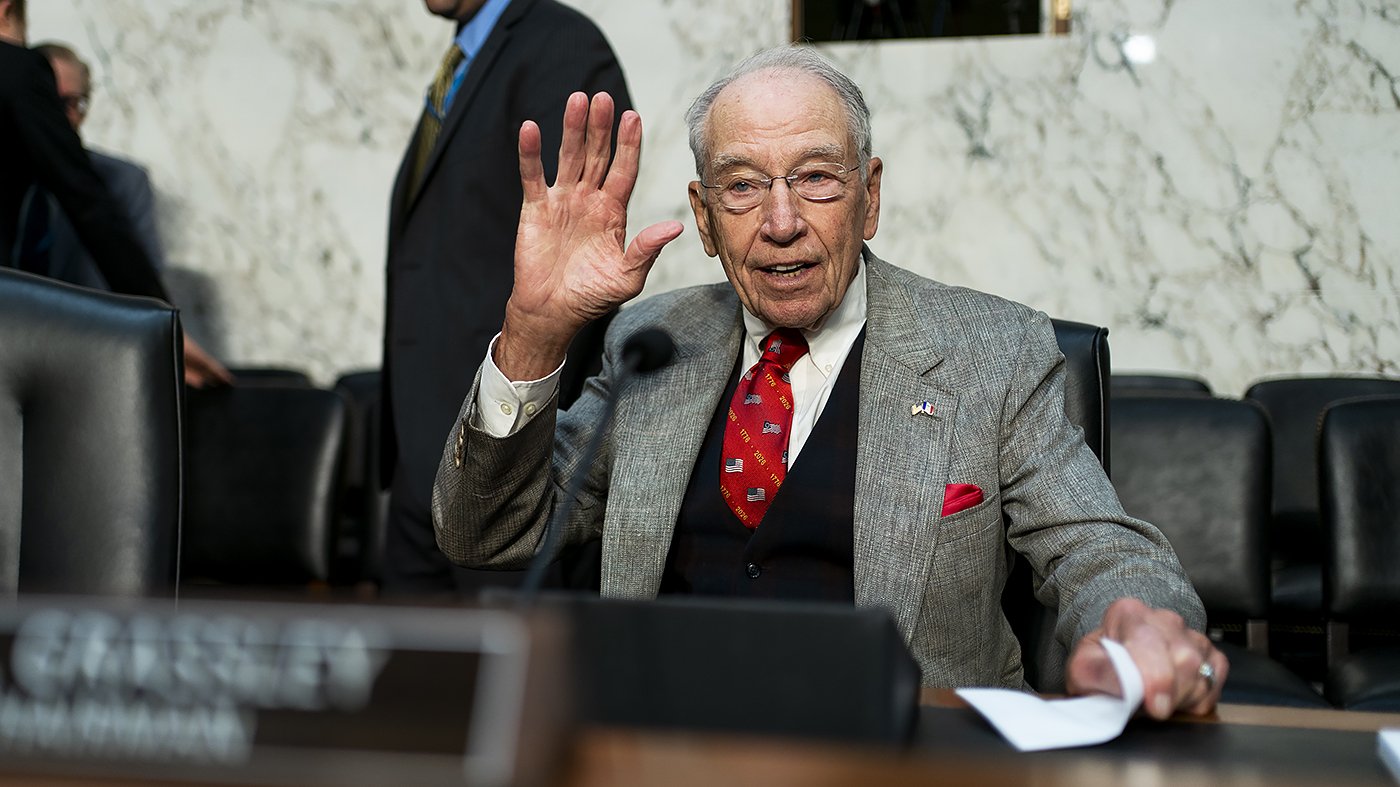
Senators Chuck Grassley (R-Iowa) and Sheldon Whitehouse (D-R.I.) on Thursday sharply criticized the Treasury Department's final rule that exempts 99% of entities from beneficial ownership reporting requirements, arguing it guts a key transparency law and weakens national security.
In a joint statement, the lawmakers said the rule, published Tuesday, directly contradicts the intent of the Corporate Transparency Act (CTA), which was designed to give federal agencies a powerful tool against illicit finance. They warned that the exemption strips law enforcement and intelligence officials of a resource that has been instrumental in uncovering fraudulent schemes and other financial crimes.

“The Treasury Department's final rule exempting U.S. based companies from the Corporate Transparency Act's reporting requirements undermines the clear intent of the law,” the senators said. They emphasized that the CTA was passed to provide “needed tools to address criminal activity like human trafficking, terrorist financing, drug distribution and sanctions evasion.”
“This decision is an unfortunate one that fails to use all available tools to protect Americans and crack down on illicit financial schemes,” they added.
The Treasury first proposed revising the beneficial ownership reporting rules in March, and the new final rule reverses a Biden-era mandate that required millions of U.S. companies to disclose their true owners to the Financial Crimes Enforcement Network (FinCEN). Treasury Secretary Scott Bessent defended the change, calling the previous requirement “a burdensome reporting requirement for millions of law-abiding business owners.”
Under the CTA, a beneficial owner is defined as any individual who directly or indirectly exercises substantial control over a company or owns at least 25% of its ownership interests. The law, passed as part of the fiscal 2021 National Defense Authorization Act, emerged from over a decade of bipartisan work and consultations with government, anti-corruption groups, and human rights organizations.
Grassley and Whitehouse were original sponsors of the TITLE Act, a precursor to the CTA. Their criticism echoes broader GOP concerns about regulatory rollbacks, but here they are joined across the aisle in opposing the Treasury's move.
The Treasury had already announced last year that it would not enforce the reporting rule for U.S. citizens and domestic companies, and the new rule narrows the scope to foreign reporting entities. The senators argue this leaves a glaring gap in financial oversight, potentially allowing bad actors to hide behind shell companies.
“We cannot afford to weaken transparency measures at a time when illicit finance is increasingly sophisticated,” they warned. The final rule is now in effect, but critics are likely to push for legislative remedies or legal challenges.