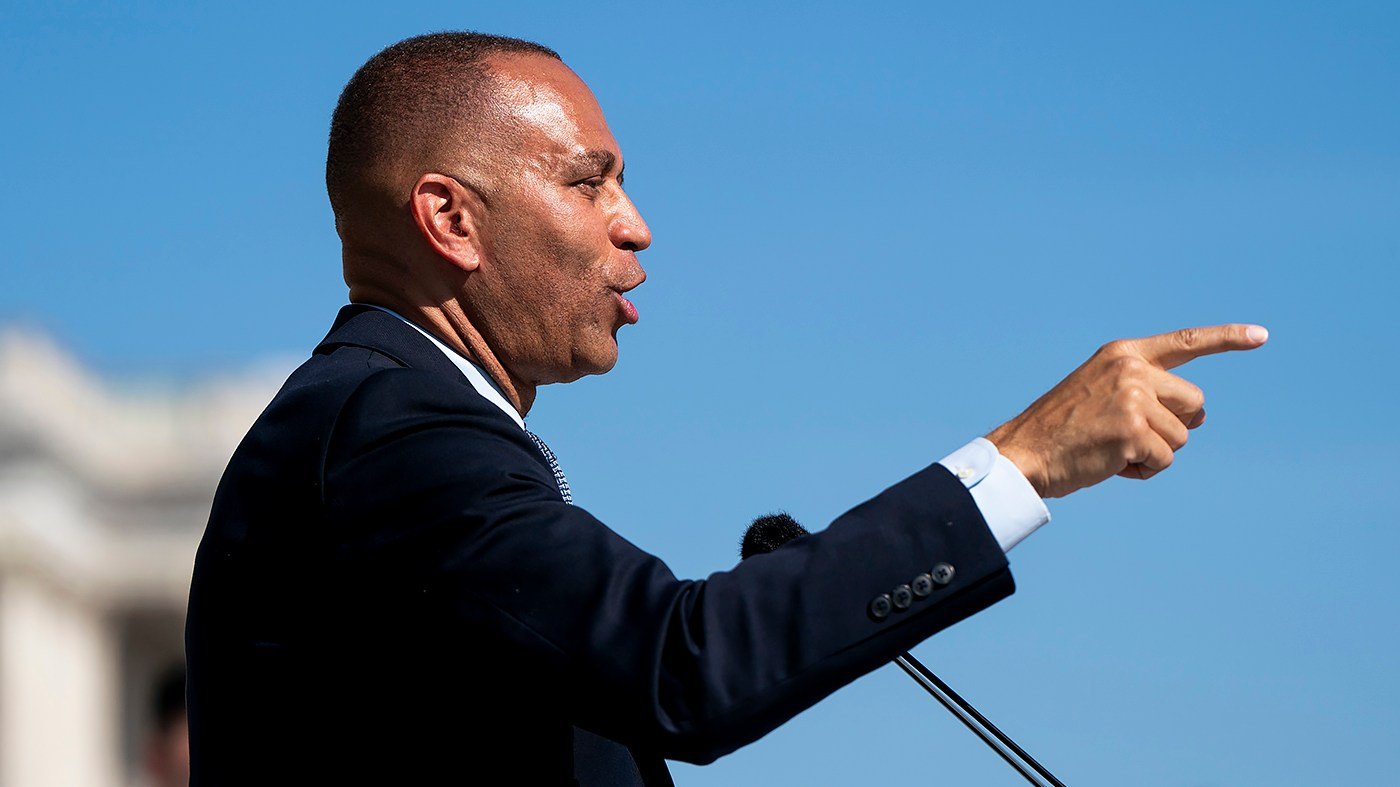
House Democrats are signaling that they will not shy away from confronting Israeli Prime Minister Benjamin Netanyahu over human rights abuses and escalating settler violence in the occupied West Bank if they win back the majority in November.
House Minority Leader Hakeem Jeffries (D-N.Y.), who is in line to become Speaker if Democrats flip the chamber, told reporters last week that the situation in the West Bank "cannot continue." His comments came as he and his top lieutenants—Reps. Katherine Clark (Mass.) and Pete Aguilar (Calif.)—endorsed a bill that would impose economic sanctions and travel bans on individuals involved in violence against Palestinians in the occupied territory.
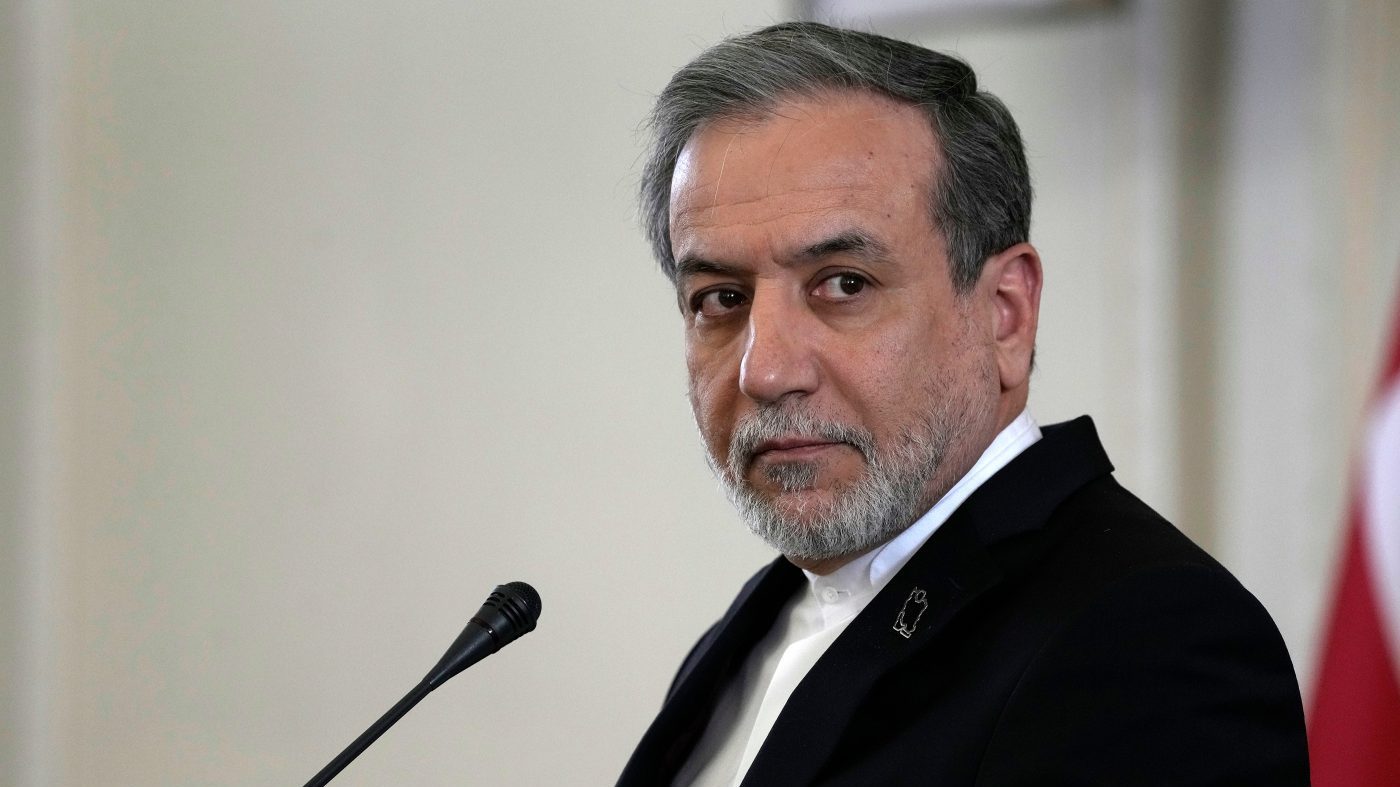
The legislation, sponsored by Rep. Jerry Nadler (D-N.Y.), a prominent Jewish lawmaker, has garnered support from 174 House Democrats. Jeffries indicated it would be a priority next year under a Democratic majority, calling it a "legislative step that should be considered in order to push back aggressively against the out-of-control settler violence in the West Bank."
This stance marks a notable shift in Capitol Hill politics, where unwavering support for Israel was once a bipartisan given. That consensus has eroded under Netanyahu's far-right coalition, which opposes Palestinian statehood and has accelerated settlement expansion in the West Bank. The construction surge has continued despite international condemnation, particularly following the October 2023 Hamas attacks that killed roughly 1,200 Israelis and saw 250 taken hostage.
Democrats continue to affirm Israel's right to self-defense, but they have also criticized Netanyahu's aggressive military response, which has killed more than 70,000 Palestinians in Gaza and fueled new settlement activity in the West Bank. The violence has prompted even some of Israel's most vocal Democratic supporters, including Reps. Steny Hoyer (D-Md.) and Lois Frankel (D-Fla.), to back Nadler's sanctions bill.
"It certainly just tells you where the winds are blowing," said Hannah Morris, vice president of government affairs at J Street, a pro-Israel group that opposes settlements. She noted that the rapid growth of outposts under the current Israeli government has led Democrats to rightly understand that "there has to be a stop to this, and a lot of this has to be reversed."
According to Israeli anti-settlement groups, settlers advanced roughly 28,000 new housing units in the West Bank last year alone—more than doubling the previous annual record. The controversial E-1 project, which would effectively sever much of the West Bank from East Jerusalem, is also moving forward. The United Nations recorded 2,803 instances of settler attacks between January 2025 and June 2026 that resulted in Palestinian casualties or property destruction. Over the same period, 295 Palestinians were killed by Israeli settlers or military forces, while 18 Israelis were killed by Palestinians.
Most Democrats view the settlements as a theft of land that undermines the prospects for a negotiated two-state solution. Jeffries reiterated his support for Israel's existence as a Jewish and democratic state but stressed that creating a Palestinian state must be a "twin priority" to achieve dignity and self-determination for Palestinians. "I think that's a view broadly shared within the House Democratic Caucus," he said.
In the Senate, four Democrats—Chris Coons (Del.), Ruben Gallego (Ariz.), Ron Wyden (Ore.), and Elizabeth Warren (Mass.)—introduced legislation this week to sanction companies involved in the E-1 project. Coons said in a statement that the U.S. must send a strong message that settler violence is unacceptable and that it remains committed to freedom, security, prosperity, and self-determination for all Israelis and Palestinians.
Israeli officials have defended their actions as necessary for national security, but the growing dissent within Democratic ranks suggests that the party is increasingly willing to hold Israel accountable, especially as Democrats' strong polling suggests they are poised to take the House. The shift also comes amid broader debates over U.S. policy in the Middle East, with some Democrats pushing back against figures like Huckabee blaming disinformation for changing attitudes toward Israel. As the midterms approach, the party's base is increasingly demanding a tougher line on Netanyahu, and Democratic leaders appear ready to deliver.