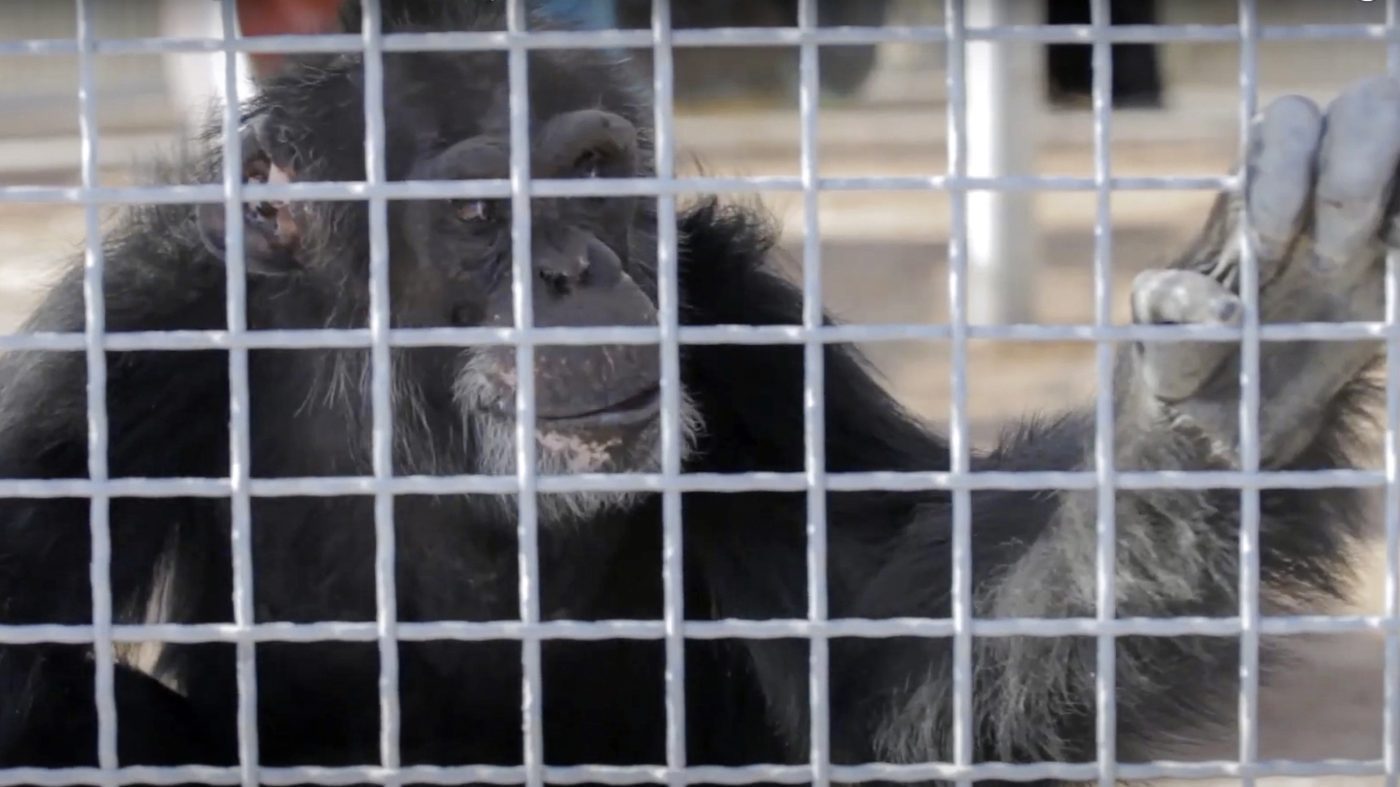
The National Institutes of Health (NIH) announced Wednesday that it will transfer its last remaining government-owned research chimpanzees to a sanctuary in early 2027, marking the end of a nearly decade-long effort to remove the animals from federal laboratories.
The 34 chimpanzees, currently housed at the Keeling Center for Comparative Medicine and Research in Bastrop, Texas, will be relocated to Chimp Haven, a 200-acre facility in Louisiana that serves as the official retirement home for government-owned apes, according to the NIH.

“Completing their transfers will fulfill NIH’s commitment, announced in November 2015, to retire all NIH-owned chimpanzees to sanctuary,” NIH Director Jay Bhattacharya said in a statement. He added that the timing of the moves, which are expected to begin early next year, will be “guided by the chimpanzees’ health, welfare and social groupings.”
The decision to end invasive research on chimpanzees came after years of pressure from animal rights groups and a 2011 NIH suspension of new funding for such studies. In 2015, the agency formally declared it would no longer conduct or fund invasive research on the animals, following an independent assessment that found little scientific need for their continued use and the U.S. Fish and Wildlife Service’s listing of all chimpanzees as endangered under the Endangered Species Act.
Historically, chimpanzees were used in biomedical research for diseases like HIV, hepatitis, and cancer because of their biological similarity to humans. Scientists used them to study viruses and test the safety of treatments, including pharmaceuticals and radiation. But then-NIH Director Francis S. Collins said in 2015, “We find no evidence that there is a need to continue to do research of an invasive sort on chimpanzees, not now and not going to in the future.”
Since that announcement, more than 200 chimpanzees have been moved to Chimp Haven in Keithville, Louisiana. At the sanctuary, the animals live in large, forested enclosures and social groups designed to mimic their natural habitats.
Animal welfare advocates hailed the announcement as a historic milestone. Kathleen Conlee, vice president of animal research issues at Humane World for Animals, told The New York Times, “This has been a long road and something that many people thought would never happen. It’s a really historic moment. This will be the end of the government’s use and confinement of chimps in labs.”
The move also aligns with broader shifts in federal research priorities, as scientists increasingly rely on alternatives to primate testing. The NIH’s decision could influence health policy debates and the future of animal research funding, especially as lawmakers on both sides of the aisle have shown interest in reducing taxpayer-supported animal testing.
With the final transfers, the federal government will completely exit the practice of keeping chimpanzees for invasive research, closing a chapter that has drawn criticism from animal rights advocates for decades. The NIH emphasized that the health and well-being of the animals will remain the top priority during the transition.