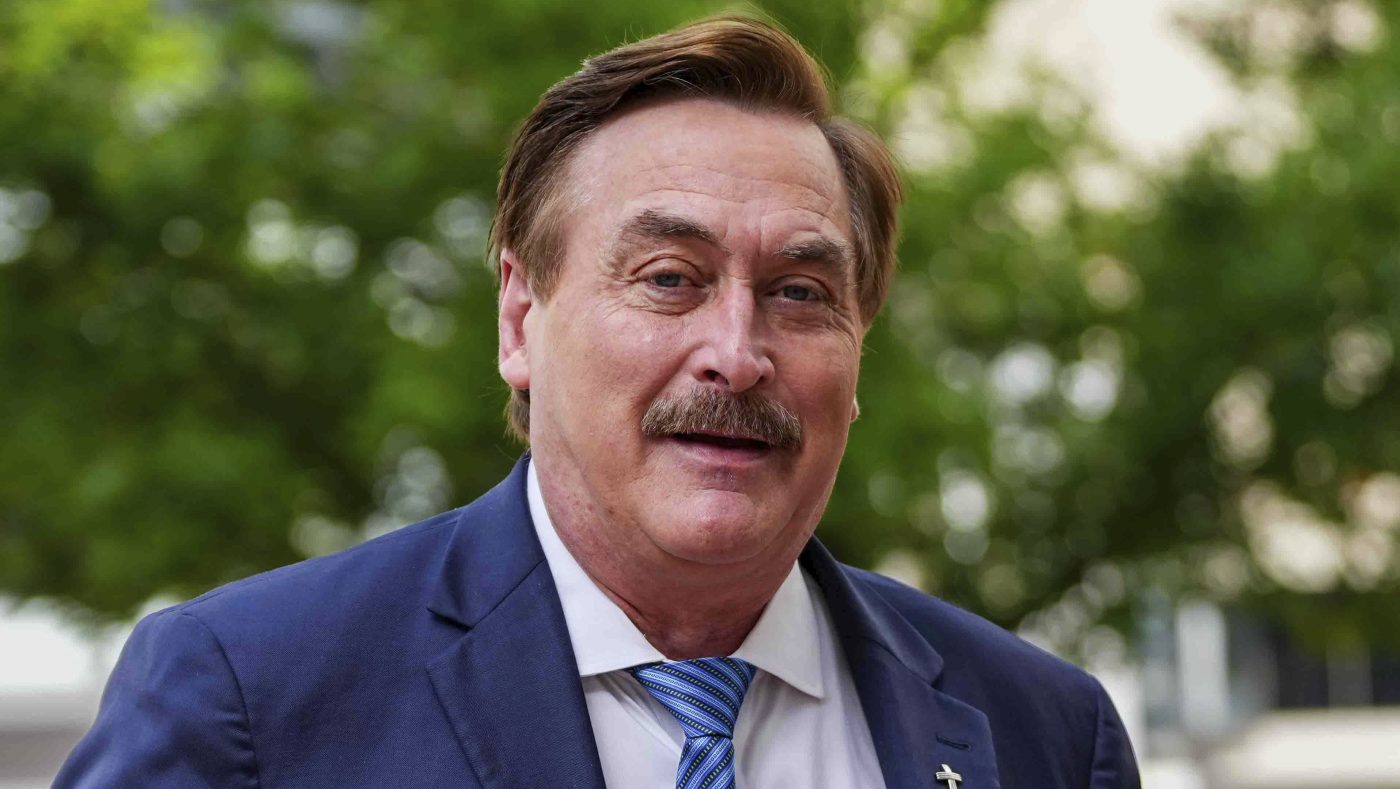
MyPillow CEO Mike Lindell announced Wednesday that he intends to file a claim against the Department of Justice's newly established anti-weaponization fund, which was set up earlier this week with nearly $1.8 billion to settle grievances from individuals alleging government misconduct.
Lindell, a prominent ally of former President Donald Trump, said his company suffered massive financial losses after he amplified baseless claims that Trump won the 2020 election. In an appearance on his own Lindell TV network, he cited evaluations from three third-party firms that pegged the damage to the MyPillow brand at approximately $400 million.
“We had three third parties look and do an evaluation of MyPillow, what it was prior to all these attacks and what it is now. And all of them averaged $400 million that it cost the brand and cost MyPillow. And it’s just horrific that our own government could do this to the American dream,” Lindell said.
He added that he hopes to use any compensation to make his employees whole, including stockholders and those who lost their jobs. “This company was built on the American dream and made in the USA and to have this happen. It will be a blessing to actually get some of these, my employees made whole,” he said.
Lindell disclosed that he spent $25 million to promote Trump’s false election fraud narrative, including funding a three-hour programming block on One America News Network that aired a documentary pushing conspiracy theories about the 2020 election results. He also helped organize the rally on January 6, 2021, which preceded the attack on the Capitol. The House Select Committee investigating the insurrection later subpoenaed his phone records.
Lindell joins a growing list of Trump allies seeking redress through the fund. According to Reuters, others include Michael Caputo and former Proud Boys leader Enrique Tarrio. Vice President JD Vance also suggested Tuesday that Tina Peters, a former Colorado election official convicted of election tampering, might be worthy of compensation.
The fund has drawn sharp criticism from law enforcement officials who view it as a mechanism to reward those involved in the January 6 attack. Former U.S. Capitol Police officer Harry Dunn, who testified about the violence that day, condemned the initiative on CNN. “Donald Trump is putting a retainer on a mob, on a militia that’s already showed the violence that they’re willing to enact on his behalf. And he’s incentivizing it, too,” Dunn said.
Hours after Dunn’s comments, he and D.C. Metropolitan Police officer Daniel Hodges filed a lawsuit to block the Department of Justice from disbursing payments from the fund. The legal challenge underscores the deepening divide over the fund’s purpose and the broader political battle over accountability for the Capitol attack.