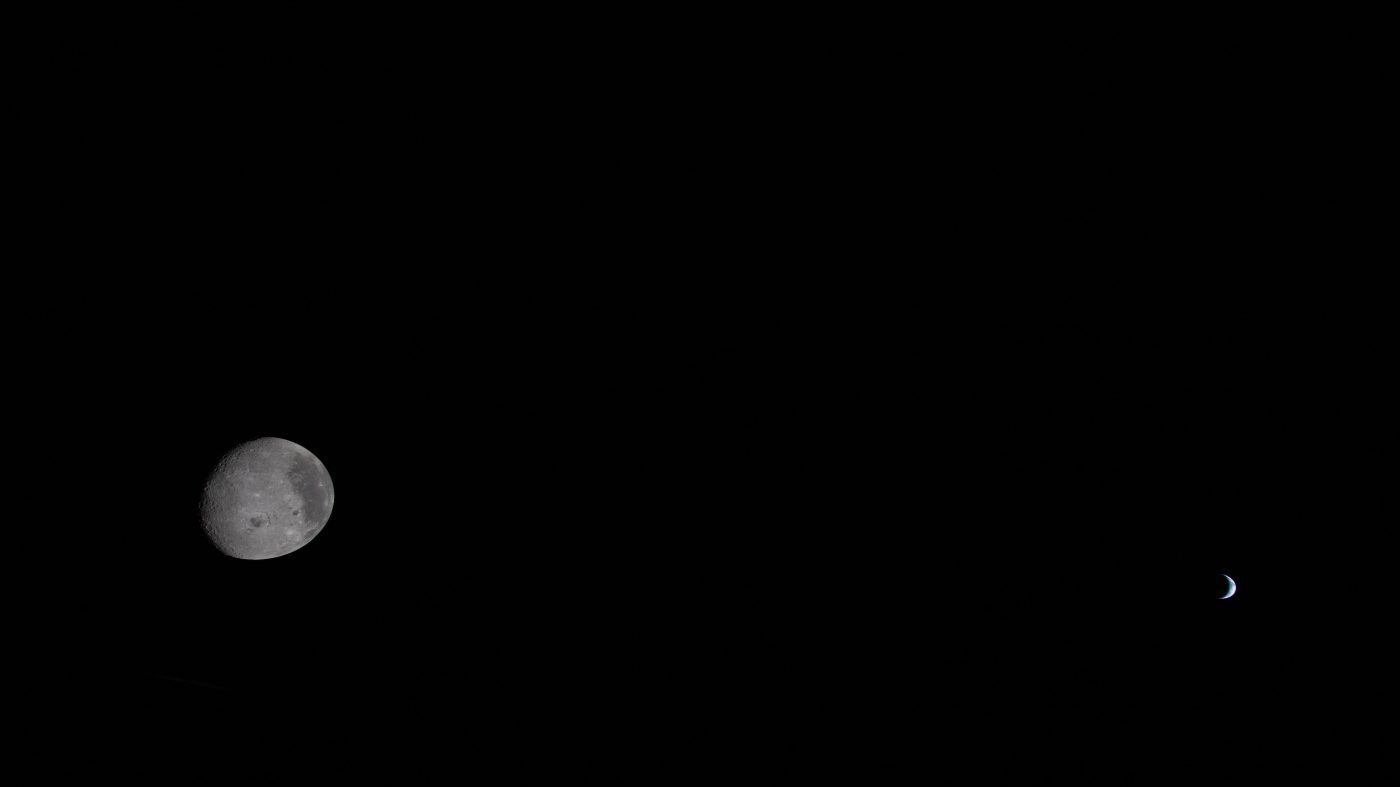
New data confirms the moon is steadily drifting away from Earth, moving at a rate of 3.8 centimeters per year, according to a report from Space Daily. While that figure may seem negligible, it carries profound implications for the long-term future of astronomical phenomena that humans currently take for granted.
The report highlights that the same measurement, when projected forward, will eliminate an event that humanity is uniquely positioned to witness: total solar eclipses. “That number is small enough to sound trivial. It is not,” Space Daily states. “The same measurement, extended forward, eliminates an astronomical phenomenon that human beings happen to be alive at exactly the right moment in geological time to witness.”

The moon’s retreat is driven by tidal friction, a process where Earth’s oceans bulge under the moon’s gravitational pull. This friction gradually lengthens Earth’s days by about 1.7 milliseconds per century, while the moon gains orbital energy and spirals outward. The rate of recession is not a theoretical model but a direct measurement, made possible through the Lunar Laser Ranging Experiment, which has been running for decades.
Observatories such as the Apache Point facility in New Mexico and the Côte d’Azur station in France time the return of laser pulses bounced off retroreflectors left on the lunar surface by Apollo missions and Soviet Lunokhod rovers. “The value of 3.8 centimetres per year is not a model output,” Space Daily noted, emphasizing the empirical nature of the data.
The moon formed roughly 4.5 billion years ago, and at that time, the separation between Earth and the moon was on the order of 20,000 to 30,000 kilometers. Today, the average distance is about 384,400 kilometers. This gradual separation has been a constant feature of the Earth-moon system, but its pace is now precisely quantified.
The findings come as NASA’s Artemis II mission, which aims to return humans to the lunar vicinity, continues to capture public attention. The ongoing drift underscores the dynamic nature of the Earth-moon relationship, with implications for future space exploration and our understanding of planetary evolution.
In related developments, the Great Salt Lake's decline fuels space research at Utahns' expense, highlighting how environmental changes can intersect with astronomical studies. Meanwhile, SpaceX sets audacious targets for Musk's compensation: Mars colony and $7.5T valuation, reflecting the private sector’s growing role in space exploration.
As the moon continues its slow retreat, scientists stress that the changes are imperceptible on human timescales but will reshape the cosmos over hundreds of millions of years. For now, the precise measurements offer a rare glimpse into the forces that govern our planet and its only natural satellite.