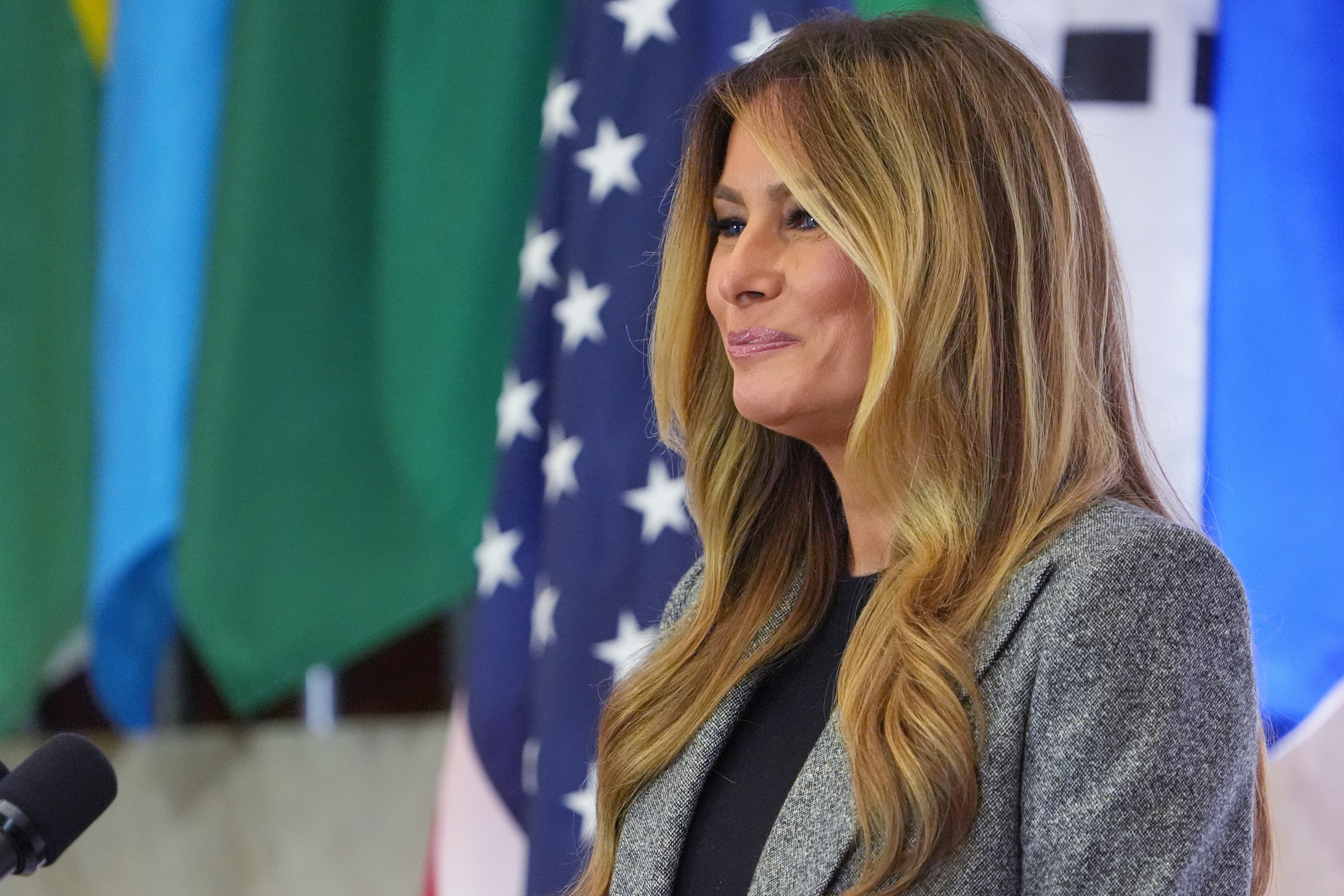
First Lady Melania Trump opened a major international summit on Tuesday, calling for a coordinated global effort to expand educational opportunities and technological access for children. Addressing diplomatic spouses from more than 40 countries at the State Department, Trump framed the issue as a foundational challenge for future economic and social progress.
A Global Alliance for the Next Generation
"As people we dream. As leaders we progress. As nations we will build," Trump declared in her opening remarks. She urged the assembled leaders to "accelerate our new global alliance" to directly improve outcomes for young people. The two-day gathering marks the operational launch of her "Fostering the Future Together" initiative, first announced during the U.N. General Assembly last year, and represents a significant expansion of her public policy portfolio into international affairs.

The First Lady outlined a concrete plan of action, asking participants to organize regional meetings, commission research, forge new partnerships, and collaborate across borders. The central aim, she stated, is "to cultivate the skills young people need to be successful in this rapidly evolving world." She argued that success hinges on developing innovative programs, advocating for supportive education policies, sponsoring technology-focused legislation, and building robust public-private partnerships.
Harnessing 'Extraordinary Human Capital'
Flanked by prominent figures including Olena Zelenska, spouse of Ukrainian President Volodymyr Zelenskyy, and Sara Netanyahu, wife of Israeli Prime Minister Benjamin Netanyahu, Trump described the room as "filled with extraordinary human capital." She challenged her counterparts to "harness it to elevate your children, to empower your people and to accelerate your economies." The summit's inclusion of major technology corporations—Microsoft, Google, and OpenAI among them—signals a deliberate strategy to blend diplomatic networks with private-sector innovation.
This focus on international coalition-building and domestic policy advocacy occurs alongside other significant foreign policy maneuvers by the administration, such as the reported strategic shift from regime change to direct negotiations with Iran. The First Lady's summit also unfolds in a complex political climate at home, where the administration continues to navigate contentious issues, including asylum policies currently under Supreme Court scrutiny.
The initiative seeks to create a lasting framework for cooperation, moving beyond a single event. By tasking participants with ongoing regional collaboration, the effort is designed to outlast any single political cycle or administration. This long-term view contrasts with more immediate domestic political battles, including debates over government funding that have seen the President backing GOP plans to fund the Department of Homeland Security.
Analysts view the summit as part of a broader effort to shape the Trump administration's legacy around forward-looking, globally engaged themes, even as it contends with persistent criticism on other fronts. Some international observers, like the Swedish Democracy Institute, have raised alarms about democratic norms, making soft-power initiatives like this one potentially significant for the nation's international standing.
Ultimately, Melania Trump's conference positions children's education and technology access as non-partisan, universal priorities capable of uniting a diverse set of nations. Whether this new "global alliance" can translate diplomatic dialogue into tangible resources and policy changes in participating countries remains the central unanswered question as the summit continues.