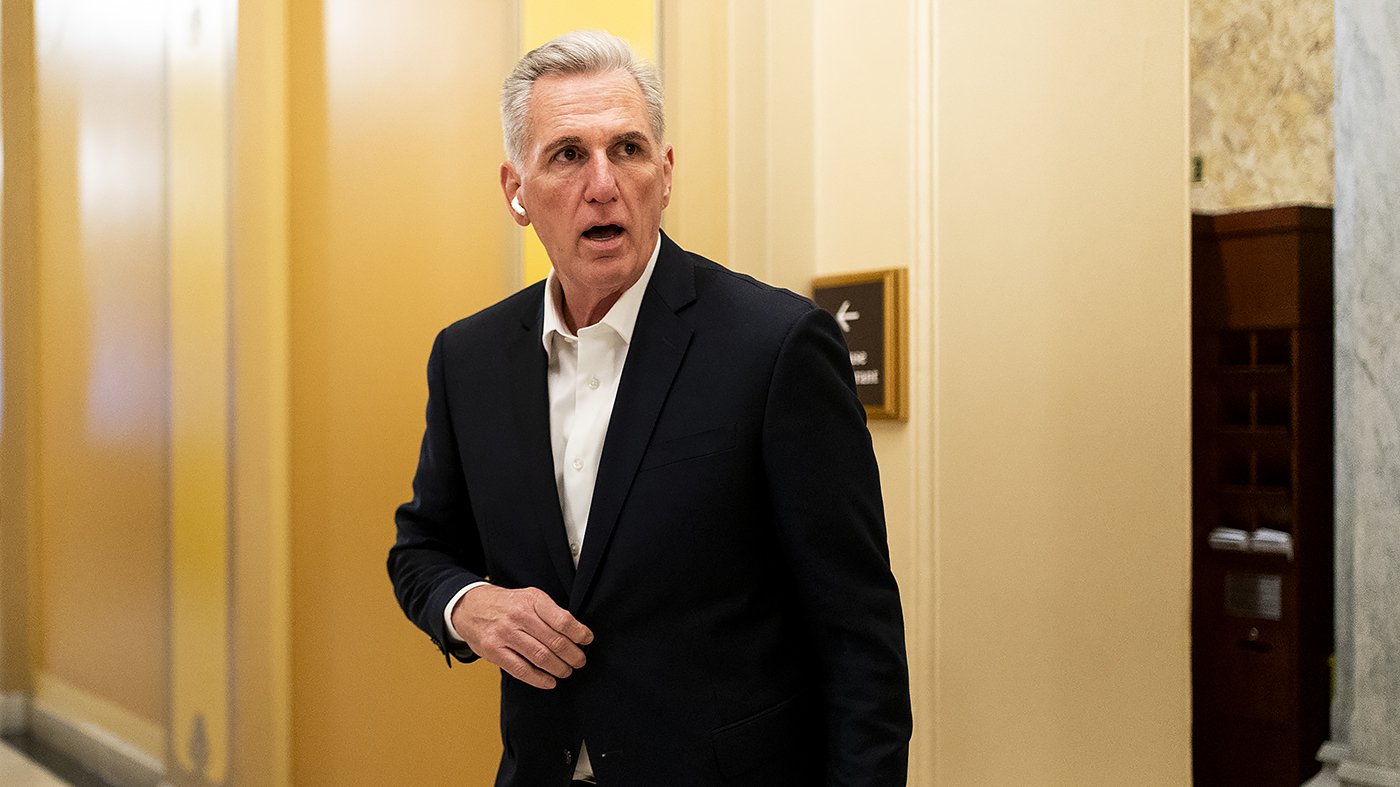
Former House Speaker Kevin McCarthy asserted that former President Donald Trump commands greater political power today than Ronald Reagan did during his presidency. McCarthy made the declaration during a Wednesday address at Harvard University's Kennedy School, where he reflected on congressional dynamics and the state of American democracy.
"A President Like This Since Roosevelt"
"Right now, Trump has more power than Reagan," McCarthy told the audience. "We haven't seen a president like this in either party since Franklin D. Roosevelt, where he has come back into power so strong, he has a greater determination of whether a Republican wins reelection than any leader in Congress does. He raises the money."
McCarthy elaborated that Trump functions as both party whip and de facto speaker, determining legislative success. "Bills don't pass—he's the whip and the Speaker, the president is right now, to go through that," he continued. The former speaker framed this as a constitutional shift, noting, "Article 1 is the power of the Congress. Well, that's kind of been usurped right now, but that will come back. So it's a much different play."
Public and Political Scrutiny of Executive Authority
Trump's use of presidential power since returning to office has generated sustained controversy. His administration has implemented sweeping tariffs, executed substantial federal workforce reductions, initiated a controversial East Wing renovation, and directed the Justice Department against political opponents. A December Quinnipiac University poll found 54% of Americans believe Trump has exceeded proper presidential authority, while 37% consider his actions appropriate.
Military actions have provoked particular conflict. Many lawmakers, predominantly Democrats, argue the president requires congressional approval for offensive operations. Trump's authorization of the capture of Venezuelan President Nicolás Maduro and the military campaign against Iran has intensified this institutional struggle. Democratic efforts to invoke the 25th Amendment followed Trump's threat that Iran's "whole civilization will die" without a peace deal reopening the Strait of Hormuz—a statement critics labeled a potential war crime.
Congressional Checks Thwarted
McCarthy's remarks coincided with direct legislative confrontation. The day after his speech, House Republicans blocked a Democratic resolution designed to limit Trump's authority to conduct military operations in Iran. This followed earlier Democratic attempts to constrain war powers during offensives in Venezuela and Iran this year.
Despite a subsequent ceasefire agreement with Iran, tensions remain acute. Tehran accused Washington of violating the ceasefire terms and re-closed the Strait of Hormuz within 24 hours of reopening it. The administration simultaneously faces pressure regarding regional conflicts, as Trump urges Israeli Prime Minister Benjamin Netanyahu to de-escalate strikes in Lebanon to preserve the fragile U.S.-Iran détente.
The political fallout continues. Some Republicans have broken ranks to criticize the administration's posture, with Trump publicly feuding with former allies like Tucker Carlson and John Kelly over their criticism of the Iran strategy. Meanwhile, Democratic impeachment efforts face practical hurdles, as House Foreign Affairs Committee Chairman Gregory Meeks has acknowledged the chamber lacks sufficient votes to advance articles of impeachment.
McCarthy's analysis presents a stark assessment of contemporary power structures, suggesting Trump's influence within the GOP and over governance mechanisms represents a historical anomaly that has temporarily altered the balance between executive and legislative branches.