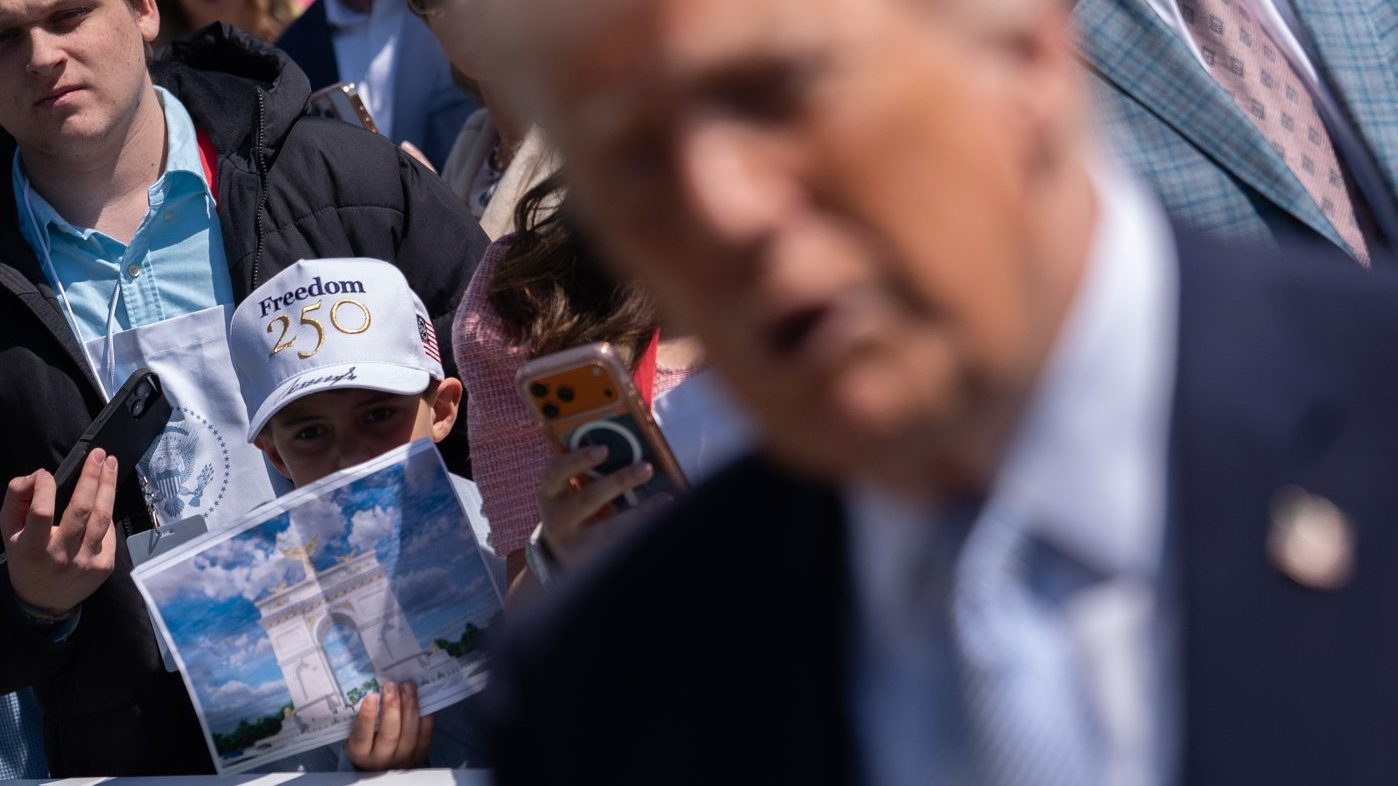
A federal judge on Wednesday extended an order barring the Trump administration from beginning construction on a proposed 250-foot triumphal arch in the nation's capital, pushing the pause at least into early December.
U.S. District Judge Tanya Chutkan, an Obama appointee on the D.C. federal bench, had issued a temporary restraining order on Nov. 5 that stopped the National Park Service from moving forward with the project. That order was set to expire Thursday, but Chutkan ruled it will remain in effect until at least Dec. 3 to maintain the status quo while litigation continues.
The extension comes as Chutkan weighs whether to issue a longer-lasting injunction. The arch is planned for Memorial Circle, a space between the Lincoln Memorial and Arlington National Cemetery, and has drawn sharp opposition from a coalition of Vietnam War veterans, an architectural historian, the D.C. government, and the state of Virginia, all of whom filed separate lawsuits this year to halt the project.
Critics argue the monument is little more than a vanity project for President Trump, with concerns ranging from impacts on airspace to worsening traffic congestion. The National Capital Planning Commission approved the plan shortly before Chutkan's initial order, prompting the legal challenges.
The Trump administration maintains it has the authority to build the arch under a 1925 statute that authorized the Arlington Memorial Bridge Commission to make changes to the bridge that, in its discretion, may be found necessary or advisable. The Justice Department has also invoked national security, suggesting the arch would be equipped with anti-drone technology and serve other defense-related purposes.
Chutkan's extension coincides with a separate lawsuit in Virginia, where the Arlington County Board is seeking a similar pause. A federal judge there is scheduled to hear arguments on Friday.
The legal battles highlight the broader tensions over presidential authority and public space, echoing other disputes in the Trump era. As the administration faces scrutiny on multiple fronts, including its push to limit protections for Venezuelan migrants, the arch case adds another layer of political and judicial friction.
Observers note that the outcome could set a precedent for how courts handle presidential monuments and executive discretion. The case also intersects with ongoing debates over the federal government's use of emergency powers, as seen in the Supreme Court's review of asylum restrictions.
For now, construction remains on hold, and both sides await Chutkan's decision on a preliminary injunction. The legal wrangling is likely to continue well into the new year, with the arch's fate uncertain.