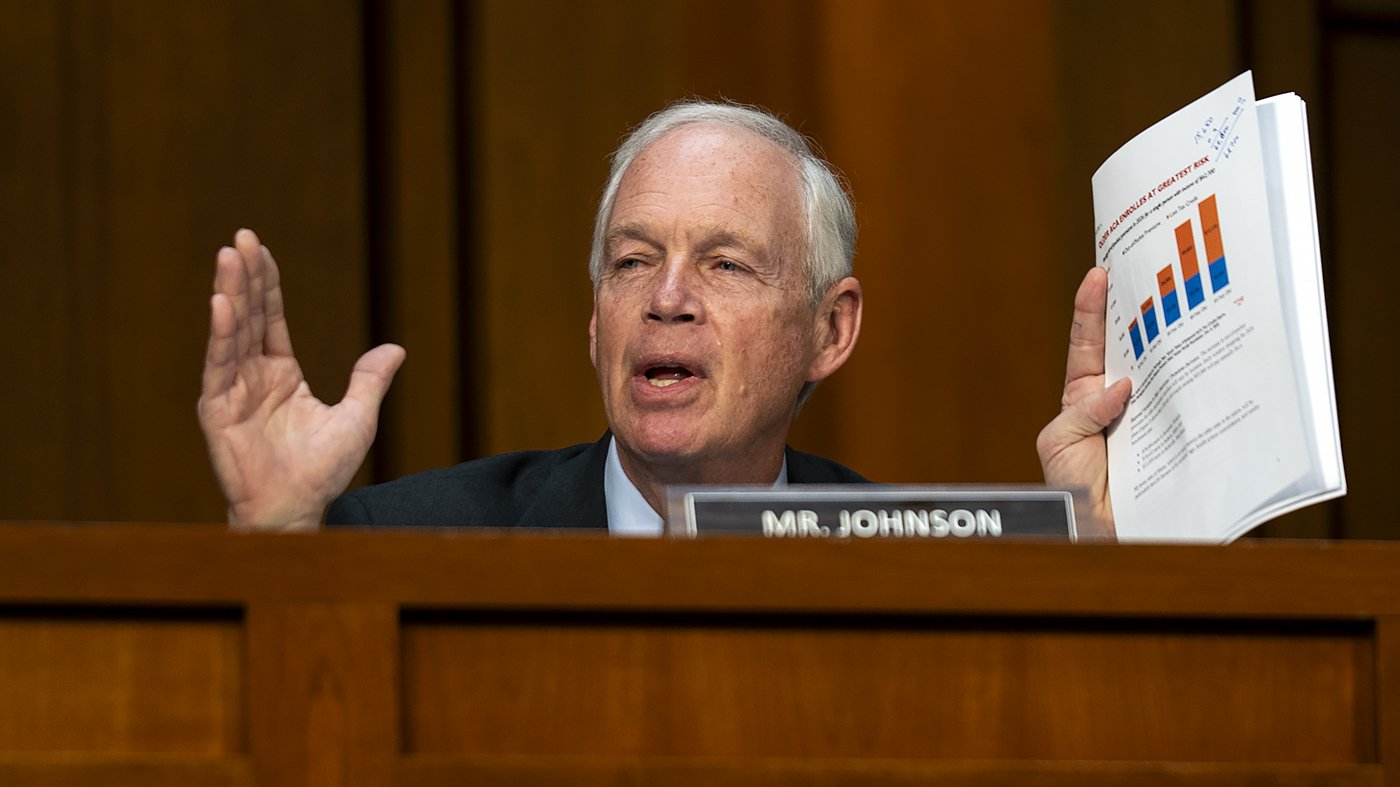
Senator Ron Johnson (R-Wis.) issued a public caution to President Donald Trump on Monday, urging the administration against escalating military conflict with Iran by attacking civilian infrastructure. His remarks come as both Washington and Tehran show no signs of backing down ahead of a critical Tuesday evening deadline set by the President.
Trump has threatened to strike Iranian power plants and bridges if the regime does not meet U.S. demands by 8 p.m. EDT, warning such action could send the country "back to the stone ages." In a Tuesday morning post on Truth Social, the President intensified his rhetoric, writing that "a whole civilization will die tonight, never to be brought back again." He added, "I don't want that to happen, but it probably will," while suggesting the potential for "revolutionarily wonderful" outcomes under a hypothetical new regime.
During an appearance on journalist John Solomon's podcast, Johnson stated that while he supports efforts to counter Iran's nuclear and military ambitions, he hopes the President's latest threats are merely strategic posturing. "I do not want to see us start blowing up civilian infrastructure," Johnson said. "I do not want to see that. We are not at war with the Iranian people. We are trying to liberate them."
The Wisconsin Republican warned that Trump's aggressive rhetoric risks playing into the hands of the Iranian leadership, which he characterized as fanatical and apocalyptic. "They may just be happy to try and usher in the end times. We need to prevent that," Johnson said. His comments reflect a growing unease within the Republican Party as the confrontation intensifies.
The diplomatic landscape remains fraught. Iran has rejected a recent U.S. peace proposal that included a 45-day ceasefire in exchange for reopening the Strait of Hormuz, dismissing the terms as "unrealistic." The regime has vowed to continue its retaliatory campaign unless hostilities are permanently ended. Trump told reporters Monday that Iran had made a "significant" offer but that it wasn't "good enough," and he has dismissed concerns that strikes on civilian sites could constitute war crimes.
The ongoing military operation has exposed clear fissures among GOP lawmakers. While some, like Senator Lindsey Graham, remain firmly supportive—Graham warned Monday of an imminent 'massive military attack'—others are expressing reservations. At least two House Republicans, Representatives Lauren Boebert (Colo.) and Nancy Mace (S.C.), have questioned a $200 billion Pentagon supplemental funding request related to the conflict. Several legislators have suggested Congress may need to intervene if operations extend beyond 60 days.
Trump's shifting messages regarding the conflict's duration and the potential for deploying U.S. ground troops have contributed to the uncertainty. The President's warnings of civilizational destruction stand in stark contrast to the caution advocated by Johnson and others within his party.
As the deadline nears, the administration's strategy appears poised between a decisive military escalation and a last-minute diplomatic resolution. Johnson's public intervention underscores the high-stakes political and humanitarian calculations involved, with the potential for widespread attacks on civilian infrastructure drawing particular scrutiny and concern from within the President's own political coalition.