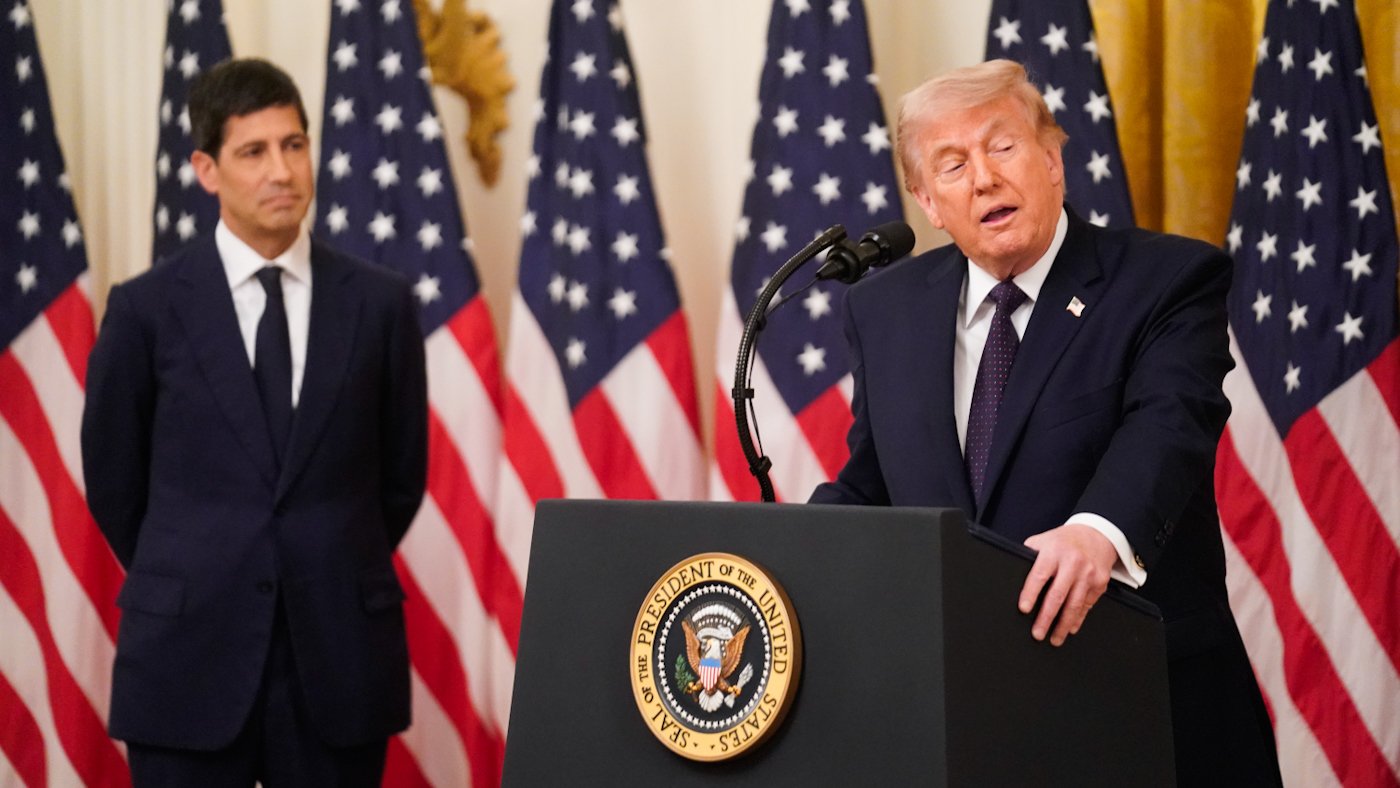
Kevin Warsh was officially sworn in as Federal Reserve chair on Friday in a White House ceremony alongside President Donald Trump, marking the start of his tenure at a pivotal moment for the U.S. economy. Supreme Court Justice Clarence Thomas administered the oath of office.
Warsh, 56, returns to the Fed board after serving as a member from 2006 to 2011. He was first nominated to the Fed by former President George W. Bush, for whom he worked as a White House economic adviser before becoming the youngest Fed board member in history. A graduate of Stanford University and Harvard Law School, Warsh also worked at Morgan Stanley and held various academic and advisory roles outside government, most recently as a fellow at Stanford's Hoover Institution, a conservative think tank with strong ties to Republican policymakers.
Trump praised Warsh as having “abilities that very few people have” and predicted he would be remembered as one of the best chairs in Fed history. The president made clear that Warsh understands the value of a booming economy, saying, “You want to stop inflation, but you don’t want to stop greatness.” Trump added that “they’ll be listening to Kevin all the way, even if they’re of a somewhat different persuasion.”
Warsh replaces Jerome Powell, a fellow Republican whom Trump nominated in 2017 but later turned against over the Fed’s refusal to cut interest rates to near zero. While Trump said this week he would not push Warsh toward specific policy decisions, he made clear last year he would only nominate a chair willing to bring rates down.
However, Warsh may find it difficult to steer the Fed toward rate cuts as inflation continues to climb, largely driven by the ongoing war in Iran. Annual inflation hit 3.8 percent in April, according to the Labor Department’s consumer price index, well above the Fed’s 2 percent target. Producer prices also rose last month at the highest annual rate in more than three years, which could push up costs for a wide range of goods and services.
The Federal Open Market Committee (FOMC), which sets interest rates, is unusually divided. In April, the panel voted 8-4 to keep rates unchanged, marking the first time four members dissented from a rate decision in three decades. Warsh will also operate under the shadow of Trump’s efforts to influence and reshape the Fed, which was designed as a politically independent agency insulated from White House direction on monetary policy.
Warsh will serve on the Fed board alongside Powell, who is taking the unusual step of staying at the central bank after his term as chair ended. Powell, 72, said in April he had planned to retire but felt it necessary to remain until he was confident the Justice Department’s criminal investigation into himself and the bank was “well and truly over.”
The Supreme Court is also set to rule on Fed board member Lisa Cook’s challenge to Trump’s attempt to fire her. The Federal Reserve Act stipulates that board members can only be removed “for cause,” generally interpreted as severe misconduct or incapacity. After the Justice Department sought to indict Cook on mortgage fraud allegations, Trump claimed that constituted sufficient cause. Cook sued to keep her position and was granted a restraining order. The court is expected to announce its decision by the end of June.
For more on the political backdrop, see our coverage of Trump swearing in the new Fed chair while hitting the campaign trail amid a GOP revolt and GOP senators revolting over Trump's $1.8 billion anti-weaponization fund.