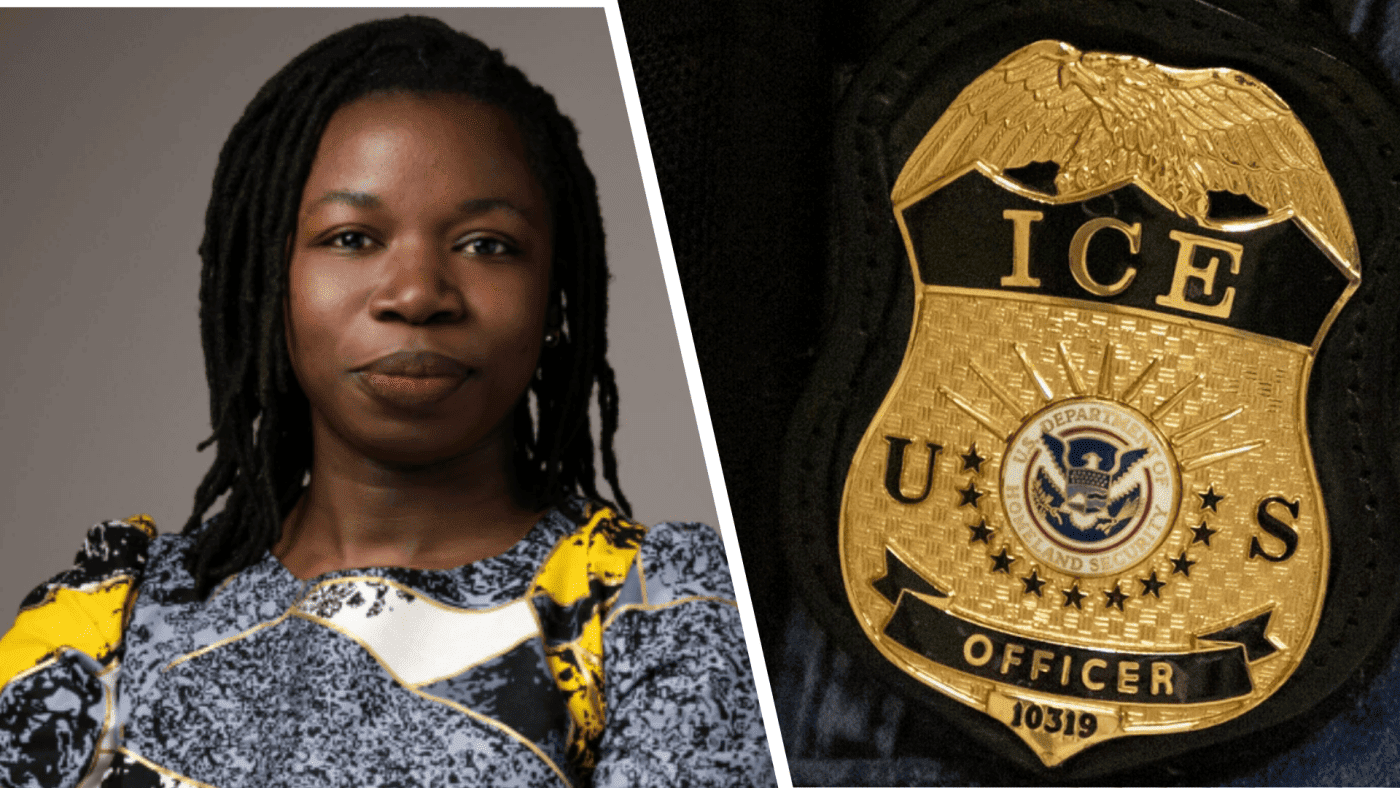
Federal immigration authorities detained a Johns Hopkins University researcher from Cameroon at Baltimore Washington International Airport this week, a move that underscores the Trump administration's intensified enforcement against visa overstays.
Ameaka Fatima Nkempu, an employee at the university's Bloomberg School of Public Health, was taken into custody by U.S. Immigration and Customs Enforcement (ICE) officers during a personal trip, according to university officials. The Department of Homeland Security (DHS) said Nkempu entered the U.S. on a visa in June 2023 that permitted her to stay legally until mid-June 2024. The agency alleges she overstayed that visa, a violation of federal immigration law, and she now faces deportation proceedings.
In a statement, DHS defended the arrest, noting that the agency offers immigrants in the country illegally a free flight home and a $2,600 check. “Being in detention is a choice,” the statement said, a line that critics have seized upon as dismissive of the circumstances many detainees face.
Johns Hopkins officials expressed “deep concern” over Nkempu's detention, describing her as a respected member of the academic community. The university said it is actively working to provide support, including ensuring access to legal representation. “The university understands the fear and concern this instills in members of our community,” the school said in a prepared statement, adding that Nkempu was traveling in a personal capacity.
The arrest comes as the Trump administration has surged ICE officers to at least 25 airports nationwide, part of a broader push to increase arrests. DHS has also entered into a data-sharing agreement with the Transportation Security Administration (TSA), making it easier for the agencies to identify individuals in the U.S. illegally, including those who have overstayed their visas. This enhanced coordination has already led to similar detentions, such as the Denver airport ICE detention of an Ecuadorian au pair that sparked public outcry.
The administration's aggressive enforcement posture has drawn sharp criticism from immigrant advocacy groups and some lawmakers, who argue that visa overstays are a civil violation, not a criminal offense, and that detaining academics and professionals disrupts research and international exchange. Meanwhile, supporters of the crackdown argue that enforcing immigration laws is essential to national security and the rule of law.
The case also highlights the broader political battle over immigration policy. The White House has pressed ICE to boost arrest numbers, and the agency has responded with visible operations at airports, which have become a flashpoint. The TSA data-sharing pact, which was reported this week, is expected to expand the government's ability to track visa overstays, raising concerns among civil liberties groups about privacy and due process.
For Johns Hopkins, the detention of a faculty member has sent shockwaves through the campus community. The university's statement emphasized its commitment to supporting Nkempu and all employees, while also acknowledging the anxiety such enforcement actions create. “We cannot comment on the specifics of her situation,” the statement read, “but we want to assure our community that the university is actively working to provide support.”
As the deportation case proceeds, Nkempu remains in ICE custody. The outcome could set a precedent for how the administration handles visa overstays among academics, a group that has traditionally been given some latitude. The broader context of the crackdown, including the administration's rhetoric on immigration, has been a central theme in political debates, with some officials, such as Trump and Miller warning about migrant surges, framing such enforcement as a necessary deterrent.
The situation is likely to intensify as ICE continues its operations. With the TSA data-sharing agreement now in place, more overstay cases are expected to surface, potentially leading to more arrests and further legal challenges. For now, Nkempu's case serves as a stark example of the administration's resolve to enforce immigration laws, even against highly educated professionals in the academic sector.