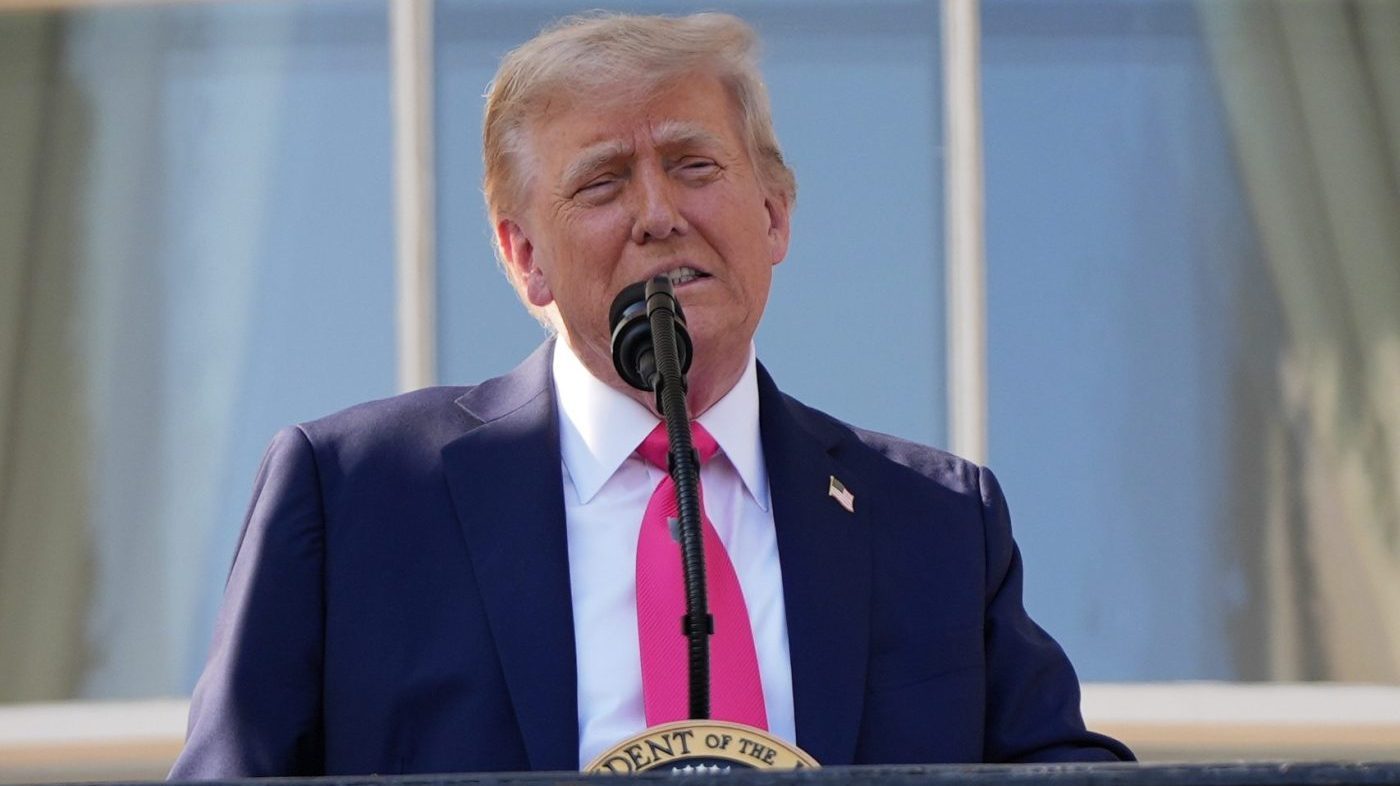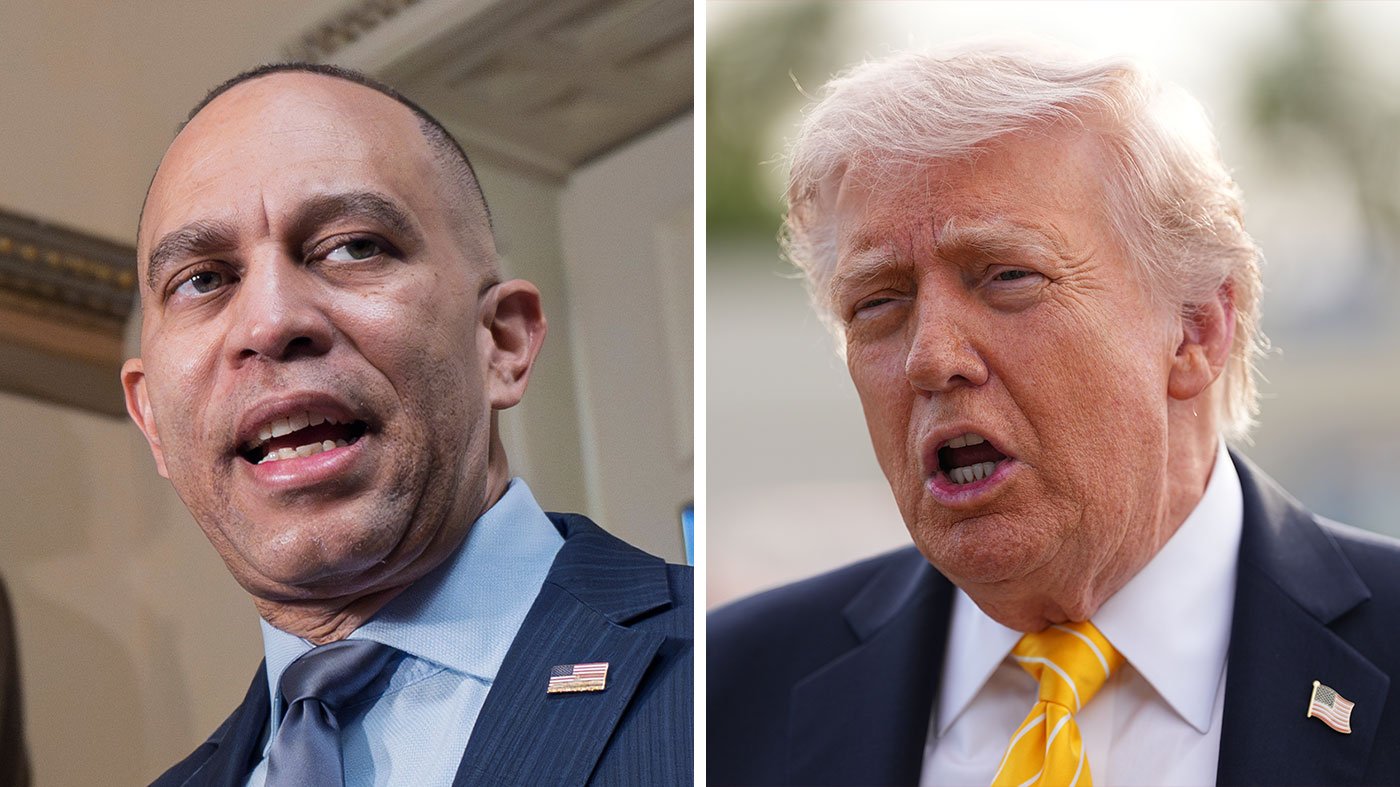
House Minority Leader Hakeem Jeffries (D-N.Y.) on Sunday cast sharp doubt on President Trump's assertion that a U.S.-Iran peace deal is imminent, accusing the president of repeatedly crying wolf. Appearing on NBC's Meet the Press, Jeffries said Trump has claimed a deal was close "38 or 39 different times" during the current conflict—only to see those predictions fall apart.
Trump administration officials have signaled that a final agreement could be signed as soon as Sunday, aiming to end hostilities, reopen the Strait of Hormuz, and set a timeline for dismantling Iran's nuclear program. But Jeffries, a key Democratic voice, was unimpressed. "Donald Trump has now said 38 or 39 different times during the course of this war that it was about to come to an end and an agreement was about to be reached. And that has never happened," he told host Kristen Welker.
Jeffries did not mince words about the broader situation, calling the conflict "a disaster" and arguing that Iran has actually emerged "stronger right now." He pointed to the 2015 Joint Comprehensive Plan of Action (JCPOA), the multilateral nuclear deal negotiated by the Obama administration, as a proven framework that Trump himself unraveled. "It was Donald Trump who made the decision to actually rip that agreement up because, apparently, he suffers from Obama derangement syndrome," Jeffries said. He noted that the JCPOA had brought together Britain, France, Germany, South Korea, India, Japan, China, and Russia to limit Iran's nuclear ambitions.
The push for a new deal has been complicated by contradictory signals from Tehran. Iranian Foreign Ministry spokesperson Esmail Baghaei told state media on Saturday that Iran would tread carefully, citing "the other side's inconsistency." Meanwhile, Qatari mediators traveled to Tehran on Sunday to help finalize terms, and Pakistani Prime Minister Shehbaz Sharif announced that his country—acting as an intermediary—is preparing for an electronic signing of the peace deal, followed by technical talks next week.
But the path to peace was jolted by Israeli airstrikes on Beirut, which Israel said were in response to three projectiles fired toward northern Israel. Trump urged Israel not to "blow" the emerging deal, while Defense Secretary Pete Hegseth downplayed the strikes' impact. Speaking on CBS's Face the Nation, Hegseth said, "Ultimately, obviously, we're attuned to what's happening with Hezbollah firing rockets into northern Israel, which they need to stop doing, and Iran needs to encourage them to stop doing that in very adamant ways, and Israel was very measured in its response, understanding that a deal is on the verge. So, I don't expect that to disrupt."
The flare-up follows Iran's own ballistic missile strikes on Israel last week, which came after Israeli attacks on Beirut. Iran accused the U.S. of violating a ceasefire due to the Israeli strikes on Lebanon—a ceasefire that is part of the broader halt in hostilities between Iran and the U.S. Trump urged restraint from Israel, while Iran claimed its missile barrage was a success. The situation underscores the fragility of any agreement, as regional tensions remain high and trust between the parties is thin.
As the Sunday deadline approaches, Jeffries' skepticism reflects a broader Democratic wariness of Trump's negotiating track record. The president's history of prematurely declaring victory in diplomatic efforts—from North Korea to Afghanistan—gives many on Capitol Hill pause. For now, the world watches whether this time will be different, or whether Trump's repeated predictions will once again fall short.
For more on the administration's defense priorities, see our coverage of Trump and Hegseth's push for a $350 billion Pentagon boost. And for the latest on the deal's prospects, read Moulton's blast of the Iran deal as a 'surrender document'.