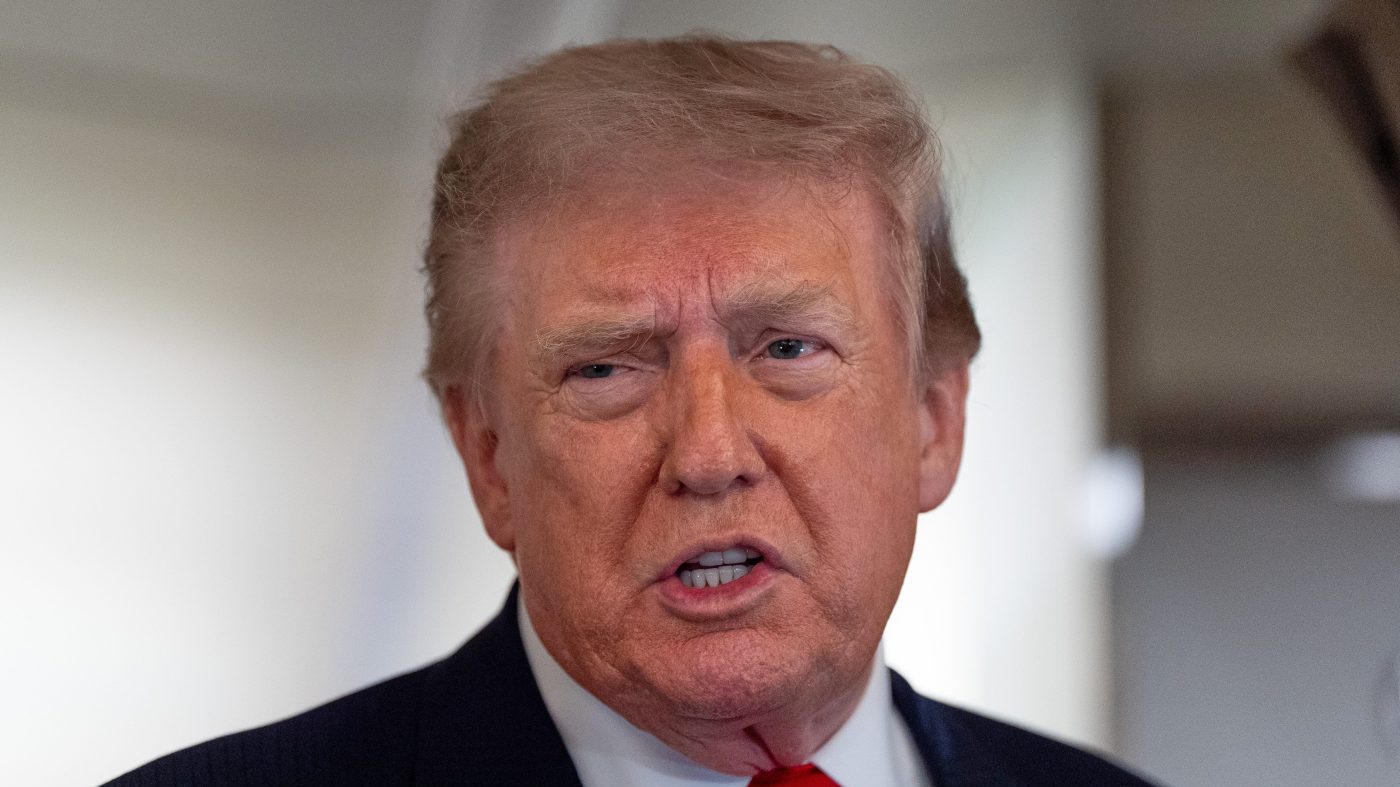
President Donald Trump escalated his war of words with Tehran on Wednesday, vowing to deliver a severe military response after Iran launched ballistic missiles at a U.S. base in Jordan. In an interview with Fox News, Trump said the United States would “beat the f—ing s— out of them,” adding that the attack would be met with overwhelming force. “They’re going to get a beating,” he declared.
The president’s comments came just hours after U.S. Central Command confirmed that Iran had fired a salvo of ballistic missiles at a base in Jordan on Tuesday evening. Centcom described the strike as a “surprise attack” but noted that all incoming missiles were intercepted and shot down. No casualties have been reported so far.
This incident marks the first publicly acknowledged Iranian attack on American forces since Trump announced a halt to U.S. airstrikes on Iran over the weekend. The president had ordered a pause in combat operations on Friday to make room for diplomatic talks between Washington and Tehran, a move that surprised many defense hawks in Congress who had been pushing for a more aggressive posture.
The timing of the missile attack is particularly notable, coming shortly after Trump met with Israeli Prime Minister Benjamin Netanyahu at the White House. The meeting had focused on regional security and the shared threat posed by Iran’s nuclear program and proxy forces.
Diplomatic Window or Military Escalation?
Trump had told reporters on Monday that Iran had requested a meeting with the U.S., signaling a potential opening for negotiations. However, Tuesday’s attack has thrown that possibility into doubt. The president’s latest threats suggest he may be pivoting back toward a military response, despite warnings from his own advisers about the risks of expanding the conflict.
Earlier this month, Trump was reportedly considering major combat operations against Iran, backed by defense hawks in Congress. But he ultimately pulled back after advisers cautioned that U.S. stockpiles were dwindling and that a wider war could destabilize the region further. The decision to pause strikes had been seen as a victory for more cautious elements within the administration.
The attack in Jordan also follows a pattern of escalating tit-for-tat strikes between U.S. forces and Iran-backed militias in the Middle East. Just last week, US and Saudi forces hit Iran-backed militias in Iraq, causing oil prices to surge. That operation had been part of a broader campaign to degrade Iranian proxy capabilities.
Political Fallout at Home
Trump’s bellicose rhetoric comes at a time when his approval ratings are already under pressure. According to a recent Economist/YouGov poll, Trump approval sinks to a new low as the midterm elections loom, with voters increasingly concerned about foreign policy and the economy.
Some critics have seized on the contradiction between Trump’s diplomatic overtures and his threats of violence. Activist Alex Jones, for instance, has flipped the script and urged Congress to impeach Trump over the Iran war, arguing that the president’s erratic approach risks dragging the U.S. into an unnecessary conflict.
Meanwhile, the Pentagon has not yet announced any new strikes in response to the Jordan attack. Military officials are reportedly weighing options, including targeted strikes against Iranian missile sites or proxy forces in Iraq and Syria. The situation remains fluid, with the potential for further escalation in the coming days.
For now, Trump’s vow to “beat the f—ing s— out of Iran” underscores the volatile nature of U.S.-Iran relations, as the region braces for what could be a new phase of confrontation.

