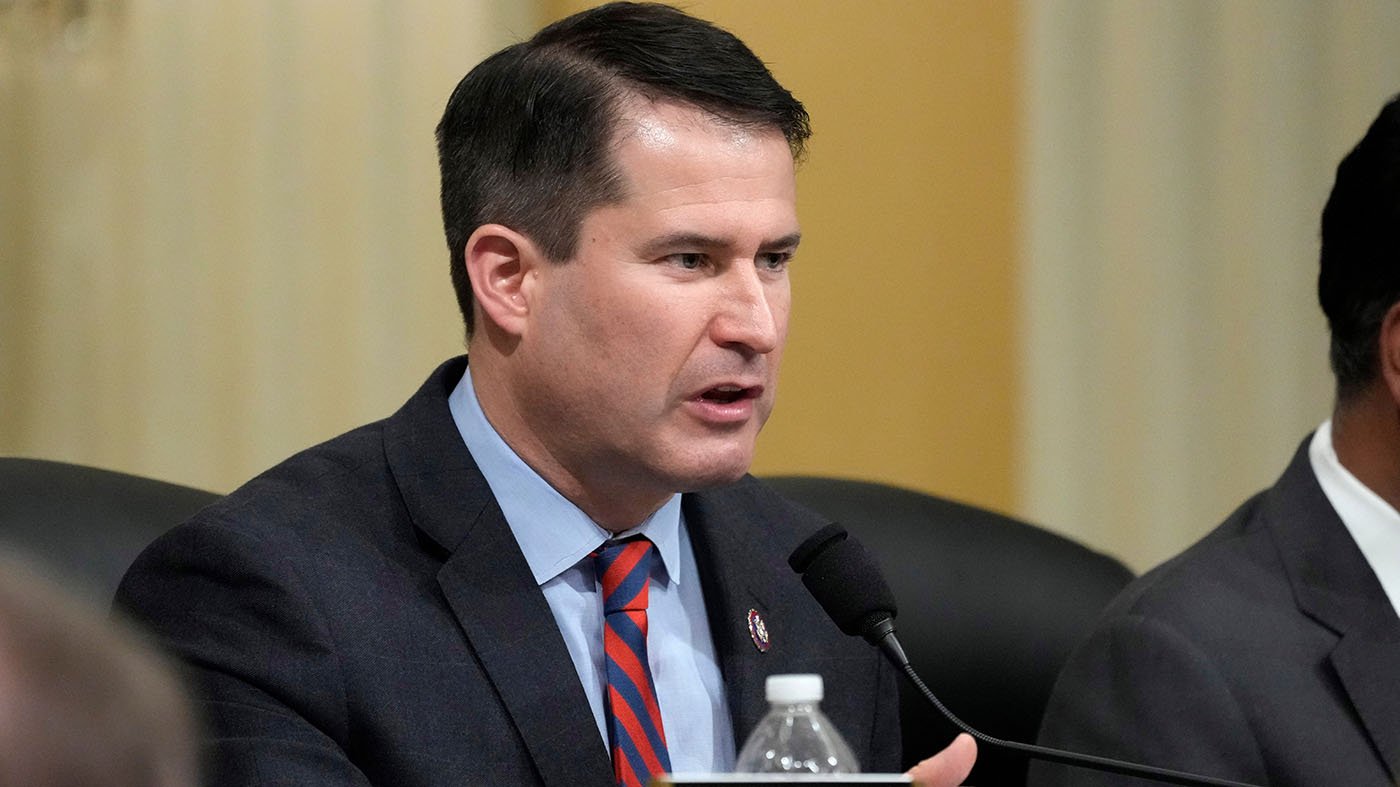
Democratic Representative Seth Moulton of Massachusetts, a member of the House Armed Services Committee, launched a sharp critique of the emerging U.S.-Iran peace framework, calling it a capitulation to Tehran. Speaking on MS NOW Saturday, Moulton labeled the agreement a 'terrible deal' and 'basically a surrender document from Donald Trump to the supreme leader of Iran.'
President Trump announced Friday that the U.S. and Iran would sign a peace framework on Sunday, aimed at reopening the Strait of Hormuz and curbing Iran's nuclear ambitions. However, Moulton questioned the strategic value of the deal, highlighting the steep costs of the conflict. 'I mean, $100 billion of taxpayer money already put into this war, 14 Americans dead, and we get a deal that just reopens the strait that was already open before he started the war? How is that a win?' he asked.
According to a senior U.S. official, the framework includes provisions to block Iran's nuclear development and restore access to the Strait of Hormuz, a critical oil shipping route. Trump confirmed the Sunday signing, after which the strait would reopen 'immediately.' Pakistan, which has mediated the talks, stated the deal would be signed electronically, followed by technical-level negotiations next week.
Moulton dismissed the announcement as a hollow victory. 'This is just lose, lose, lose across the board for Trump and the United States of America,' he said. Yet he acknowledged the necessity of ending the conflict: 'I will still say that stopping this war and getting out of it is the best that we can do at this point. So that's why we are still hoping for a deal, even though we have to admit it's a losing deal for America.'
The congressman also noted Trump's history of teasing imminent deals with Iran, calling it a pattern. 'It really sounds like Donald Trump wants a deal. It sounds like the Iranians are pretty content dragging out negotiations because guess what? They have a stranglehold on the world economy by closing the strait,' he said.
Complicating the timeline, Iranian Foreign Ministry spokesperson Esmaeil Baghaei offered a different perspective, telling Iran's Tasnim News Agency that the signing would 'not be tomorrow.' He added, 'The possibility that it will happen in the coming days is not ruled out. However, due to the other party's instability, we must be cautious about any statements regarding this process.' The mixed signals from Tehran underscore the fragility of the talks.
The deal has drawn comparisons to previous U.S.-Iran negotiations, including the Obama-era JCPOA, which Trump has repeatedly criticized. As Trump announced the Sunday signing, he slammed the Obama administration's approach, but Moulton's comments suggest deep skepticism within his own party.
Meanwhile, the humanitarian and economic toll of the conflict continues to mount. The war has strained U.S. resources and global energy markets, with the Strait of Hormuz closure driving up oil prices. Moulton's critique echoes broader concerns about the administration's strategy, as Tucker Carlson previously slammed Trump's war sales pitch, labeling it an 'all-you-can-eat buffet' of military intervention.
As the Sunday signing approaches, the gap between U.S. and Iranian narratives remains wide. For Moulton and other critics, the deal represents a costly retreat rather than a diplomatic triumph. 'It's a losing deal for America,' he reiterated, underscoring the political fallout that may follow.