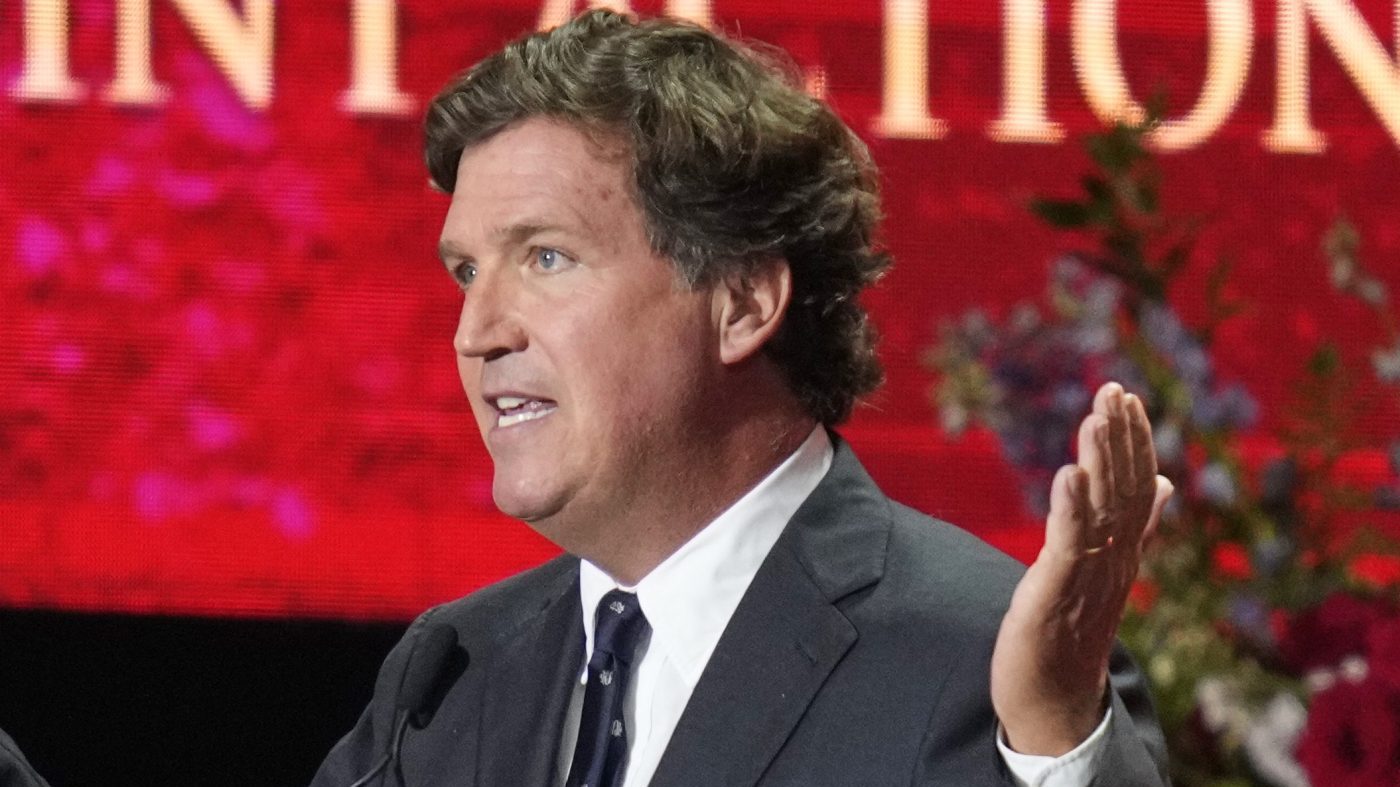
Conservative commentator Tucker Carlson is taking President Donald Trump to task over the administration's handling of the military campaign in the Middle East, accusing the commander-in-chief of overselling the conflict to the American public. In a recent episode of his podcast, Carlson argued that the war has actually strengthened Iran's position in a key strategic waterway.
“As of right now, Iran controls the Strait of Hormuz. It did not when this war began. Now it does,” Carlson said. “So, what do we learn from this? Well, we learned that President Trump is not a great diplomat.”
The former Fox News host, who once campaigned for Trump during the 2024 election, compared the president's sales pitch to an “all-you-can-eat buffet in Atlantic City.” He accused Trump of overpromising and underdelivering on the conflict, which has dragged on for months with no clear resolution.
“It’s tempting to kind of lay all the blame at Trump’s feet, and on one level it is all his fault. He decided to do this,” Carlson said. “Whatever pressures he faced, it was his decision, and he has oversold America’s position in this and he is, in some very real way, not good at this.”
The criticism marks a sharp turn for Carlson, who was once a staunch ally of the president. Since the U.S. launched operations against Iran and its proxies earlier this year, the pundit has repeatedly blasted Trump, suggesting that Israeli influence is driving White House decisions. Some allies, like Representative Marjorie Taylor Greene, have also voiced frustration with the administration's shift away from its anti-war stance.
Trump has claimed multiple times that he is close to a diplomatic breakthrough with Tehran. On Thursday, he said he called off a planned round of strikes after reaching a “great settlement” with Iran—a statement he has reportedly made more than two dozen times since the conflict began. Iranian officials have cast doubt on those assertions, leaving the administration's narrative under scrutiny.
Carlson seized on that pattern, questioning the president's credibility as a negotiator. “What we’re really learning is not simply that Trump is a spotty commander-in-chief and certainly no diplomat and obviously not a dealmaker,” he said. “If you announce a deal 38 times and it doesn’t materialize, you’re not a dealmaker.”
The pundit went further, framing the conflict as a broader lesson about American power. “What we’re beginning to understand, unfortunately for the rest of us, are not just the limits of Trump, but the limits of American power,” he added.
Carlson's critique reflects growing unease among some conservative voices about the trajectory of the war and the administration's strategy. Even within the Republican Party, there is resistance to Trump's push for additional military funding, signaling that the president's handling of the conflict is becoming a political liability.

