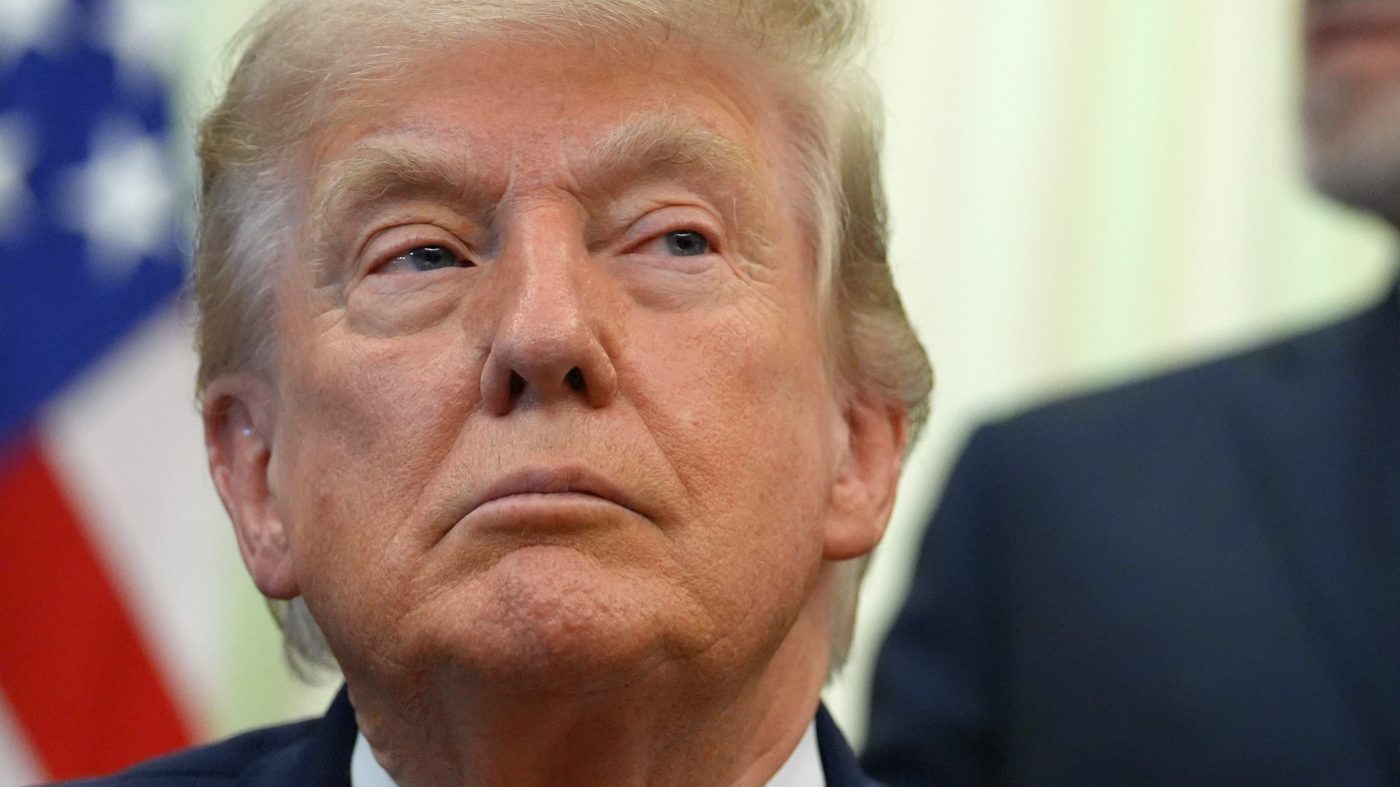
President Donald Trump announced Saturday that a new framework for a peace agreement with Iran is set to be signed on Sunday, marking a sharp departure from the Obama administration's approach to Tehran. In a post on Truth Social, Trump declared, “The Deal is scheduled to get signed tomorrow,” asserting that his administration has cultivated a “much different and better” relationship with Iran than previous ones.
Trump expressed optimism about the process, writing, “Hopefully, this process will all work out quickly, easily, and smoothly.” However, he also issued a veiled threat: “If it doesn’t, we have the ultimate alternative, hopefully never to be used again!” The president added that the Strait of Hormuz, a critical oil shipping route disrupted by regional tensions, would reopen “immediately” after the signing.
The announcement follows a statement from Pakistani Prime Minister Shehbaz Sharif, who has been mediating the talks. Sharif said Saturday that an agreement would be finalized “in the next 24 hours” and that Pakistan is preparing for a formal signing ceremony. He noted that “technical level talks” would commence next week, expressing confidence that the deal would “form a strong foundation for lasting peace.”
But the timeline is already contested. Iranian Foreign Ministry spokesperson Esmaeil Baghaei told state media that the signing will “not be tomorrow,” though he did not rule out an agreement in the coming days. “Due to the other party’s instability, we must be cautious about any statements regarding this process,” Baghaei said, according to Reuters. This discrepancy highlights the fragility of the negotiations and the distrust that persists between the two nations.
Trump used the announcement to attack the Joint Comprehensive Plan of Action (JCPOA), the 2015 nuclear deal brokered under President Barack Obama. He called the JCPOA “an easy, beautiful, smooth road to a Nuclear Weapon,” contrasting it with his own accord, which he described as “A WALL TO NO NUCLEAR WEAPON!” Trump claimed that Tehran “no longer want[s] a Nuclear Weapon,” a statement that runs counter to intelligence assessments and Iran’s history of nuclear ambitions.
The president also sought to dispel reports that the deal includes a financial component. “No money will exchange hands,” Trump insisted, pushing back against leaked reports from Tehran officials suggesting a rebuilding fund for Iran. He outlined a plan for the eventual destruction of nuclear material, saying, “At the appropriate time, when all is calm, we will go in and get the Nuclear Dust, buried deep under the powerful sunken granite mountains, thanks to our beautiful B-2 Bombers and their brilliant pilots, and downblend and destroy it, whether in Iran, or the United States.”
Trump’s aggressive rhetoric and shifting timelines have drawn scrutiny from critics who question the deal’s viability. Some analysts point to his administration’s broader foreign policy challenges, including ongoing disputes with allies and internal divisions. For example, Joe Rogan recently criticized Trump’s handling of Iran, while House conservatives are pushing to enshrine Trump border policies into law, reflecting the polarized political landscape.
The president concluded with a forward-looking statement: “We look forward to working with Iran, and the entire Middle East, long into the future.” Whether Sunday’s signing will materialize as promised remains uncertain, but the announcement has already reshaped the debate over U.S.-Iran relations, drawing sharp lines between Trump’s approach and that of his predecessor.