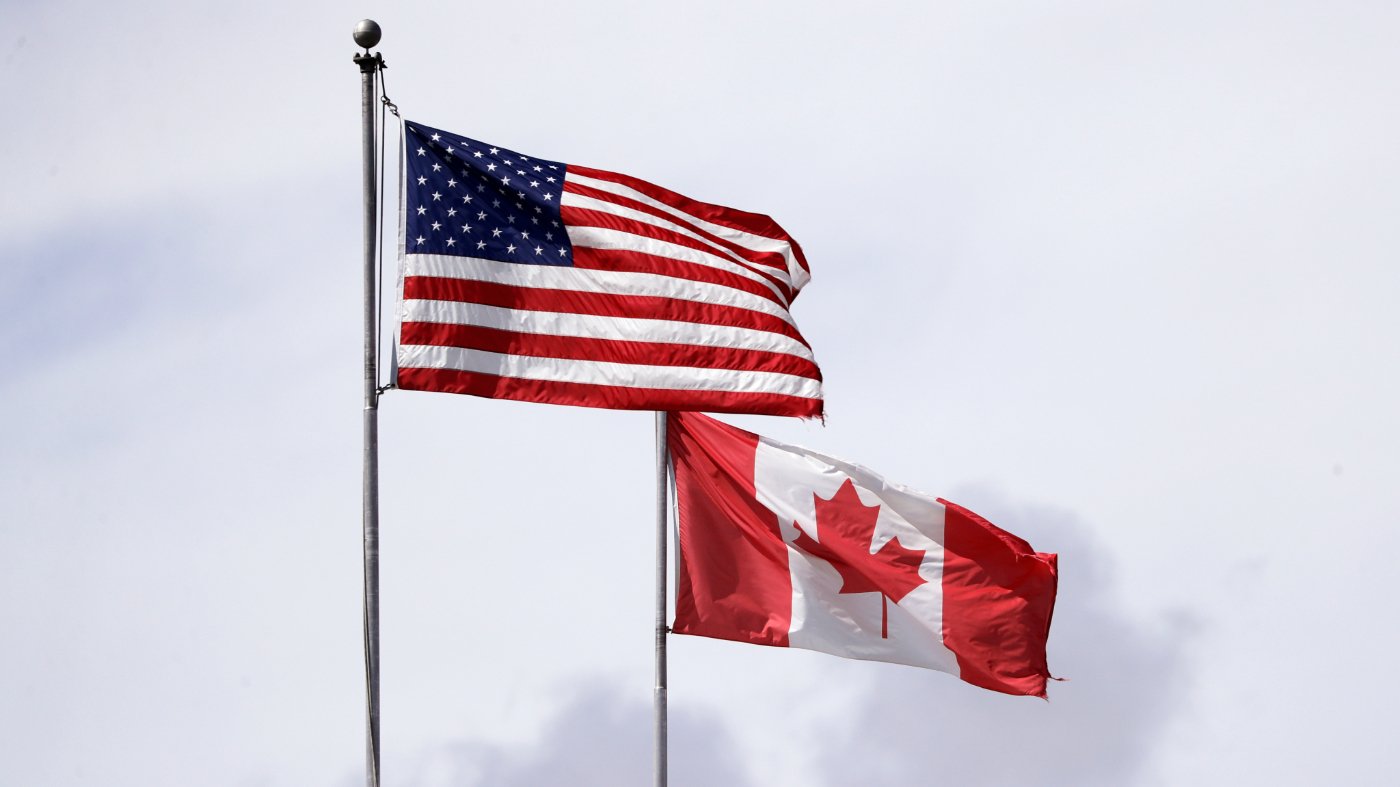
Canadian spending on trips to the United States plummeted by $3.3 billion last year, according to new data from Statistics Canada, as the Trump administration's tariff policies and political friction reshaped cross-border travel patterns.
Total spending by Canadian visitors in the US reached $18.8 billion in 2025, a sharp decline from the previous year. The drop was most pronounced in leisure travel, which fell by $2.2 billion, even as Canadians increased their international leisure spending by $3.6 billion, redirecting trips to other destinations.

Family-related travel to the US also contracted, though at a slower pace than leisure. The report noted that the pullback deepened as the year wore on, hitting its lowest point in July, when border crossings were nearly one-third below the same month in 2024. By late 2025, return crossings stabilized at roughly 25 percent below 2024 levels.
Statistics Canada described the figures as the lowest number of border crossings since 1972, when digital recordkeeping for the Frontier Counts program began, excluding the pandemic period. The agency noted that year-over-year declines exceeding 30 percent had previously only been recorded after the September 11, 2001 terrorist attacks.
Canadian residents returning from the US dropped by more than 70 percent from December 2024 to December 2025, underscoring the scale of the shift.
The downturn coincided with President Trump's imposition of a 25 percent tariff on Canadian goods under the International Emergency Economic Powers Act early in his second term, citing border security and fentanyl concerns. USMCA-compliant goods were largely exempt, but additional levies included a 10 percent tax on energy and potash, as well as tariffs on timber, lumber, and certain vehicle parts.
Most tariffs were later overturned by a Supreme Court ruling in February, which found that Trump had exceeded his executive authority. But the damage to consumer and business sentiment had already rippled through the economy, fueling uncertainty that dampened travel demand. Trump has since threatened new tariffs over wildfire smoke affecting Michigan and has repeatedly made provocative comments about Canada becoming the “51st state.”
The travel slump has begun to ease modestly in recent months, as Canadian and US officials launch an ad campaign aimed at repairing relations, according to CBC reports. However, the broader political climate remains strained, with Trump's ongoing tariff threats and his dismissal of Senate filibuster rules for voting legislation adding to the tensions.
The data highlights how trade disputes and political rhetoric can have concrete economic consequences, reshaping longstanding travel habits between the two countries.