Israel’s Foreign Ministry on Friday sharply criticized the Nobel Peace Prize committee for awarding this year’s honor to Navi Pillay, the former International Criminal Court (ICC) judge who led a United Nations inquiry that accused Israel of genocide in Gaza. In a blistering social media post, the ministry described the decision as a “grotesque weaponization” of the prestigious award.
“If there were an award for lies, hatred, and blood libels, Navi Pillay wouldn’t just be a contender. She’d be a frontrunner. Her role in the relentless, politically motivated demonization of Israel and promotion of the genoLIE speaks volumes,” the ministry wrote. “Awarding Pillay the Nobel Peace Prize isn’t a recognition of justice. It’s the grotesque weaponization of an award to legitimize anti-Israel hatred and prejudice.”
Pillay, who previously served as the UN High Commissioner for Human Rights, was recognized for her contributions to expanding the scope and impact of international law. But her recent work has drawn intense criticism from Israeli officials. In September, a team of independent experts commissioned by the UN Human Rights Council, which Pillay oversaw, concluded that “the Israeli authorities and Israeli security forces have the genocidal intent to destroy, in whole or in part, the Palestinians in the Gaza Strip.”
“The Commission finds that Israel is responsible for the commission of genocide in Gaza,” Pillay said in a statement accompanying the report.
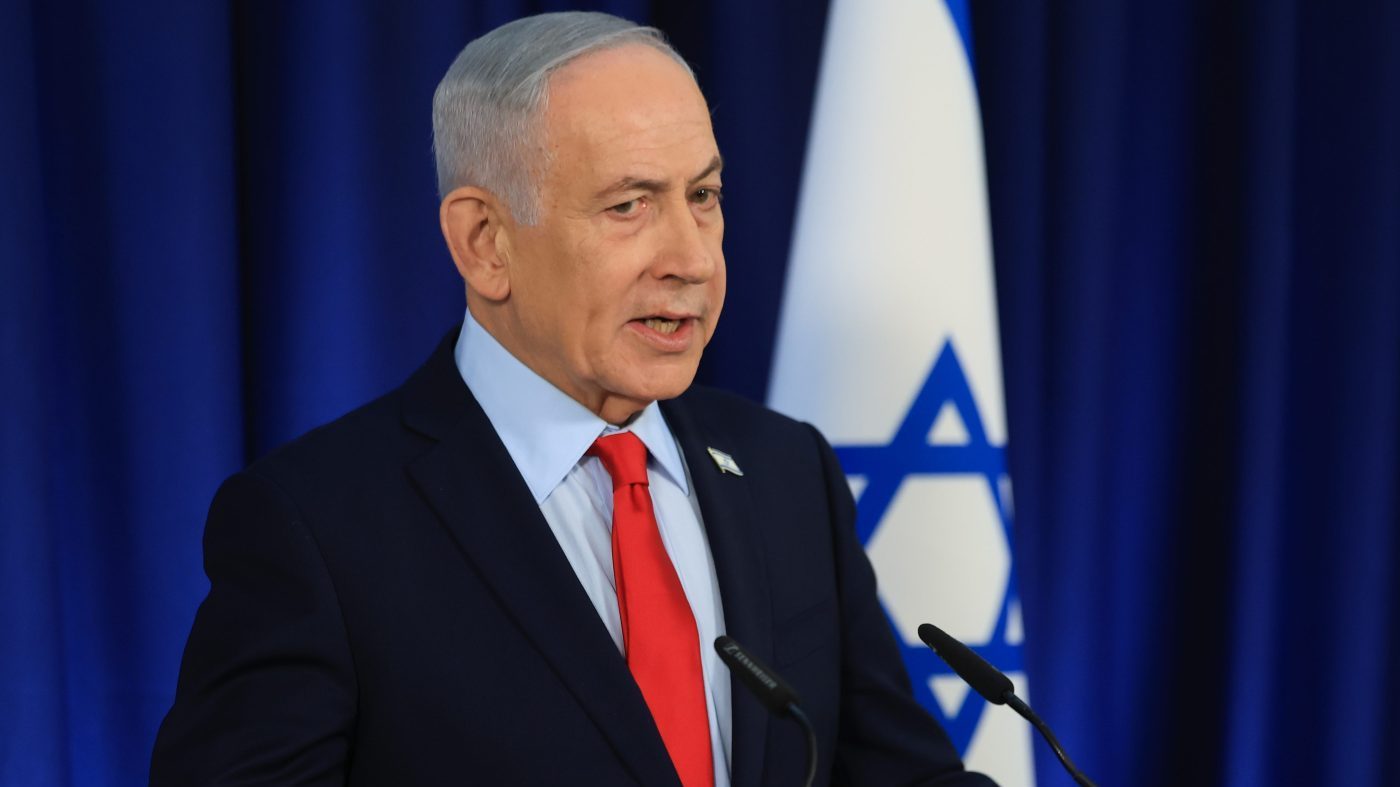
Israeli Prime Minister Benjamin Netanyahu also weighed in, accusing the Nobel committee of having “lost its moral compass.” In a social media post, he said the prize had been given to “a bigot who built her career around inventing and propagating blood libels against the one and only Jewish state.” Netanyahu further claimed that Pillay’s “proudest achievement was to legitimize a corrupt prosecutor,” a reference to former ICC chief prosecutor Karim Khan.
Khan was removed from his post after allegations of sexual misconduct from a female aide surfaced. The court’s 125 member states voted to oust him, and the allegations became intertwined with the ICC’s investigation into the Gaza war, according to experts quoted by The Associated Press.
The Nobel announcement came just hours before the United States imposed sanctions on the ICC, which has sought to pursue war crimes cases against the Trump administration, American military personnel, and Israel. ICC President Tomoko Akane, who was sanctioned by the Trump administration in August, said the court would continue its work investigating and prosecuting war crimes and crimes against humanity.
This is not the first time Pillay has clashed with Israeli officials. Her recent remarks have also drawn attention from Washington, where her criticism of US policy has been noted. Meanwhile, the broader diplomatic fallout continues, with some analysts suggesting that a Saudi-Israel normalization deal may be further complicated by such disputes.
The Israeli Foreign Ministry’s condemnation reflects a deepening rift between Jerusalem and international legal bodies, a trend that has been exacerbated by the ICC’s investigations and the UN’s findings. As the world reacts to the Nobel committee’s decision, the controversy underscores the growing polarization over how international law is applied to the Israeli-Palestinian conflict.