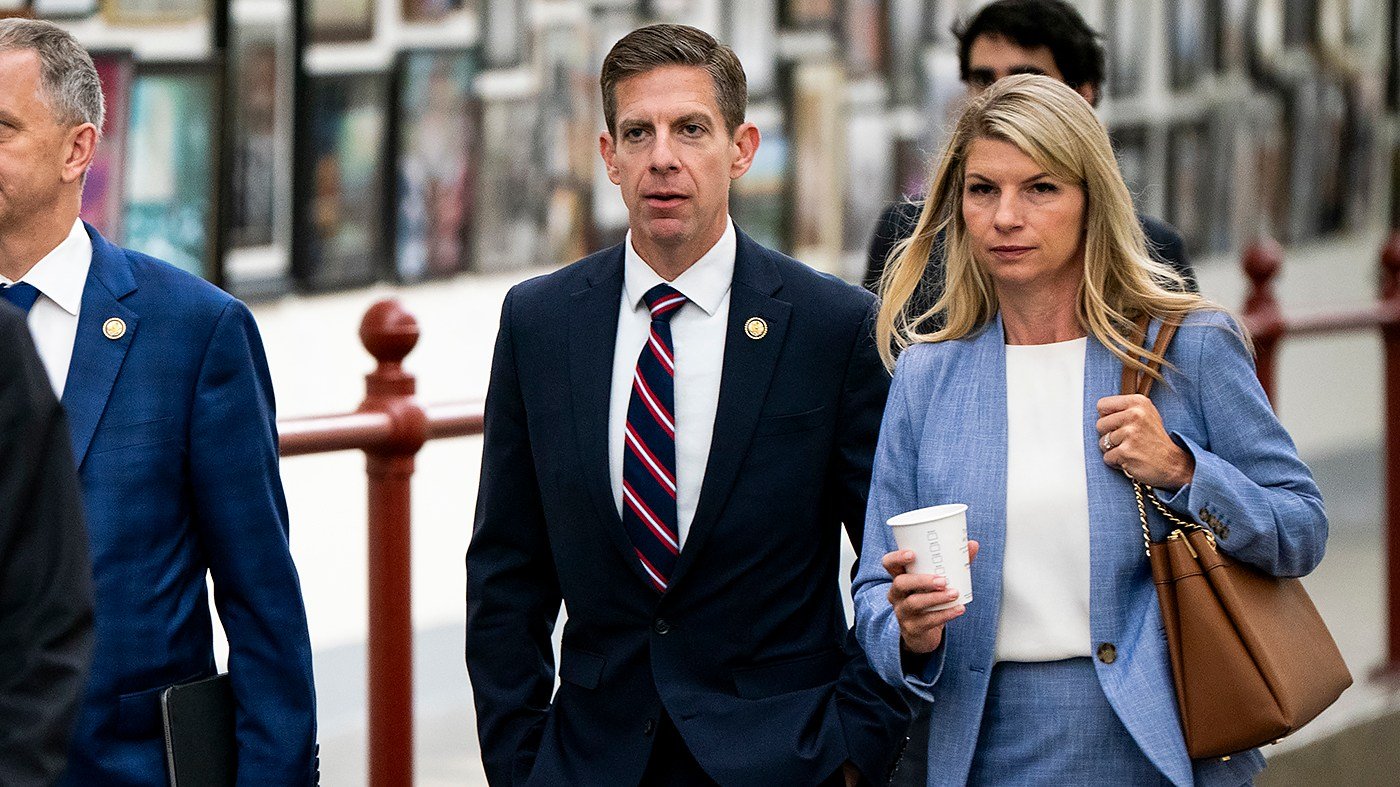
Rep. Mike Levin (D-Calif.) announced Monday that he will vote against the Senate-passed Bipartisan American Affordability and Jobs Act (BAAJA), a sweeping permitting reform bill aimed at accelerating energy and infrastructure projects nationwide. Levin, a prominent clean energy advocate, acknowledged the bill's potential benefits but argued that its costs to environmental protections and tribal rights are too high.
In a statement, Levin said the bill "would modernize a power grid that too often can't carry affordable clean energy to the homes that need it, and it would require data centers to pay for their own grid upgrades instead of passing the cost on to families." He also noted "real promise on costs and clean energy deployment."

However, Levin detailed several objections. He said the bill would limit "California's ability to protect its own water, weaken the science behind endangered species decisions, and keep courts from halting a project even when an agency skips the review the law requires." He also pointed to President Trump's approvals for offshore leases, arguing that BAAJA would make it "extremely hard" for future administrations to reverse such decisions.
"For those of us who have spent years fighting to keep new oil rigs off the California coast, that's a serious threat," Levin said. He also echoed concerns raised by tribal nations, stating that changes to historic preservation law "could endanger sacred sites and undercut Tribal sovereignty."
Levin emphasized that the bill's harms would be permanent, while its clean energy gains are uncertain. "Those harms would be permanent, while the clean energy gains would rise or fall with whoever happens to be carrying out the law," he said, adding that the bill risks "giving up protections we may never win back in exchange for gains that aren't guaranteed either."
Despite his opposition, Levin left the door open for negotiation. "There's still time to get this right. If House and Senate leaders from both parties sit down together and negotiate sufficient changes, I'll be ready to vote yes," he said. Levin represents California's 49th Congressional District, spanning northern San Diego and southern Orange counties.
Rep. Sean Casten (D-Ill.) echoed Levin's concerns, noting the two have worked "extensively on this issue." Casten argued that the country "does not struggle to build data centers or gas pipelines" but rather struggles to build cheaper, cleaner energy sources that are blocked by incumbent interests. He insisted that BAAJA's "problems ... can be fixed."
The Senate passed BAAJA 62-33 last Thursday, with bipartisan support. The bill was spearheaded by Sens. Shelley Moore Capito (R-W.Va.), Mike Lee (R-Utah), Martin Heinrich (D-N.M.), and Sheldon Whitehouse (D-R.I.). Only two Republicans—Mike Rounds (R-S.D.) and Josh Hawley (R-Mo.)—voted against it, while 15 Democrats joined in favor.
Opponents argue the measure would bolster fossil fuels and mining, loosen environmental laws, and limit legal challenges to projects. Supporters counter that it will boost the economy, speed up infrastructure upgrades, and help lower emissions. The bill now faces a crowded lame-duck calendar, with potential government funding fights and other legislative priorities competing for attention.