Israel announced Wednesday that it had killed Mohammed Odeh, the newly appointed commander of Hamas' military wing, in an airstrike on Gaza City. The operation came less than two weeks after Israeli forces eliminated his predecessor, Izz al-Din al-Haddad, on May 16.
Israeli Defense Minister Israel Katz confirmed the strike, describing Odeh as one of the key architects of the October 7, 2023, assault that triggered the ongoing war. Katz wrote on X: “We pledged to eliminate everyone who led the October 7 massacre and this is what we will do: they are all bound to die, everywhere. We pledged that Hamas will not hold civilian or military rule.”

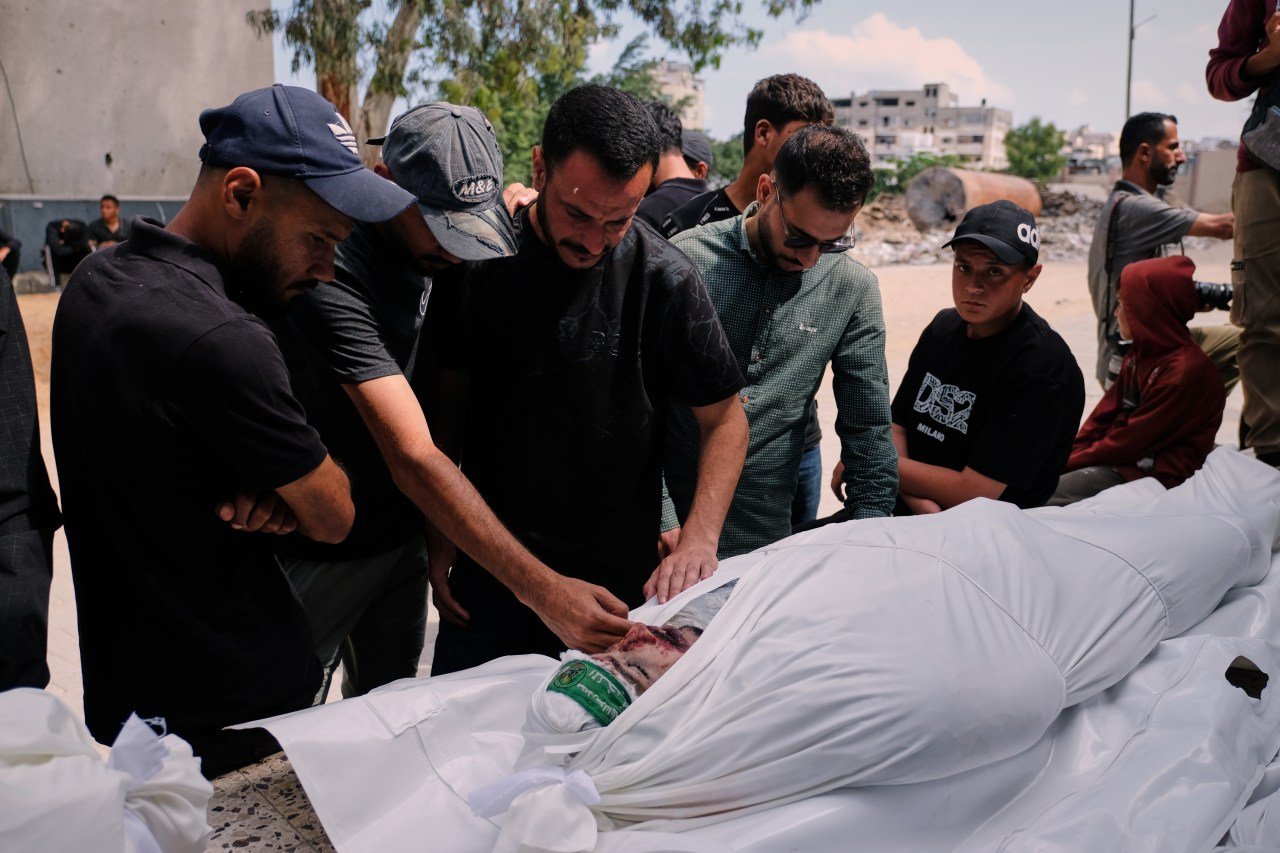
The attack on Tuesday struck a market in Gaza City, killing at least five people, including Odeh, his wife, son, daughter, and another woman, according to local hospitals. Twelve others were injured. The timing—on the eve of Eid al-Adha, one of Islam's holiest holidays—added a layer of grim symbolism to the violence.
On Wednesday, thousands gathered in Gaza City for a joint funeral procession. Mourners wrapped the four bodies in green Hamas flags, marching from a mosque through the city while chanting and firing shots into the air. Some carried posters of Odeh bearing the words “one of the chiefs of staffs of the Qassam Brigades,” a reference to Hamas' military wing.
Prime Minister Benjamin Netanyahu, who is gearing up for fall elections, echoed Katz's threats, vowing to target everyone involved in the October 7 attack. The Israeli offensive, launched in response to that assault—which killed some 1,200 people and took 251 hostages—has devastated Gaza. The Palestinian Health Ministry, part of Gaza's Hamas-run government, reports over 72,803 Palestinian deaths, though it does not differentiate between civilians and combatants.
The fragile ceasefire reached in October remains tenuous. Since it took effect, Israeli attacks have killed more than 880 Palestinians, according to Palestinian officials. Israel claims its strikes target Hamas violations or threats to soldiers, but civilians have died. Four Israeli soldiers have also been killed in Gaza during this period. For context on broader regional dynamics, some Democratic lawmakers have criticized the administration's Israel policy, urging conditions on arms transfers.
Eid al-Adha, normally a time of family gatherings and gift-giving, was muted across Gaza. Around 90% of the enclave's more than 2 million residents are displaced, living in tent camps plagued by rats and sewage, dependent on aid. “This is not Eid … we’re dead,” said Mahmoud Saqer, a displaced man from Khan Younis. In Gaza City and Khan Younis, amid rubble and ruined mosques, worshippers gathered for prayers with few signs of celebration beyond a few balloons. “There’s no Eid. My children were killed. Eid is only for the people who lost no one,” said Ayda Al-Banna, a displaced woman from Gaza City, who prayed with her granddaughter.
The strike on Odeh underscores Israel's stated policy of systematically targeting Hamas leadership, even as the war's human toll mounts. As the region grapples with these developments, senators have also blasted the Iran deal and questioned military strategy. With no end in sight, both sides remain locked in a cycle of killing and retaliation that shows no sign of breaking.