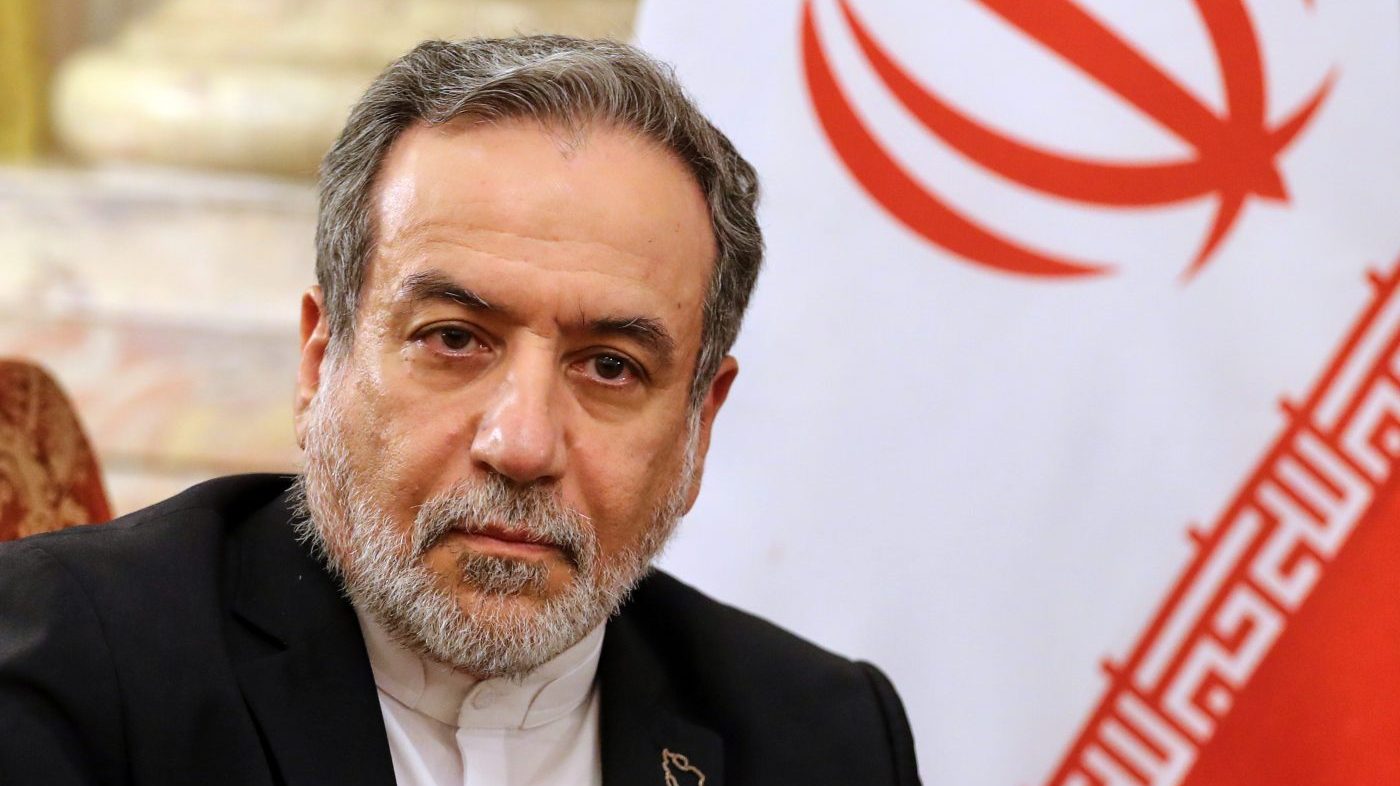
Iranian Foreign Minister Abbas Araghchi issued a sharp rebuke Thursday to President Trump's threat to use military force to take Iran "back to the Stone Age," highlighting the central role of energy resources in the escalating conflict. Araghchi's response came via social media following the president's televised address outlining continued U.S. military operations against the Islamic Republic.
"There is one critical distinction between now and the Stone Age: no oil or gas was being extracted from the Middle East then," Araghchi wrote. He posed a direct question to the U.S. administration: "Are the President and the Americans who elected him certain they wish to reverse time?" The comment underscores how Iran's vast energy infrastructure has become a focal point in the standoff.

The exchange follows a series of joint U.S.-Israeli strikes in late February that reportedly killed Iranian Supreme Leader Ayatollah Ali Khamenei and other senior officials in Tehran. These operations occurred alongside stalled negotiations over Iran's nuclear program. Analysts view the military campaign as part of a broader strategy by the Trump administration to leverage American power to secure foreign natural resources.
President Trump has been explicit about this objective. In a recent interview with the Financial Times, he stated, "Frankly, I'd love to take Iran's oil, but some foolish people here ask, 'Why would you do that?' They're foolish." This sentiment was echoed in his Wednesday address, where he threatened to cripple Iran's power grid if a peace agreement is not swiftly concluded. "If there's no deal, we will strike every one of their electricity plants hard, likely all at once," Trump warned.
Iran has retaliated with attacks on U.S. military installations and energy assets across the Persian Gulf. Last week, the Islamic Revolutionary Guard Corps expanded its threat matrix, warning it could target U.S. university campuses and technology company operations in the Middle East.
In a separate social media post, Araghchi condemned an alleged U.S.-Israeli attack on a civilian bridge in Iran. President Trump had previously posted a video on his Truth Social platform appearing to show a strike on the same structure, which he labeled "the biggest bridge in Iran." Araghchi argued that such tactics are counterproductive. "Attacking civilian structures, even unfinished bridges, will not force Iran to capitulate," he said. "It only reveals an adversary's defeat and moral bankruptcy. We will rebuild every bridge and building stronger. What cannot be restored is the damage to America's global reputation."
The escalating rhetoric and military action have drawn criticism from some U.S. political figures. For instance, former National Security Advisor John Bolton has characterized Trump's changing deadlines on Iran as a demonstration of weakness, while Senator Bernie Sanders has called for congressional intervention following the president's threats.
The situation remains volatile, with Israeli forces recently striking a major Iranian petrochemical plant as Trump's ultimatum approaches. The administration's aggressive posture continues to shape a high-stakes confrontation where energy security and military strategy are inextricably linked, with global markets watching closely for any disruption to the flow of resources from the region.