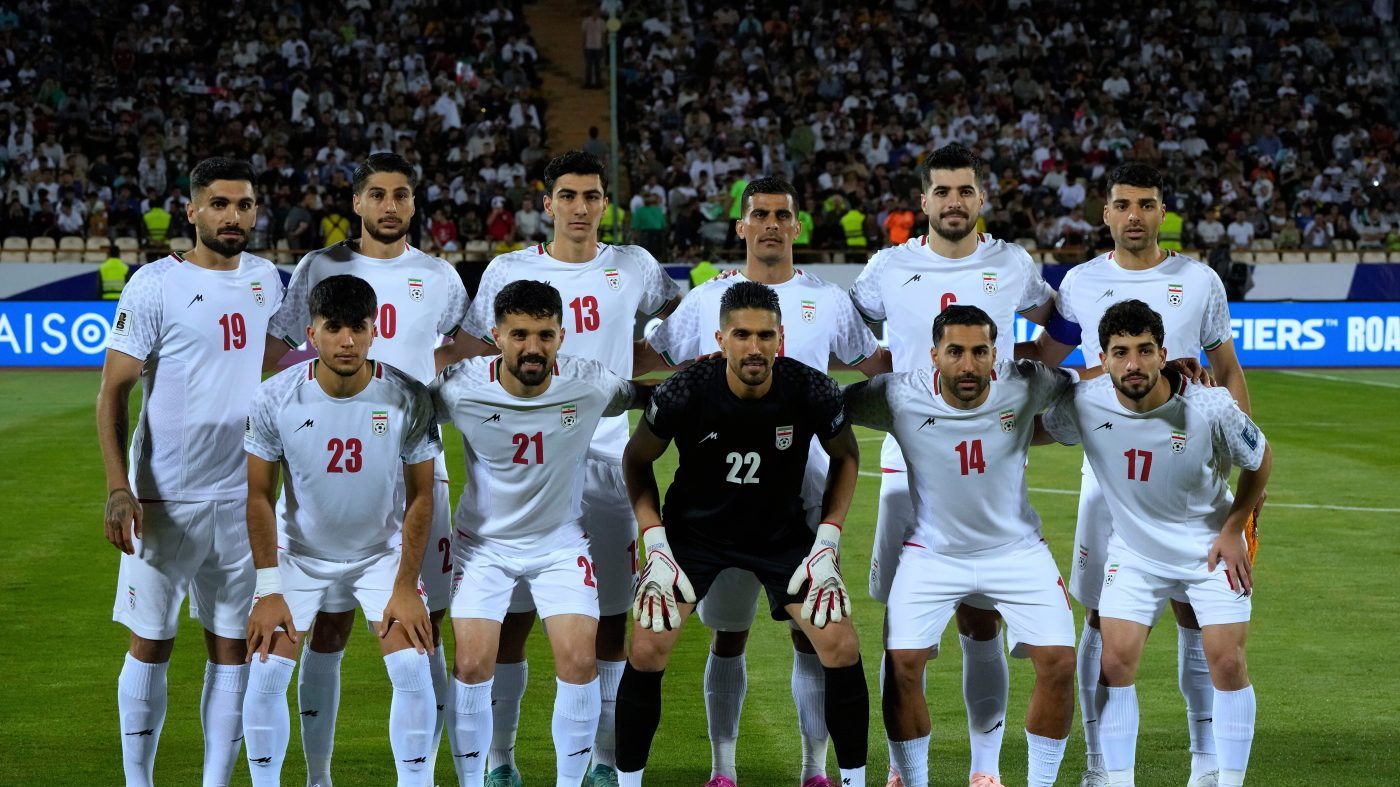
The Iranian national soccer team was forced to depart the United States shortly after their 2-2 draw against New Zealand in the World Cup opener on Monday, according to head coach Amir Ghalenoei. The directive came without allowing players time to recover, adding a layer of political tension to an already fraught tournament.
Speaking through an interpreter, Ghalenoei told the Associated Press that officials told the team to leave immediately after the match. “It’s very important for us to have time for recovery, but we are asked to get on a plane and return to our camp in Tijuana, and we are really troubled by that,” he said. The coach did not specify which authorities issued the order.
The team is based in Tijuana, Mexico, just a short flight from Southern California, where they played Monday and will face Belgium on Sunday. The quick turnaround threatens to disrupt their preparation for the second group-stage match against the world’s 10th-ranked team.
This development unfolds against the backdrop of a tentative US-Iran ceasefire agreement that may be nearing completion. Andrew Giuliani, President Trump’s World Cup czar, had earlier described the US allowing the Iranian team to enter the country early as a “goodwill gesture.” In a related report on the extended ceasefire, Giuliani noted the administration wanted the team to be able to compete.
However, the visa situation remains problematic. While all 31 players and coaches received entry visas, multiple members of the traveling party did not, complicating logistics. The dispute echoes broader geopolitical strains, including the recent controversy over a Somali referee blocked from the tournament.
Captain Mehdi Taremi echoed the coach’s frustration, telling reporters after the match that the rushed departure would affect the team’s rhythm. “It’s supposed to be… tomorrow morning recovery, then we fly to Tijuana, then we return to [Los Angeles] again,” Taremi said. “But now, right now, we have to go back.” His comments came after Iran, ranked 23rd by FIFA, managed only a draw against 82nd-ranked New Zealand.
Despite the travel turmoil, Taremi acknowledged the strong support from Iranian-American fans at SoFi Stadium. According to Pew Research Center, roughly 230,000 Iranian Americans live in the Los Angeles area, the largest diaspora concentration in the US. “It was an incredible atmosphere in the game, all 90 minutes,” he said. “It was like at home for us.”
After facing Belgium, Iran will have four days before their final group-stage match against Egypt on June 26 in Seattle. The constant back-and-forth travel between Mexico and the US threatens to hamper their performance in a group that already poses significant challenges.
The incident adds a sharp political edge to the World Cup, highlighting the delicate balance between sporting diplomacy and national security concerns. It also raises questions about the administration’s handling of the event, especially given ongoing criticism over empty seats and ticketing failures. For now, the Iranian team must navigate both the pitch and the border.