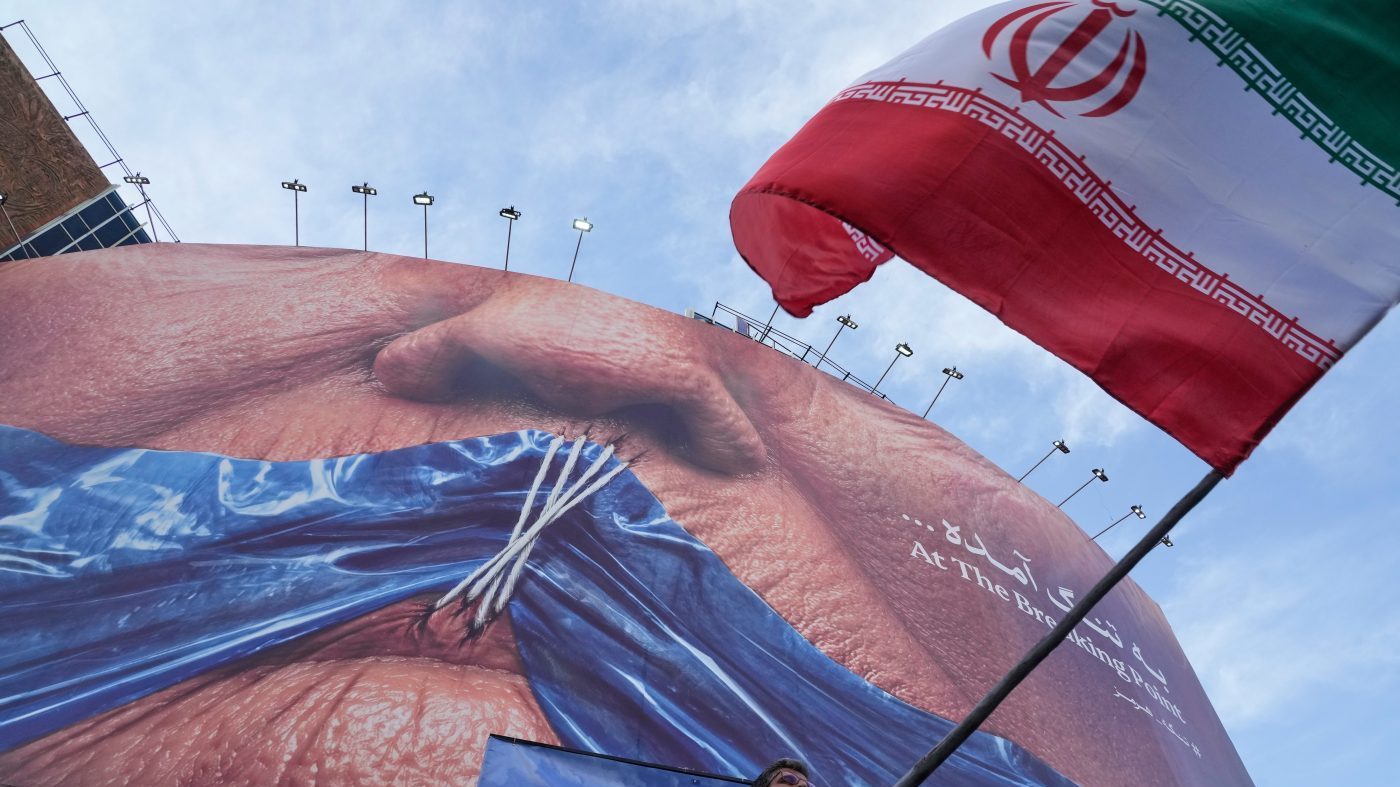
Iran's Islamic Revolutionary Guard Corps (IRGC) has stepped directly into the US midterm campaign, calling on American voters to cast their ballots against President Donald Trump and his administration's policies toward Tehran. In a 25-page open letter released Tuesday, IRGC spokesman General Hossein Mohebbi framed the upcoming elections as a chance for Americans to reshape US foreign policy and embrace what he described as an offer of "peaceful coexistence."
The letter, which was obtained by The Times of Israel, marks seven months since the outbreak of the US-Iran conflict in late February. Mohebbi wrote that American voters hold the power to change the course of their government, accusing politicians of winning support through "deception and false promises." He specifically cited Trump, urging voters to apply "criteria for good leadership" when choosing their representatives.

"You are the ones who empower, with your votes, the government and allow it to do what it does," the letter reads. "Although American politicians often win your votes through deception and false promises, as Trump did, you can change the makeup of the government if you apply the criteria for good leadership in choosing the people you vote into office."
The IRGC also claimed that the US and Israel are losing the war, while acknowledging the United States as a great nation. However, Mohebbi warned that allowing "vulgar and immoral individuals" to steer US politics would further humiliate the country. "Any politician who thinks they can buy your vote for $5,000 is unworthy to lead you," he added. "Take back control."
In comments to the Associated Press, Mohebbi went further, urging Americans to take to the streets in protest against the Trump administration and its "warmongering" policies. He accused Washington of trying to turn Iran "back into a colony" by focusing on its nuclear program, which Tehran insists is for peaceful purposes.
The intervention comes amid ongoing diplomatic efforts. On Wednesday, Iranian officials confirmed they had received an official US response to Tehran's seven-day peace proposal, which Trump rejected over the weekend. Foreign Minister Abbas Araghchi presented the latest response to President Masoud Pezeshkian during a Cabinet meeting, according to government spokesperson Fatemeh Mohajerani. Pezeshkian said Iran would "make every effort to bring the agreement to fruition" and insisted that any deal must be based on a "win-win strategy."
The Iran conflict has become a central issue in the midterm elections. Democratic candidates have criticized the administration for dragging the US into another Middle East war, while Republicans have called for a swift end to the conflict to ease soaring gas prices, which have been exacerbated by Iran's closure of the Strait of Hormuz. Trump and other officials initially predicted the conflict would last only days or weeks, but it has dragged on, and voter concerns over high fuel costs have been dismissed by the president. At a rally in North Carolina earlier this month, Trump told voters that rising gas prices were "a very inexpensive price to pay" in the confrontation with Iran, though he predicted prices would soon "come tumbling down."
The national average gas price dipped slightly to $4.43 on Wednesday, according to AAA, after hovering near $4.50 earlier in the week. The economic impact of the conflict has become a key vulnerability for the administration, and the IRGC's letter appears aimed at amplifying that pressure. As the midterms approach, the intersection of foreign policy and domestic economic anxiety is likely to remain a flashpoint, with Iran seeking to influence the outcome from afar.