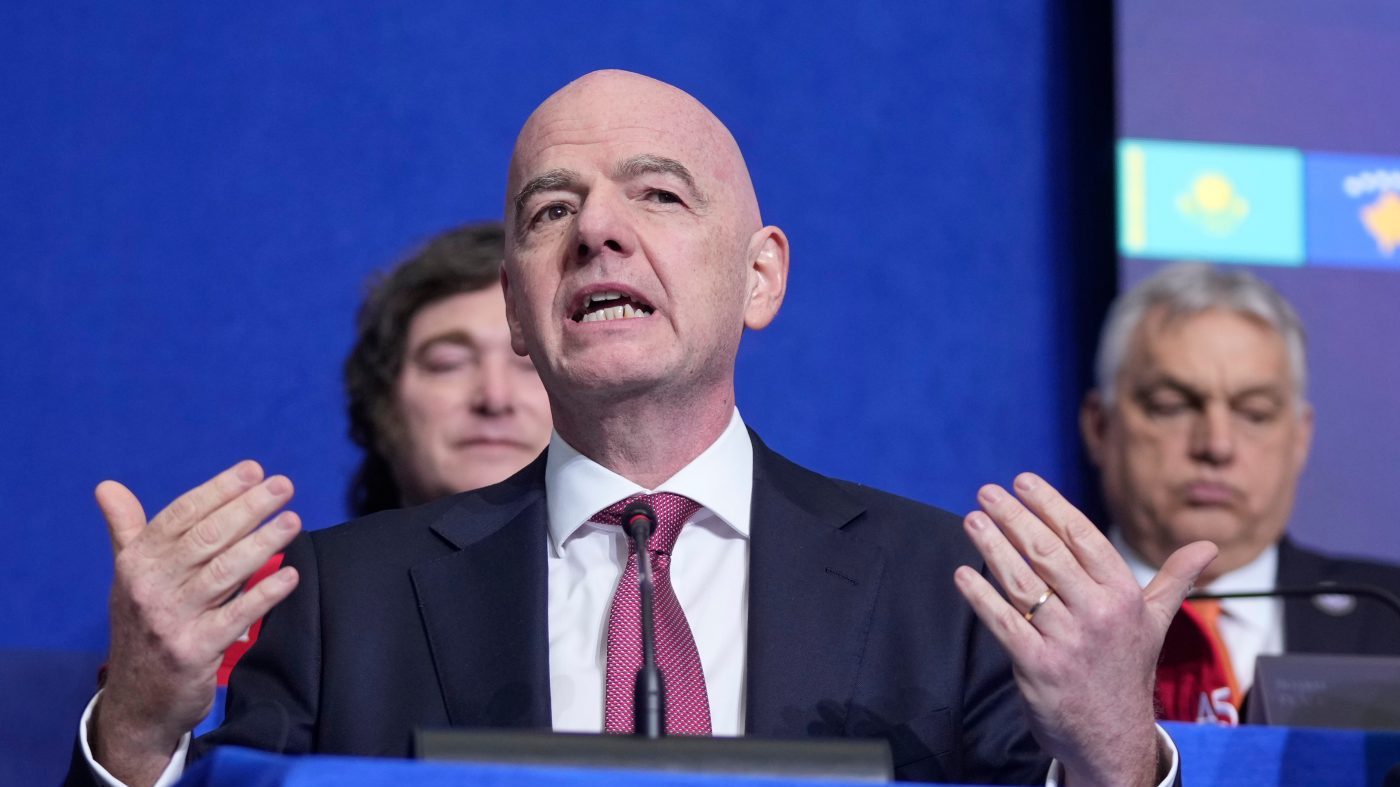
FIFA President Gianni Infantino has removed any doubt about Iran's place in the 2026 FIFA World Cup, declaring the nation's team will compete "for sure" despite its ongoing military conflict with tournament co-host the United States. The statement, made during CNBC's Invest in America Forum, directly addresses the geopolitical cloud hanging over the global sporting event.
Sports and Politics on a Collision Course
Infantino acknowledged the precarious situation, noting Iran's participation had been in question since U.S. and Israeli airstrikes targeted the country earlier this year. "We hope that by then, of course, the situation will be a peaceful situation," he said, adding that peace "would definitely help." However, he firmly insisted on Iran's inclusion, arguing, "Iran has to come. Of course, they represent their people. They have qualified. The players want to play."
The FIFA president recently met with the Iranian national team during their training camp in Antalya, Turkey, and came away impressed with their quality and determination. "They are actually quite a good team as well," Infantino noted. "And they really want to play and they should play. Sports should be outside of politics now."
The Reality of Geopolitical Tensions
Yet, Infantino conceded the ideal of separating sport from global affairs is often unattainable. "OK we don't live on the moon, we live on planet Earth," he stated pragmatically. He positioned FIFA's role as one of bridge-building in a fractured world, saying, "if there is nobody else that believes in building bridges and in keeping them intact and together, well we are doing that job."
The logistical reality is stark: Iran is scheduled to play two of its group-stage matches in Inglewood, California, and one in Seattle, Washington, placing its athletes directly on American soil. The war has fueled significant uncertainty, compounded by warnings from analysts about Iran's deteriorating economic stability and conflicting signals from Iranian government and soccer officials about their willingness to attend.
Former U.S. President Donald Trump has publicly discouraged the Iranian team from traveling to the tournament, citing safety concerns. This adds another layer of political friction to an event already grappling with controversies, including significant global backlash over FIFA's premium ticket pricing strategy for the 2026 edition.
The confirmation of Iran's participation sets the stage for a highly charged atmosphere, intersecting with broader regional security dynamics. The situation echoes ongoing strategic complexities in the Persian Gulf, where military analysts suggest Iran may still seek strategic advantages in key waterways like the Strait of Hormuz, even amid confrontations.
Infantino's firm declaration attempts to preempt a major diplomatic and sporting crisis for the 2026 World Cup, which will be jointly hosted by the United States, Canada, and Mexico. It represents a high-stakes gamble that the spectacle of the world's most-watched sporting event can temporarily transcend a deep-seated international conflict, a theory that will be tested both on and off the pitch.