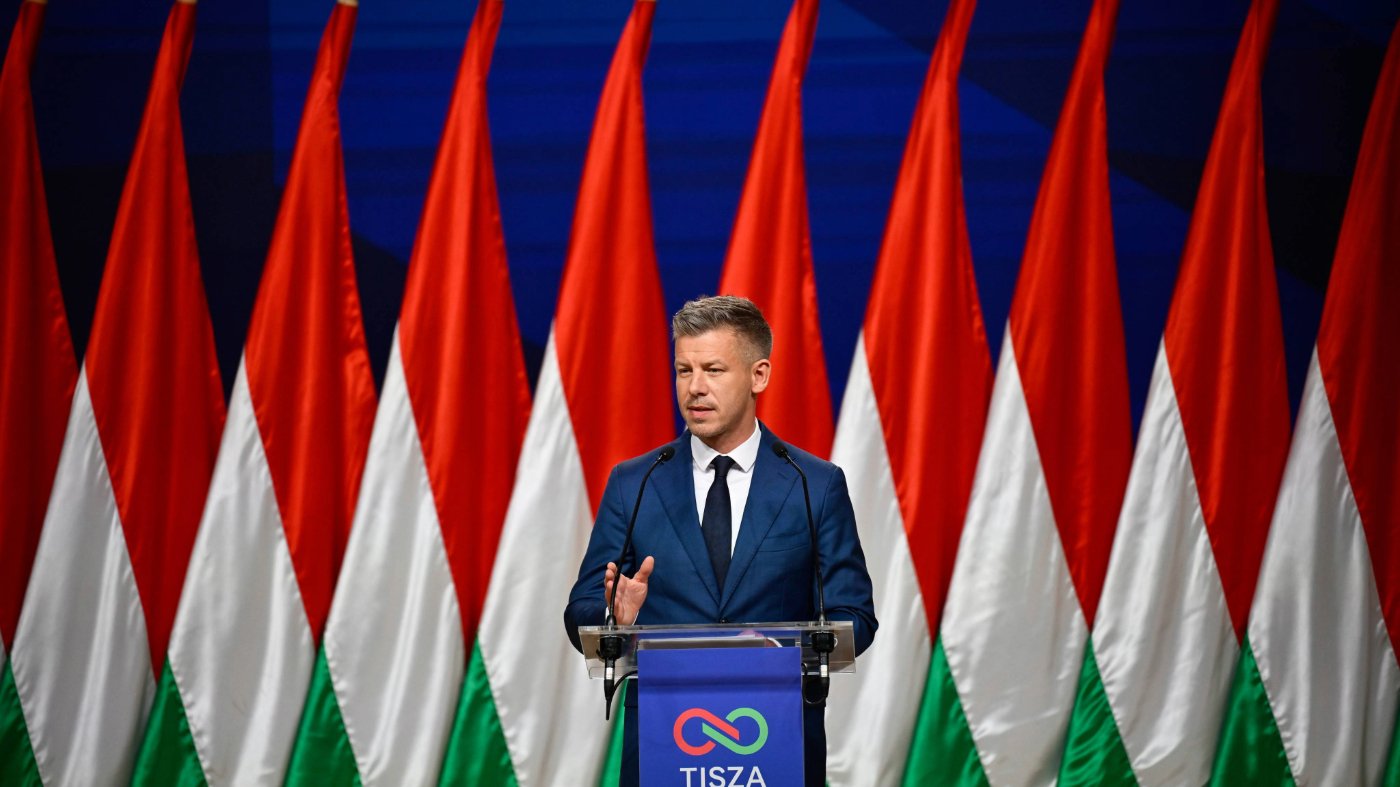
For the first time in 16 years, Hungary is set to have a prime minister other than Viktor Orbán. Peter Magyar, a former Fidesz insider now leading the Tisza party, won this month’s election on a platform of rooting out corruption, restoring rule of law, and fixing public services. The change offers a fresh chance for American policymakers, across party lines, to reset ties with a key Central European ally.
Under Orbán, Hungary drifted far from U.S. interests. His government deepened ties with Moscow, welcomed Chinese investment and even Chinese police on its soil, blocked EU aid to Ukraine, and reportedly assisted Tehran after Israel’s 2024 pager operation against Hezbollah. These moves made Budapest a strategic headache for Washington.
Why Magyar Won
Magyar capitalized on widespread discontent. Last fall, protests erupted over Orbán’s lavish, unfinished family estate, complete with a private zoo, fueling accusations of systemic graft. Magyar has vowed to investigate Orbán and his inner circle. His campaign also hammered on the rising cost of living and crumbling public services, resonating with voters tired of Fidesz’s grip.
Many American conservatives once admired Orbán’s defiance of Brussels on migration and sovereignty. But that admiration often ignored Hungary’s dangerous alignment with U.S. adversaries. Orbán’s Hungary became a hub for Chinese investment—between 2023 and 2025, it absorbed a quarter of China’s FDI in the EU, despite having just 2% of the bloc’s population. It also allowed Chinese police to operate inside its borders, a clear security concern.
On Russia, Orbán doubled down even as Europe distanced itself from the Kremlin. In December, his government signed a 12-point cooperation plan with Moscow. Hungarian officials reportedly kept the Kremlin informed of closed-door EU talks, and Orbán vetoed a $100 billion EU loan package for Ukraine—a block Magyar asked him to lift before leaving office. Hungary also became a safe haven for Russian spies, with an unusually high number of Russian diplomats enjoying immunity there.
What Magyar’s Win Means for the U.S.
Magyar has pledged to prioritize Hungarian “sovereignty” in foreign policy, which would require a fundamental break with China, Iran, and Russia. That shift would be a clear win for Washington. He also supports raising defense spending to 5% of GDP and strengthening border security, aligning closely with a Trump administration’s priorities on defense and migration. Tisza’s MEPs sit with the center-right European People’s Party, but Magyar has shown he won’t be a rubber stamp for Brussels, especially on frozen EU funds.
Unwinding years of entanglement with Beijing and Moscow won’t be easy or painless. But for too long, American conservatives idealized Orbán without looking closely at his record. A stagnant Hungary aligned with America’s principal adversaries doesn’t serve U.S. interests. That’s why Americans of all political stripes should welcome the winds of change now sweeping Budapest.
For context on broader political shifts, see Gallup’s latest data on the economy and Senate GOP’s recent budget moves.