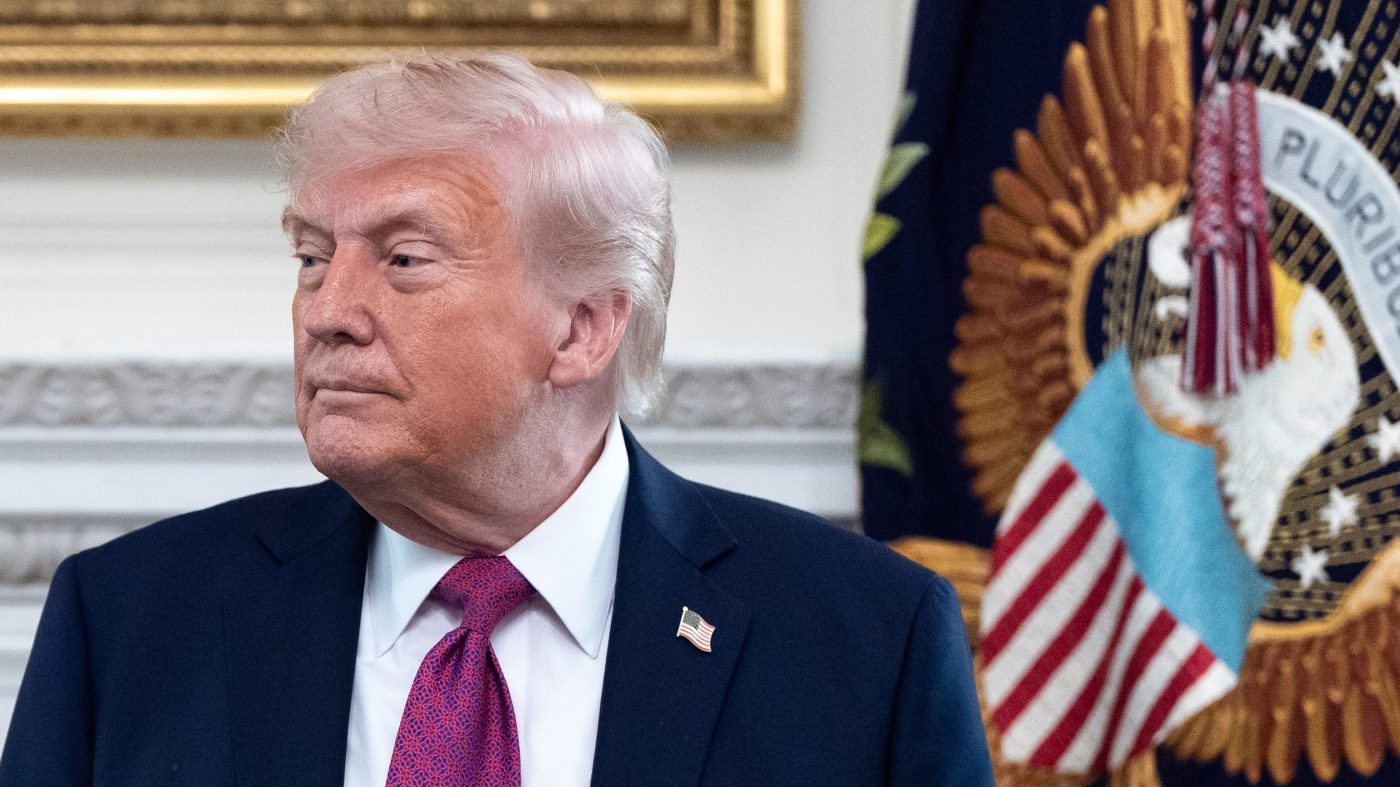
President Donald Trump indicated Wednesday that a second phase of direct negotiations between the United States and Iran could commence within the next 36 to 72 hours. This statement follows his decision to indefinitely prolong a fragile two-week ceasefire that was set to expire, marking a reversal from his previous insistence that an extension was unlikely without a concrete agreement.
The President conveyed the possibility of imminent talks via a text message to the New York Post, responding to an inquiry with a brief, "It's possible!" This development occurs against a backdrop of heightened military and diplomatic friction, with the critical Strait of Hormuz remaining a volatile flashpoint.
Diplomatic Delays and Regional Mediation
The White House postponed a planned trip by Vice President J.D. Vance to Islamabad, where he was to represent American interests in Pakistan-mediated discussions. Special Envoy Steve Witkoff and senior advisor Jared Kushner were slated to join the delegation. The delay stemmed from Tehran's refusal to confirm its participation, casting uncertainty over the diplomatic process.
Trump explained his ceasefire extension on his Truth Social platform, stating that Pakistani officials had requested the U.S. "hold our attack" while Iranian leaders formulated a unified proposal. "I have therefore directed our Military to continue the Blockade and, in all other respects, remain ready and able, and will therefore extend the Ceasefire until such time as their proposal is submitted, and discussions are concluded, one way or the other," the President wrote. This decision coincides with reports that his economic approval ratings have suffered due to the conflict's pressure on global fuel markets.
Accusations and Escalations at Sea
Both nations exchanged sharp accusations of violating the ceasefire terms on Tuesday. Trump asserted that Iran had breached the agreement "numerous times," while Iranian Foreign Minister Abbas Araghchi countered that the ongoing U.S. naval blockade in the Gulf of Oman constituted "an act of war and thus a violation of the ceasefire." Araghchi further claimed on social media that striking a commercial vessel and taking its crew hostage represented an even greater violation, vowing that "Iran knows how to neutralize restrictions, how to defend its interests, and how to resist bullying."
U.S. Central Command reported that American naval forces have redirected 28 commercial vessels since the blockade began two weeks ago and intercepted an Iranian-flagged cargo ship attempting to circumvent the restrictions over the weekend. Tensions escalated further Wednesday when Iran's Islamic Revolutionary Guard Corps attacked two ships in the vital waterway, according to the U.K. Maritime Trade Operations. The Strait of Hormuz, a chokepoint for roughly one-fifth of the world's oil and gas supply, has been a central theater since the conflict began.
Iranian Resistance and Domestic Political Pressure
Iranian officials have not publicly committed to further talks. Parliament Speaker Mohammed Bagher Qalibaf, a lead negotiator, warned that the regime would not be coerced into negotiations under threat. This internal resistance complicates the diplomatic path forward. Meanwhile, the Pakistani Prime Minister's office confirmed a meeting between Prime Minister Shehbaz Sharif and the Iranian ambassador to discuss "the ongoing regional situation and peace efforts."
The foreign policy crisis unfolds as Trump faces intensified scrutiny over his leisure time and social media use, with critics arguing it distracts from grave international matters. The administration's approach has also sparked internal Republican dissent, evidenced by visible fractures within the MAGA movement over foreign policy strategy.
The prospect of talks restarting by Friday remains uncertain, hinging on Iran's willingness to engage and the maintenance of an increasingly precarious truce. The White House had not provided additional comment at the time of reporting.