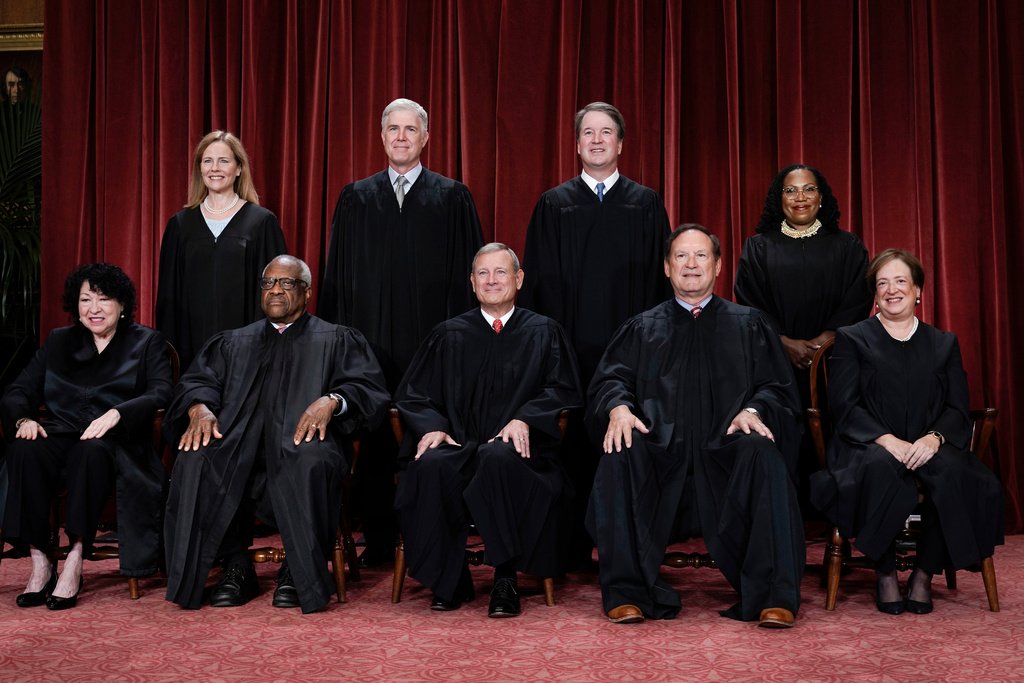
Four years after the Supreme Court overturned Roe v. Wade in Dobbs v. Jackson Women's Health Organization, Justice Samuel Alito's most lasting impact may not be the end of abortion rights but the institutionalization of doubt as a legal weapon. Borrowing a page from industries that manufactured uncertainty about tobacco and climate change, the Court's conservative majority now routinely uses ambiguity to justify stripping away constitutional protections.
In Dobbs, Alito didn't just eliminate a nearly 50-year precedent. He established a framework where historical murkiness, contested social science, and speculative state interests become reasons to revoke rights. Long-settled protections are reframed as unsettled questions, while states' unsubstantiated claims—like vague fears of election fraud or moral panic—receive near-total judicial deference.
This logic quickly spread. In Louisiana v. Callais, another Alito-authored decision this spring, the Court questioned evidence of racial discrimination in Louisiana's congressional map under the Voting Rights Act, then deferred to the state's unsupported assertions of potential harm. The pattern is clear: doubt is applied asymmetrically, targeting protections for marginalized groups while shielding state power.
The same asymmetry surfaced in a recent Fifth Circuit ruling on mifepristone, the medication used in most U.S. abortions. The court reinstated in-person dispensing requirements, arguing the FDA hadn't sufficiently studied mail-order distribution's consequences—despite the agency's rigorous safety review. As one analysis notes, the FDA met normal evidentiary standards, but the court demanded more because uncertainty could exist. Meanwhile, Louisiana's unsubstantiated claims of potential "sovereign injury" were accepted without similar scrutiny.
The Supreme Court stayed that ruling, keeping mifepristone available by mail for now. But Alito's dissent doubled down, dismissing decades of safety data as uncertain while elevating speculative state harms. This mirrors the Dobbs approach: selectively narrowing historical records to create the illusion of uncertainty, then using that doubt to justify withdrawing rights.
Alito's jurisprudence isn't simply conservative versus progressive interpretation. It's a method that makes every protection vulnerable to re-litigation. As long as courts can redescribe history, science, or precedent as uncertain, no right is secure. This asymmetry threatens constitutional democracy, which relies on individuals trusting that legal commitments endure beyond ordinary politics.
The result is a legal landscape where doubt flows in only one direction—against reproductive rights, voting rights, and racial equality. That may be Alito's true legacy: not originalism, but a weaponized uncertainty that erodes the foundations of constitutional protection.