President Donald Trump and several Republican lawmakers are pointing fingers at Canada for the smoke from wildfires that has blanketed parts of the United States in recent days, threatening to impose tariffs as a form of retribution. But wildfire experts on both sides of the border say the real driver is climate change, not Canadian forest management.
In a social media post last week, Trump accused Canada of “willful negligence” for failing to properly maintain its forests, calling the resulting air pollution “filthy, polluted, and unhealthy.” He argued that the cost of that pollution should be “added to the TARIFFS Canada is currently paying.” On Sunday, he reiterated the idea, saying, “If we can help them, we’ll help them. But maybe they should pay us some damages or something, or we should do some tariffs.”

Sen. Bernie Moreno (R-Ohio) went further, introducing legislation to sanction Canada over the fires. “Thanks to Canada’s failed leadership, Ohio’s skies are seeing the worst pollution on record,” Moreno said in a statement. His bill would declare an emergency, sanction Canadian officials, and study a victims’ compensation fund funded by additional tariffs.
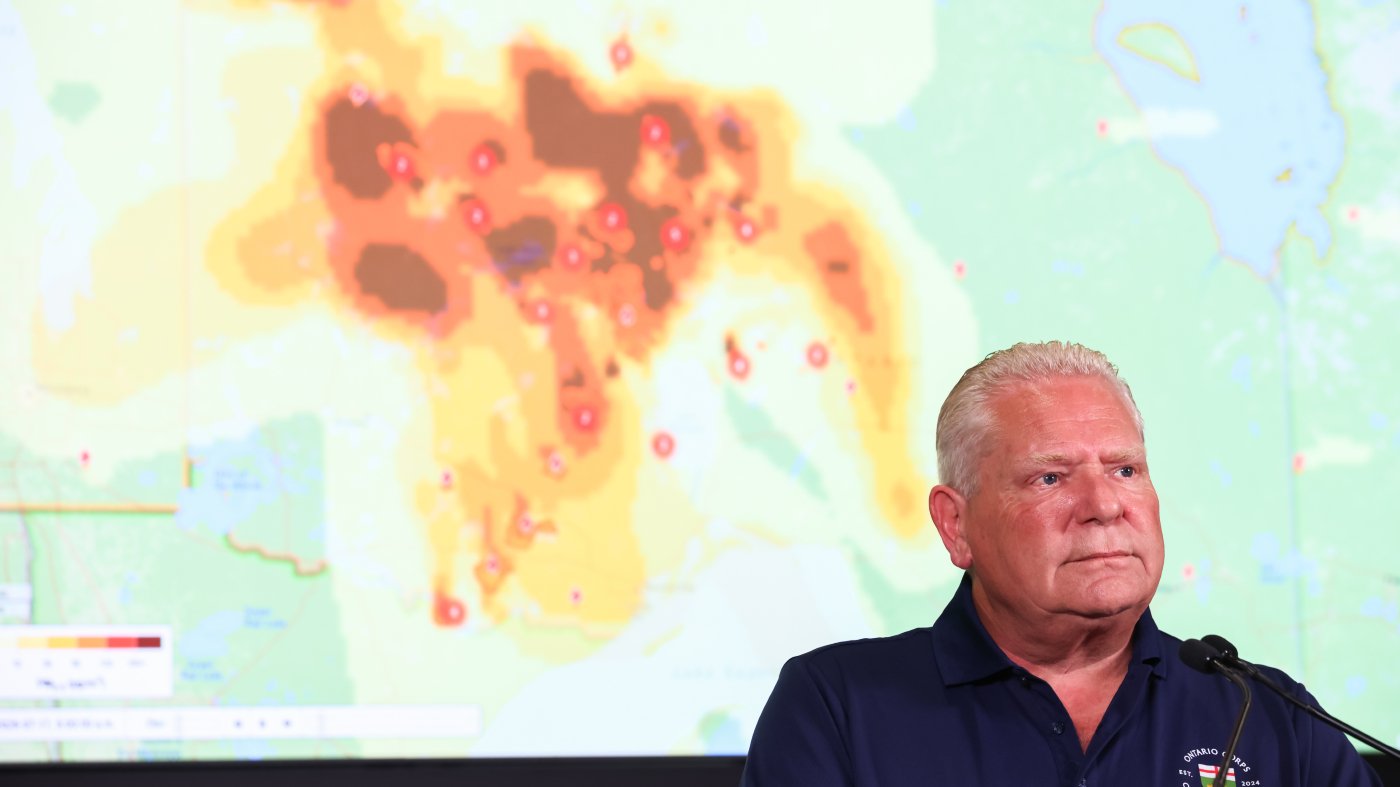
Canadian leaders pushed back. Ontario Premier Doug Ford reminded critics that Canada has helped the U.S. during its own disasters. “That’s what neighbors do, right? You don’t get on and start threatening and criticizing because guess what, one day, it’s going to be your turn,” Ford said.
Wildfire experts said the blame is misplaced. Many of the fires are burning in remote, inaccessible parts of Canada where active management is impractical. “Most of these forests are in really remote locations. There’s no roads within many miles of these fires, and there’s no practical way that you could have enough boots on the ground,” said Chris Field, director of Stanford University’s Woods Institute for the Environment.
Mike Flannigan, a professor of wildland fire at Thompson Rivers University, dismissed the idea that simply “raking” the forest floor would stop the fires. “You’d have to remove all organic material,” he said, adding that fires will spread as long as there is fuel. “You’re not going to stop fires unless you completely bulldoze the area, and that’s enormous.”
Mark Ashton, a forestry professor at Yale, noted that unmanaged forests are common in the U.S. as well. “There’s vast stretches of Alaska that have a similar level of productivity with no roads, small indigenous populations, and they do the same policy,” he said. “They’re not managed. You let things burn.” He added that climate change is making fires more severe by amplifying dryness.
The experts pointed to climate change as the key factor. “Warmer conditions lead to drier fuels,” Field said. “The warmer it is, the faster things dry, and the drier they are, the faster they burn.” The U.S. is a major contributor to global emissions, though Trump has repeatedly denied climate change and rolled back environmental regulations.
Lori Daniels, a professor at the University of British Columbia, questioned the logic of blaming Canada. “What should you be doing differently to put out the fires in the United States?” she asked, noting that the U.S. has its own wildfire problems, including major fires in California last year. “When he comes up with that answer, the rest of us are waiting for the answer.”
The dispute comes amid already strained ties between the two countries, with Trump recently escalating tariff threats on Canadian goods. For more on that, see our report on Trump’s tariff threats over wildfire smoke. Meanwhile, some Republican senators, like John Thune, have questioned the wisdom of further escalation.