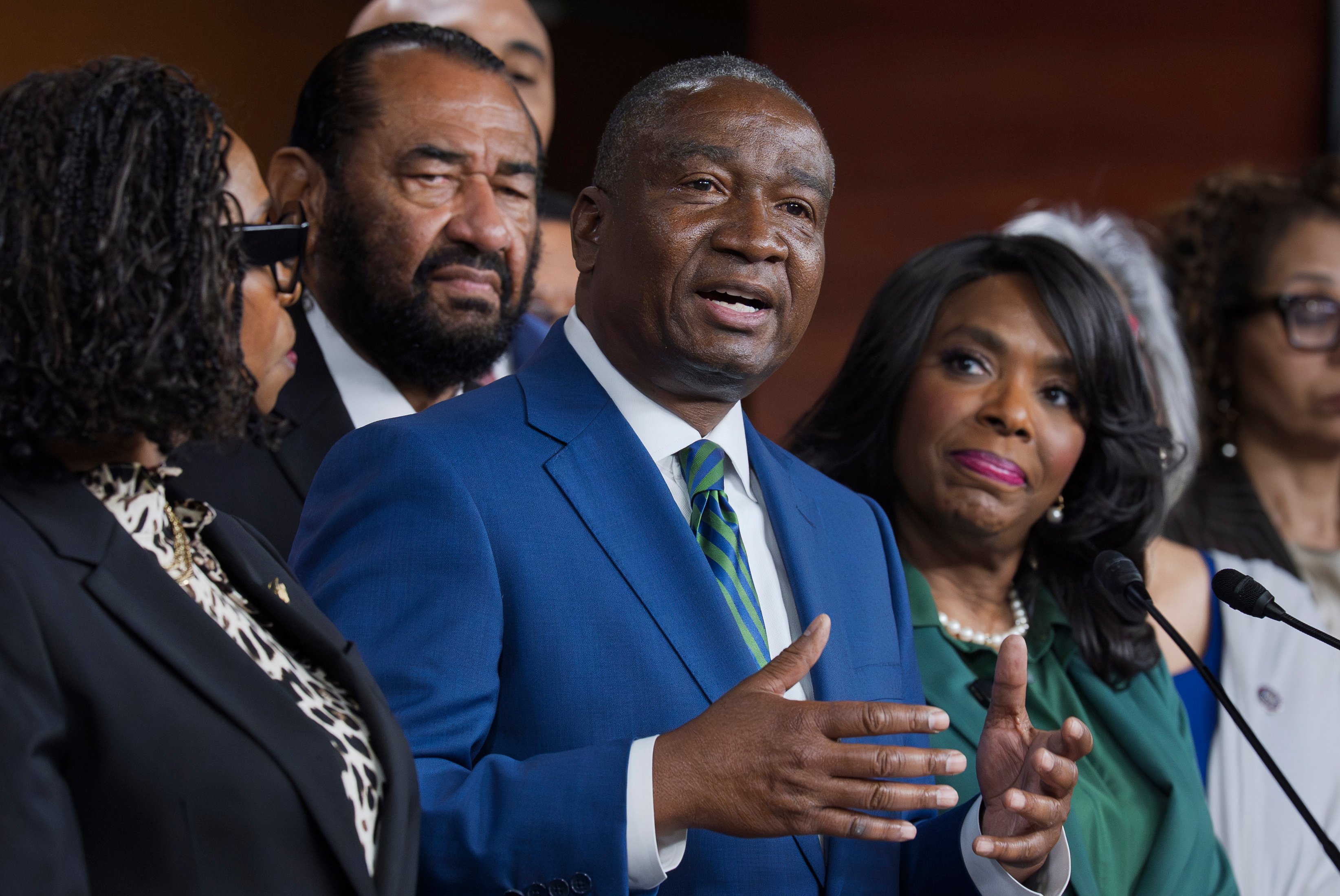
Freshman Democratic Representative Cleo Fields announced Tuesday he will not seek another term in Congress, citing a GOP-led redistricting that has made Louisiana's 6th Congressional District unwinnable for his party. Fields, who currently represents a sprawling district that cuts across the state from northwest to southeast, said he will instead run for a seat in the Louisiana State Senate.
“After a great deal of prayer and reflection, I have decided not to seek re-election to Congress, in the 6th District or any other district in Louisiana,” Fields said in a statement. “Instead, I will be running to fill the unexpired term for the State Senate in the 14th District. I feel my calling to serve the people is better put to use back home than here in D.C., and I intend to answer that call.”

Fields’ decision follows a Supreme Court ruling in April that allowed Louisiana Republicans to redraw the state's congressional map, effectively dismantling the district that had elected him. The nonpartisan Cook Political Report now rates the newly configured 6th District as “solid Republican,” leaving Fields with no viable path to reelection.
The move is a stark reversal from just a year earlier, when a separate Supreme Court decision in 2023 had forced Louisiana GOP lawmakers to create a second Black-majority House district—after the court struck down Alabama’s map for diluting Black voting power. That earlier ruling had briefly given Democrats hope of gaining a seat, but the April decision shifted the advantage back to Republicans.
Fields’ exit is part of a broader national trend as both parties jockey for control of the House. Republicans are expected to pick up seats in Alabama, Louisiana, Tennessee, Florida, North Carolina, Texas, Ohio, and Missouri. Democrats, meanwhile, hope to net gains in California and benefit from a court-ordered redistricting in Utah.
The candidate filing deadline for Louisiana congressional candidates is August 7, giving both parties little time to adjust to the new map. Fields’ departure opens the door for a GOP pickup in a district that was once a rare Democratic stronghold in the Deep South.
Fields’ decision also underscores the deepening partisan gridlock over redistricting, a process that has become a key battleground for control of Congress. As House Democrats unite against GOP stopgap funding measures, the loss of a seat in Louisiana further complicates their path to retaking the majority.
For Fields, the shift to state politics marks a return to familiar ground. He previously served in the Louisiana State Senate and has a long history in Baton Rouge. His decision to run for the 14th District signals he sees his future in state-level policymaking rather than in a Washington increasingly defined by partisan warfare.
The redistricting saga in Louisiana is far from over, with legal challenges likely as Democrats argue the new map still violates the Voting Rights Act. But for now, Fields’ announcement is a clear win for Republicans, who continue to press their advantage in the battle for House seats.