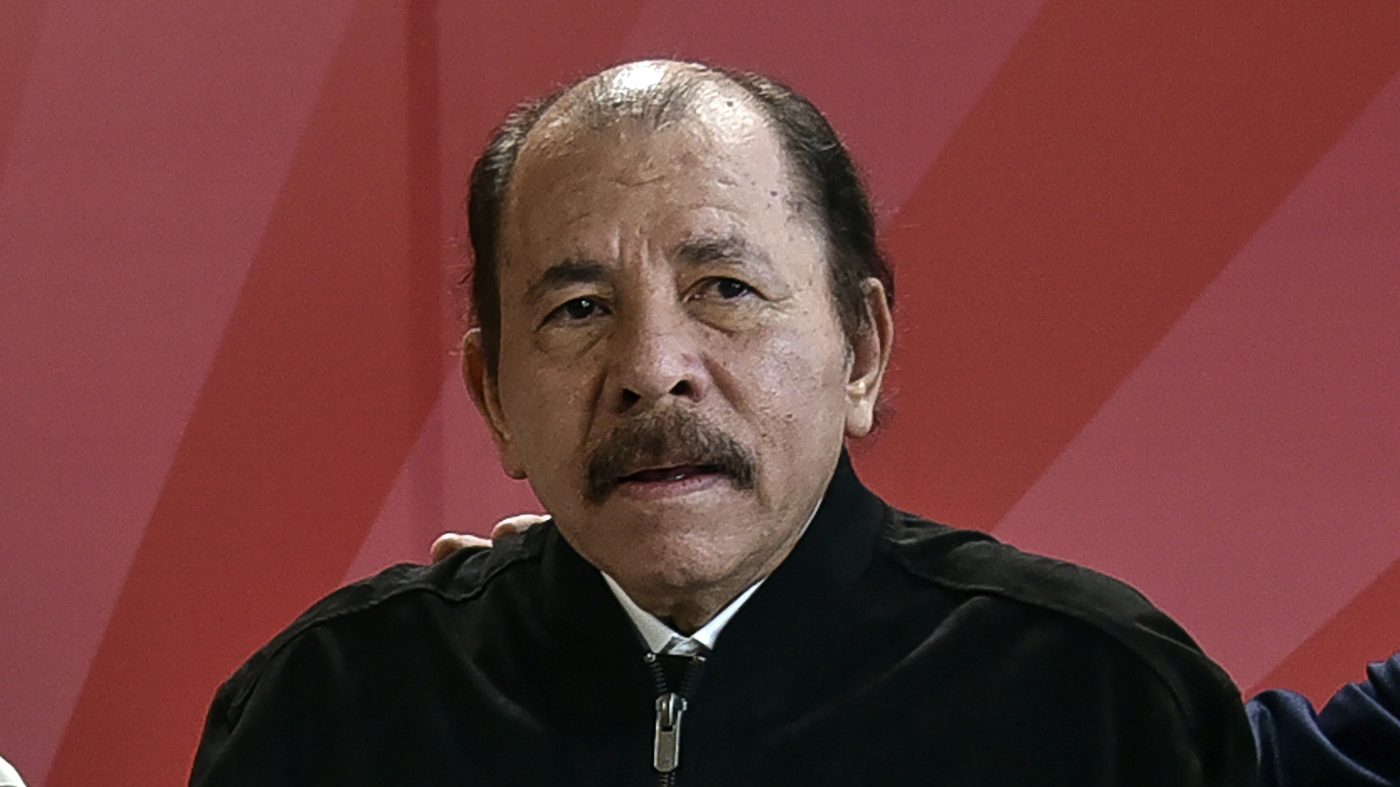
Nicaraguan President Daniel Ortega declared Sunday that his government will no longer hold presidential elections, effectively entrenching the shared rule he exercises with his wife and co-president, Rosario Murillo. Speaking at a rally marking the 47th anniversary of the Sandinista revolution's seizure of power, Ortega said there “won’t be any more elections here for them to try to seize the government and seize power,” according to a translation by Reuters.
Ortega framed the move as a rejection of U.S. influence, vowing that “the days when parties backed by the Yankees and the Somocistas would return to power are over—never again.” The reference to Somocistas invokes the followers of Anastasio Somoza, the U.S.-backed dictator whom the Sandinistas overthrew in 1979.

The announcement consolidates a power structure that has been in place since Ortega returned to the presidency in 2007, after being voted out in 1990. His most recent electoral victory in 2021 was widely condemned as neither free nor fair, triggering a crackdown on political opponents and independent media. Last year, Ortega pushed through constitutional reforms that extended presidential terms to six years and formally installed Murillo as co-president.
Secretary of State Marco Rubio condemned the move, saying it “lays bare their true authoritarian nature.” In a statement, Rubio added: “Daniel Ortega and Rosario Murillo have abandoned even the pretense of popular consent. The Nicaraguan people have the right to choose their own leaders through democratic elections. The United States calls on the international community to join forces to demonstrate to the Murillo-Ortega dictatorship that it cannot expect to maintain business as usual with other nations when it is thwarting the basic tenets of our democratic hemisphere.”
The United States has long labeled Ortega a dictator, a characterization echoed by the United Nations Human Rights Council, which accused his administration of turning Nicaragua into an “authoritarian state” that systematically violates human rights. For context, recent debates over election integrity in other countries have drawn comparisons, such as suggestions that U.S. elections might be unsafe, though the Nicaraguan case involves a far more direct assault on democratic processes.
Félix Maradiaga, a 2021 presidential candidate who was arrested by the Ortega-Murillo government, told The New York Times that Ortega “buried Nicaraguan democracy a long time ago.” He added: “As long as Daniel Ortega controls the Nicaraguan state, Nicaragua cannot have free elections.”
The move to abolish elections marks a sharp escalation in Nicaragua’s drift toward one-party rule, drawing comparisons to other authoritarian consolidations in the region. Observers note that the international response, including potential sanctions from the U.S. and allies, will be critical in determining whether Ortega faces any consequences for this latest step. Meanwhile, the opposition remains largely dismantled, with many leaders imprisoned or in exile, making any domestic challenge to the regime unlikely in the near term.
Laura Kelly contributed reporting.