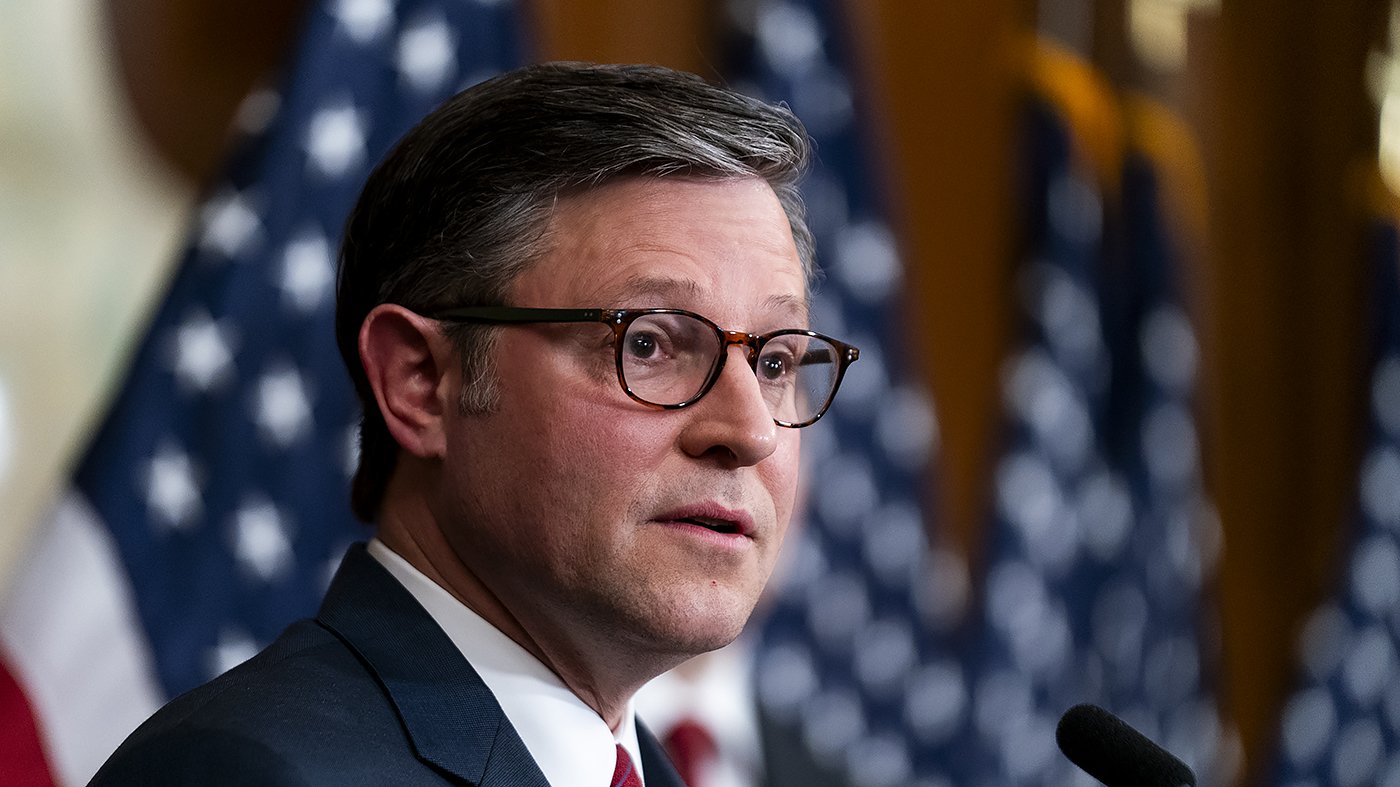
House Republican leadership has abandoned plans for an immediate vote to renew a key foreign surveillance authority, pushing the contentious debate into April as opposition from within their own ranks and from Democrats creates an insurmountable legislative blockade. The decision delays action on Section 702 of the Foreign Intelligence Surveillance Act (FISA), which is set to expire on April 20.
A Fractured Majority Blocks the Path
The core challenge for Speaker Mike Johnson is his party's narrow and fractured majority. A "clean" reauthorization—extending the powers without new reforms—lacks the votes to pass through the normal procedural rule vote. With Republicans holding a slim margin, just two defections can sink such a rule, and several members have already pledged opposition. Representative Lauren Boebert has vowed to block any rule for a clean extension, demanding reforms like a warrant requirement for searches involving U.S. citizens.

Further complicating the calculus, some conservatives are attempting to attach unrelated legislation to the FISA bill as a condition for their support. Representative Anna Paulina Luna has pushed to link the reauthorization to the SAVE Act, a voter citizenship verification bill championed by former President Trump. This maneuvering reflects the broader strains on Republican unity seen across high-stakes policy fights.
Democratic Support Uncertain for Alternative Path
Faced with internal GOP resistance, leadership could bypass a rule vote by using a suspension of the rules, a process requiring a two-thirds majority. This path would necessitate significant Democratic support, but that appears far from guaranteed. House Minority Leader Hakeem Jeffries has declined to state his position on a final vote and said Democrats would not assist Republicans on the procedural rule. The Congressional Progressive Caucus, comprising nearly 100 House Democrats, formally voted this week to oppose reauthorization of the warrantless surveillance powers.
"I think if this was going to go the route of the rule, we'd have to talk about a couple of minor reforms," said House Freedom Caucus Chair Andy Harris, indicating he was unsure if he would support a rule for a clean extension. The dynamic leaves Speaker Johnson in a bind, with the clock ticking toward the April deadline he had hoped to beat before a scheduled two-week recess.
Leadership Argues Recent Reforms Are Sufficient
In a bid to shore up support, Johnson and allies are arguing that sweeping reforms enacted in the last reauthorization have effectively addressed past abuses. "Last time it was up for reauthorization, we instituted 56 substantive reforms to FISA," Johnson said Tuesday. "By every measure and review, those are working just as we planned. We've not had the abuses that were happening before those reforms."
This argument has won over some previous skeptics. In a notable shift, Judiciary Committee Chair Jim Jordan, who voted against the 2024 reauthorization, now says he will support a clean extension. "It's a whole different context today—2026, not 2024," Jordan said. "And you know, we got something like 56 reforms in the legislation last year, and they've made a huge difference. I think it's a completely different framework."
A Looming Deadline and Broader Security Context
The delay ensures a compressed timeline, forcing Congress to address the spy powers in the week before they lapse unless the schedule changes. The debate occurs against a backdrop of heightened global tensions, including an ongoing conflict with Iran that has sharpened focus on intelligence capabilities. Former Trump administration officials, including ex-FBI Director Kash Patel and former CIA Director John Ratcliffe, recently briefed House members on the importance of the authority.
The standoff over FISA underscores the persistent conflict between national security imperatives and privacy concerns, a divide that cuts across party lines. With neither a clean extension nor a reform package currently able to muster a coalition, House leaders face a difficult April, potentially needing to negotiate a last-minute compromise to prevent the expiration of a tool the intelligence community describes as critical.