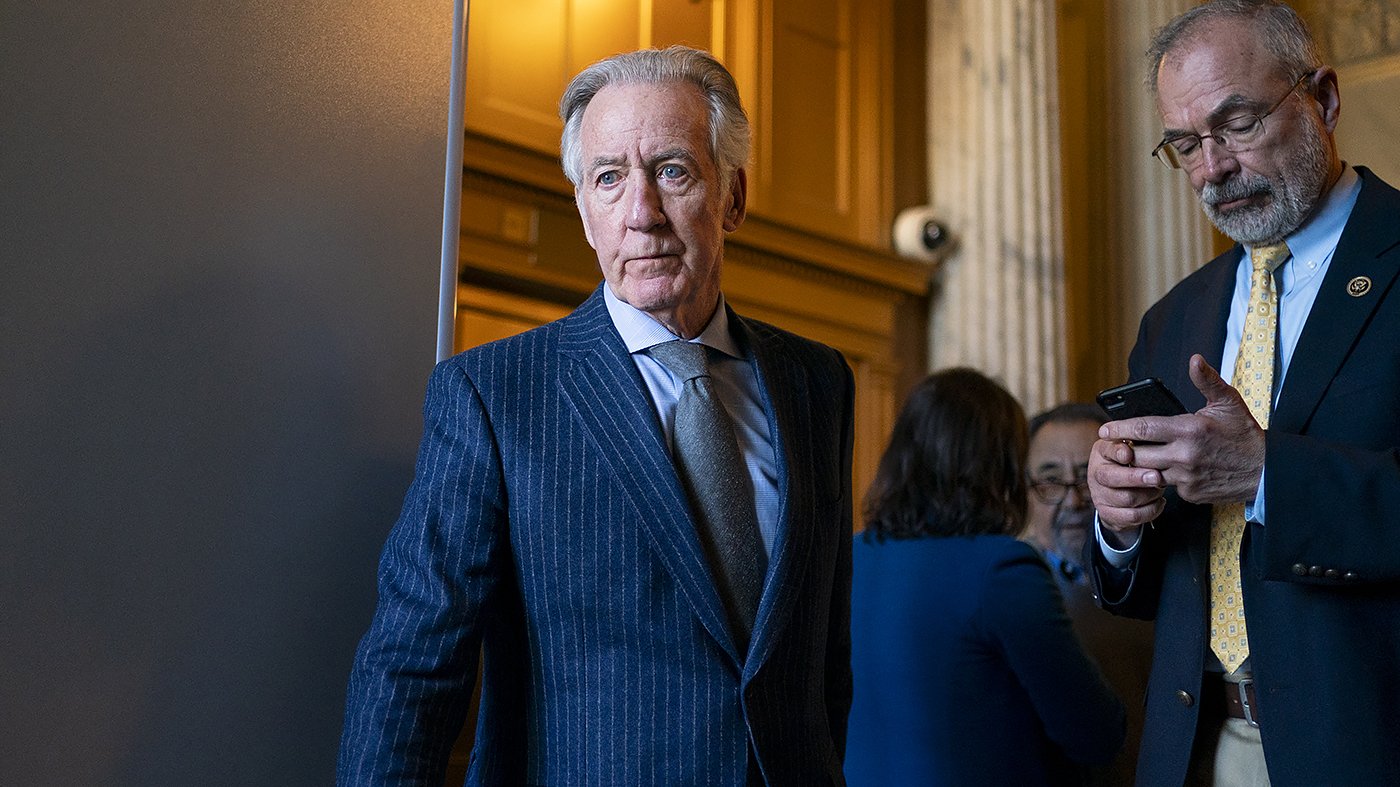
House Democrats are escalating their scrutiny of the Trump administration over a newly created $1.78 billion compensation fund, which they describe as one of the most egregious examples of public corruption and self-dealing in American history. In a letter sent Wednesday, Reps. Richard Neal (D-Mass.) and Jamie Raskin (D-Md.) demanded answers from Treasury Secretary Scott Bessent, Acting Attorney General Todd Blanche, and IRS chief Frank Bisignano about the fund's creation and oversight.
The Justice Department announced the fund on Monday, calling it an "anti-weaponization" mechanism designed to issue formal apologies and monetary payouts to individuals who claim they have been victimized by "lawfare" or government overreach. The fund stems from a settlement between President Trump, his family, and the IRS, in which Trump agreed to drop a $10 billion lawsuit over the leak of his tax returns in exchange for the fund's establishment. As part of the deal, the IRS is permanently barred from auditing Trump's past tax filings.
Democrats Allege Corruption on an Unprecedented Scale
In their letter, Neal and Raskin wrote that the settlement "is a transparent attempt to circumvent the separation of powers and use the Judgment Fund for a scam Congress never contemplated: rewarding the President's political allies at the expense of American taxpayers." They added, "Never in American history has a President pursued corruption this brazenly or on such a colossal scale." The lawmakers have given the administration until May 27 to respond to a detailed list of questions, including the names of government attorneys involved in the settlement and whether there is any cap on individual payouts.
The fund is overseen by a five-member commission appointed by the Justice Department, with one member chosen "in consultation" with congressional leaders. However, the president retains the power to remove any member at will, with the attorney general responsible for appointing replacements. Neal and Raskin argued that this structure means Trump "essentially controls the commission," raising concerns that payouts will be directed according to political loyalty rather than merit. "This obviously means that the commission will pay recipients as the President directs, conduct no meaningful oversight of the claims, and expend federal tax dollars without any public accountability," they wrote.
Eligibility Concerns and Jan. 6 Connections
While Blanche has stated there will be "no partisan requirement" to file a claim, Democrats have characterized the fund as a vehicle to funnel taxpayer money to Trump's political allies, including those involved in the January 6, 2021, attack on the U.S. Capitol. During a Senate hearing on Tuesday, Blanche declined to rule out whether campaign donors or members of the Oath Keepers would be eligible. "That's not for me to set, that's for the commissioners, and whether an individual, an Oath Keeper, as you just mentioned, applies for compensation — anybody in this country can apply," he told lawmakers.
The possibility that January 6 participants could receive compensation has drawn sharp criticism. Jan. 6 officers have already filed a lawsuit to block the fund, arguing it would effectively reward those who attacked the Capitol. Separately, a Trump ally has already been identified as the first to tap the fund, raising further questions about its intended purpose.
Congressional Oversight and Next Steps
Treasury Secretary Bessent is expected to appear before the House Ways and Means Committee, which Neal chairs, in June. The hearing will likely focus on the fund's legality, oversight mechanisms, and the potential for abuse. Democrats have also raised broader concerns about the administration's use of executive power, with some linking the fund to other controversial moves, such as Trump's push to abolish the filibuster and fire the Senate parliamentarian.
The fund's creation has reignited debate over the separation of powers and the proper use of taxpayer money. As the May 27 deadline approaches, the administration's response—or lack thereof—could set the stage for a legal and political showdown. For now, Democrats are united in their condemnation, with Neal and Raskin vowing to pursue every avenue of oversight to prevent what they see as a dangerous precedent.