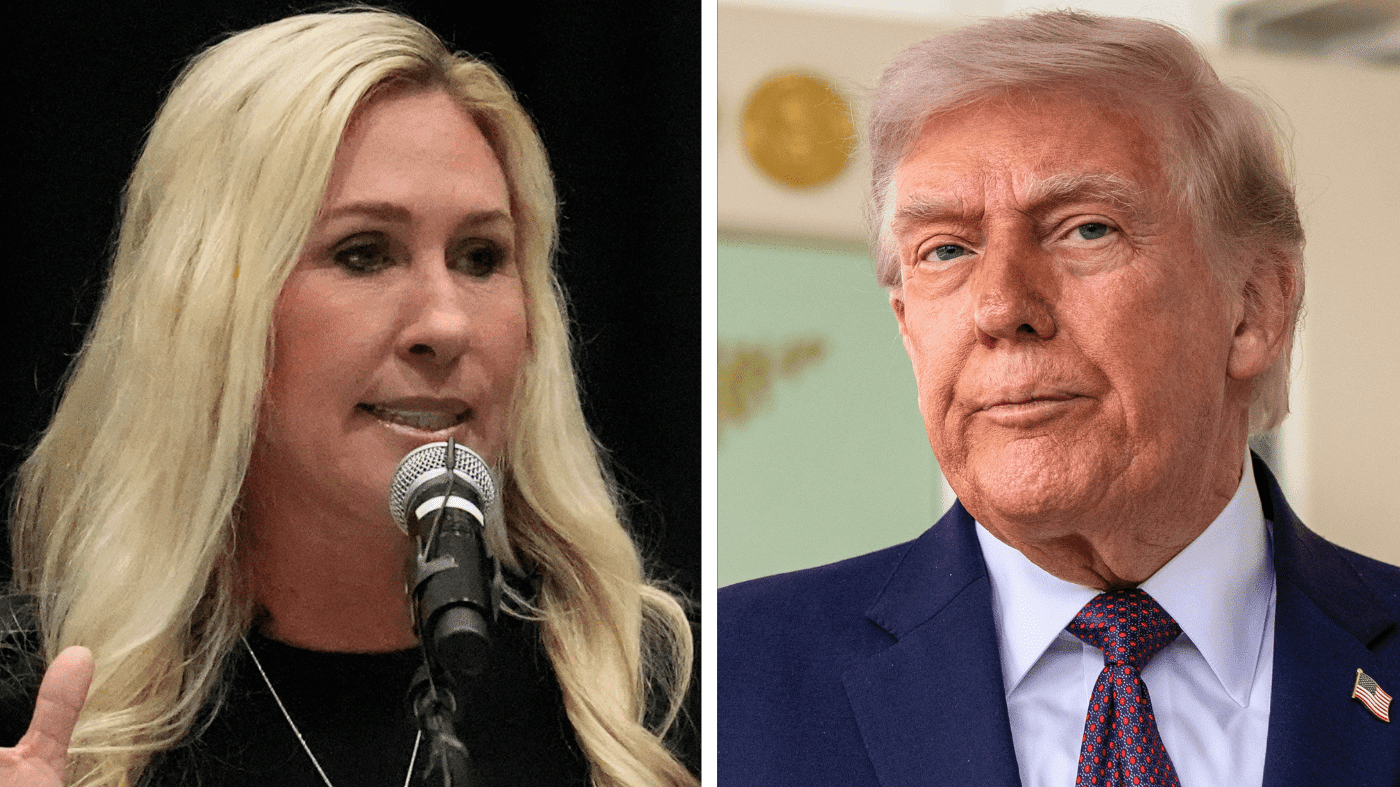
In a revealing podcast interview, former Georgia Congresswoman Marjorie Taylor Greene detailed the final, acrimonious exchange with President Donald Trump that severed their once-close political alliance, centered on what she describes as his callous response to death threats against her family.
Speaking on 'Piers Morgan Uncensored,' Greene said she contacted FBI Director Kash Patel and other senior administration officials after threats against her 'escalated' to target one of her children. She claimed some threats echoed Trump's own rhetoric, including labeling her a 'traitor' for her stance on releasing files related to convicted sex offender Jeffrey Epstein. 'I'm not a traitor to my country. Standing up for rape victims doesn't make me a traitor,' Greene asserted.
When she alerted Trump to the threats, Greene said he displayed 'no compassion whatsoever.' Pressed by Morgan on the president's exact words, Greene stated, 'He blamed me basically that if my son were to get killed, it would be my fault.' She described the moment as a 'nail in the coffin' for her relationship with Trump, noting that even her staunchest political opponents had never uttered such words to her.
'I don't know what kind of person basically has no compassion or care to someone's child being threatened to be killed. It's just, it's unimaginable,' Greene added. The White House did not immediately respond to a request for comment on her account.
A Fractured MAGA Alliance
The rift between Greene and Trump began in late 2025, as she publicly criticized his administration's handling of the Epstein files and domestic policy issues like affordability and healthcare. The feud erupted publicly last November when Trump withdrew his endorsement, calling Greene a 'raging Lunatic,' after which she resigned early from the House of Representatives.
Since her departure, Greene has transformed from a key MAGA ally to a vocal critic, particularly of Trump's foreign policy. She has opposed the U.S. military operation in Iran, calling joint strikes against Tehran a 'betrayal' of his 2024 campaign promises. Last week, she called for Trump's removal via the 25th Amendment after he threatened to attack Iranian civilian infrastructure.
Greene told Morgan that removal proceedings were 'extremely unlikely,' arguing that Republicans 'serve Donald Trump as if he is some sort of cult leader.' She challenged congressional Republicans, particularly those who identify as Christian, to condemn the president's rhetoric about 'wiping out an entire civilization.'
'There's an unwillingness there of every single one in the administration and every single one in Congress to be willing to challenge the President when he says such things, as well as saying we need to examine what his mental state is,' Greene said. This dynamic of congressional deference was recently highlighted when the House GOP blocked a war powers resolution aimed at curbing presidential authority over the Iran conflict.
Broader Context of Loyalty and Dissent
Greene's account adds a deeply personal dimension to the ongoing tensions within the Republican Party regarding loyalty to Trump. Her criticism aligns with a growing, though still minority, voice questioning the president's conduct and judgment. This internal dissent contrasts with the staunch defense mounted by many in Trump's orbit, such as when Russ Vought defended the administration's budget priorities before the Senate.
The episode underscores the intense personal and political fallout that can follow a break with Trump, extending beyond policy disagreements into the realm of personal safety and loyalty tests. As Greene positions herself as an external critic, the Republican establishment continues to grapple with the boundaries of support for the president, a theme also evident in analyses of Speaker Mike Johnson's leadership approach.