Midterm elections typically focus on control of Congress, and 2026 is no exception. With President Donald Trump's approval ratings underwater, an ongoing conflict in Iran, and rising fuel costs, Democrats are optimistic about reclaiming the House and making serious inroads in the Senate. But there is another battleground that could prove just as consequential: governor's mansions.
Governors have long operated in the shadow of federal politics, but their role has grown more critical as the White House and Congress align on a conservative agenda. In the absence of legislative or judicial checks, state executives have emerged as a practical line of defense against executive overreach. In recent months, Democratic governors have blocked attempts to deploy federal troops in U.S. cities, challenged the administration's birthright citizenship order in court, and fought federal interference in state election procedures. A coalition of 20 states plus the District of Columbia also succeeded in stopping the president from withholding congressionally approved funds from states that defied his directives. Without these actions, the balance of power would tilt even further toward the executive branch.
The political landscape for governorships has shifted after Democrats flipped Virginia and New Jersey in 2025, narrowing the GOP's overall lead to 26–24. This year, 36 governorships are on the ballot—18 held by each party—and nonpartisan analysts at Sabato's Crystal Ball and the Cook Political Report see multiple Democratic pick-up opportunities.
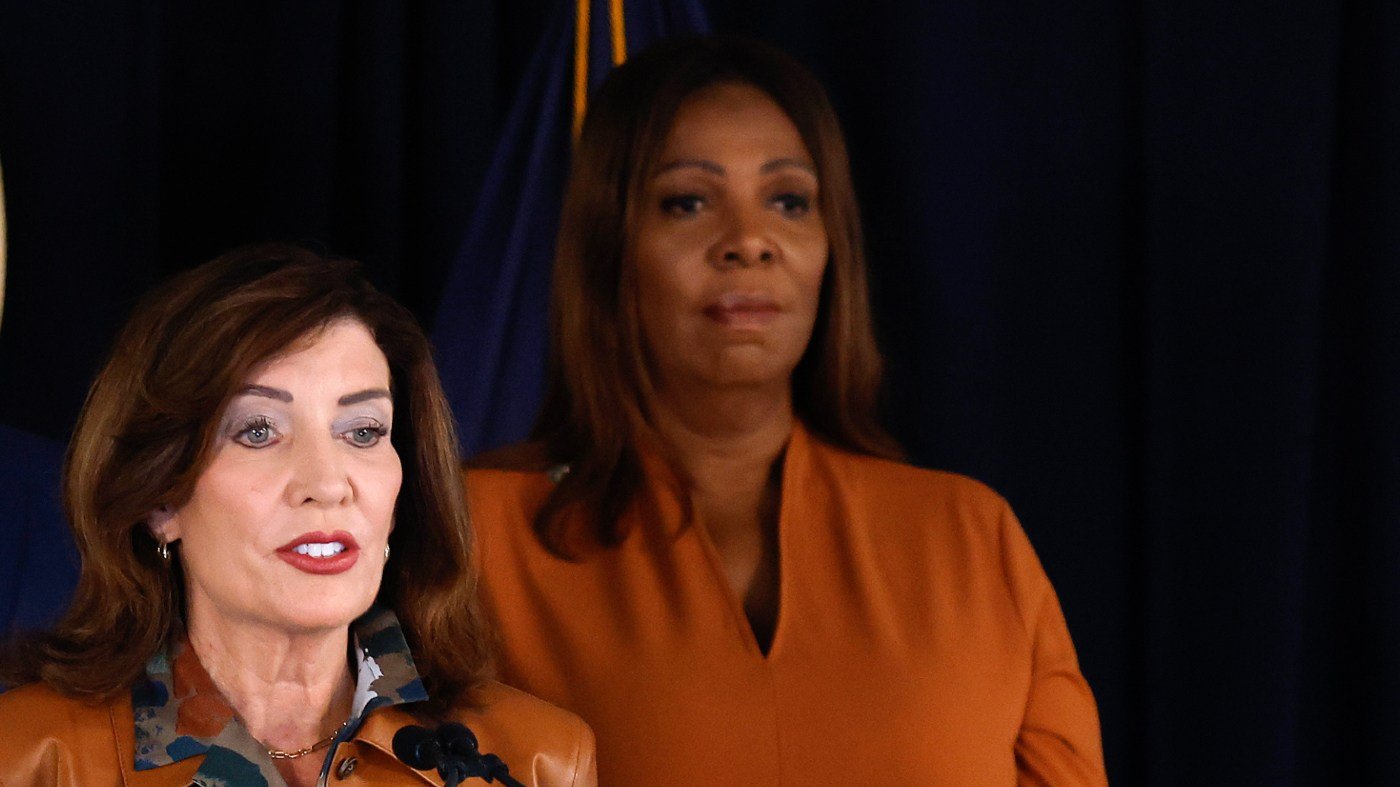
Start with the safest seats: nine Democratic incumbents are heavily favored to win re-election, including JB Pritzker of Illinois, Kathy Hochul of New York, Wes Moore of Maryland, Josh Shapiro of Pennsylvania, Tina Kotek of Oregon, Ned Lamont of Connecticut, Josh Green of Hawaii, and Maura Healey of Massachusetts. Rhode Island's Daniel McKee faces a primary challenge from Helena Foulkes, but the eventual winner is expected to keep the seat in Democratic hands.
Beyond those, five open seats are all but guaranteed to stay Democratic: California's Xavier Becerra, Minnesota's Amy Klobuchar, Maine's Hannah Pingree, Colorado's Phil Weiser, and New Mexico's Deb Haaland. That brings the likely Democratic total to 14 before considering competitive races.
Three more states are now rated as leaning Democratic. Wisconsin shifted after Milwaukee County Executive David Crowley won the Democratic primary over state Rep. Francesca Hong. Michigan Secretary of State Jocelyn Benson leads in every public poll. And in Arizona, Governor Katie Hobbs—once considered the most vulnerable Democratic incumbent—has improved her odds by choosing John Giles, a Republican-turned-independent, as her running mate. That would give Democrats 17 likely wins.
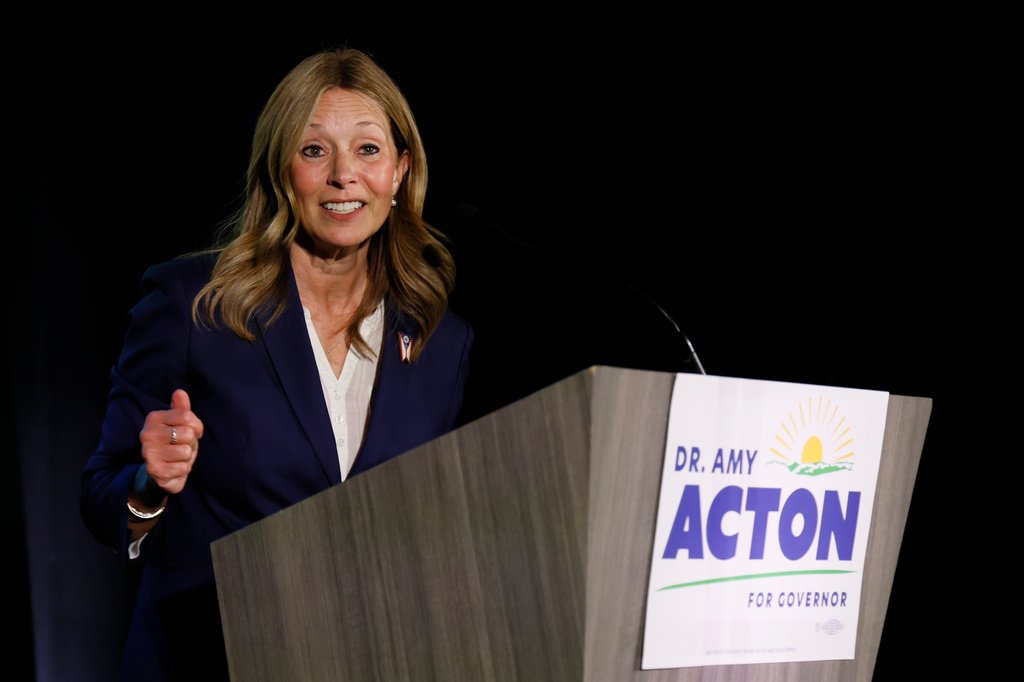
Then come the wild cards. In Ohio, Dr. Amy Acton, who gained prominence during the pandemic, is tied with Republican Vivek Ramaswamy despite his $25 million self-funded campaign. Georgia's Keisha Lance Bottoms and Republican Rick Jackson are in a dead heat. Nevada's Attorney General Aaron Ford is challenging Governor Joe Lombardo. Even deep-red Kansas is on the radar after Nate Silver rated the race between Democrat Cindy Holscher and Republican Ty Masterson a toss-up. And in Texas, Governor Greg Abbott is tied with Democrat Gina Hinojosa—a result that would be the upset of the cycle if Democrats pulled it off.
If Democrats win even a handful of these toss-ups, they could take the majority of governorships. Combined with the six Democratic-held states not up this year—Washington, Virginia, New Jersey, Delaware, North Carolina, and Kentucky—the party would have a powerful counterweight to Washington. As attention intensifies on the midterms, governors are no longer just local figures; they are the front line of policy and politics. The outcome of these races could reshape the national agenda, proving once again that states serve as laboratories of democracy—and sometimes as laboratories of resistance.