President Trump's pitch to hand every American adult a $5,000 check if Republicans keep control of Congress is running into a wall of skepticism from his own party's fiscal hawks. Several GOP senators are openly questioning the plan's cost, its impact on inflation, and the wisdom of sending money to people who neither work nor pay taxes.
The proposal, unveiled during Trump's primetime address at the GOP's midterm convention in Dallas, would add more than $1 trillion to the national debt, according to preliminary estimates. That would force Congress to raise the debt ceiling further to cover the remainder of his second term, and it comes as the government already faces a $2 trillion annual deficit and $40 trillion in total debt.
Senator James Lankford (R-Okla.) said he has seen no legislation and is trying to figure out what the president actually has in mind. He warned that injecting over a trillion dollars into the economy could reignite inflation, pointing to the Biden administration's spending spree as a cautionary tale. "We watched the Inflation Reduction Act and the money that was actually shipped out the door and what that did to inflation across the country," Lankford said. "That had a detrimental effect when you throw money out."
Senator Steve Daines (R-Mont.) echoed those concerns, noting the nation's debt now costs more than $1 trillion a year in interest payments alone. "I do worry about the $40 trillion in debt that we have, and something like that would add to the national debt," he said. Daines admitted he first heard of the proposal when Trump announced it last Thursday, and he does not expect quick action.
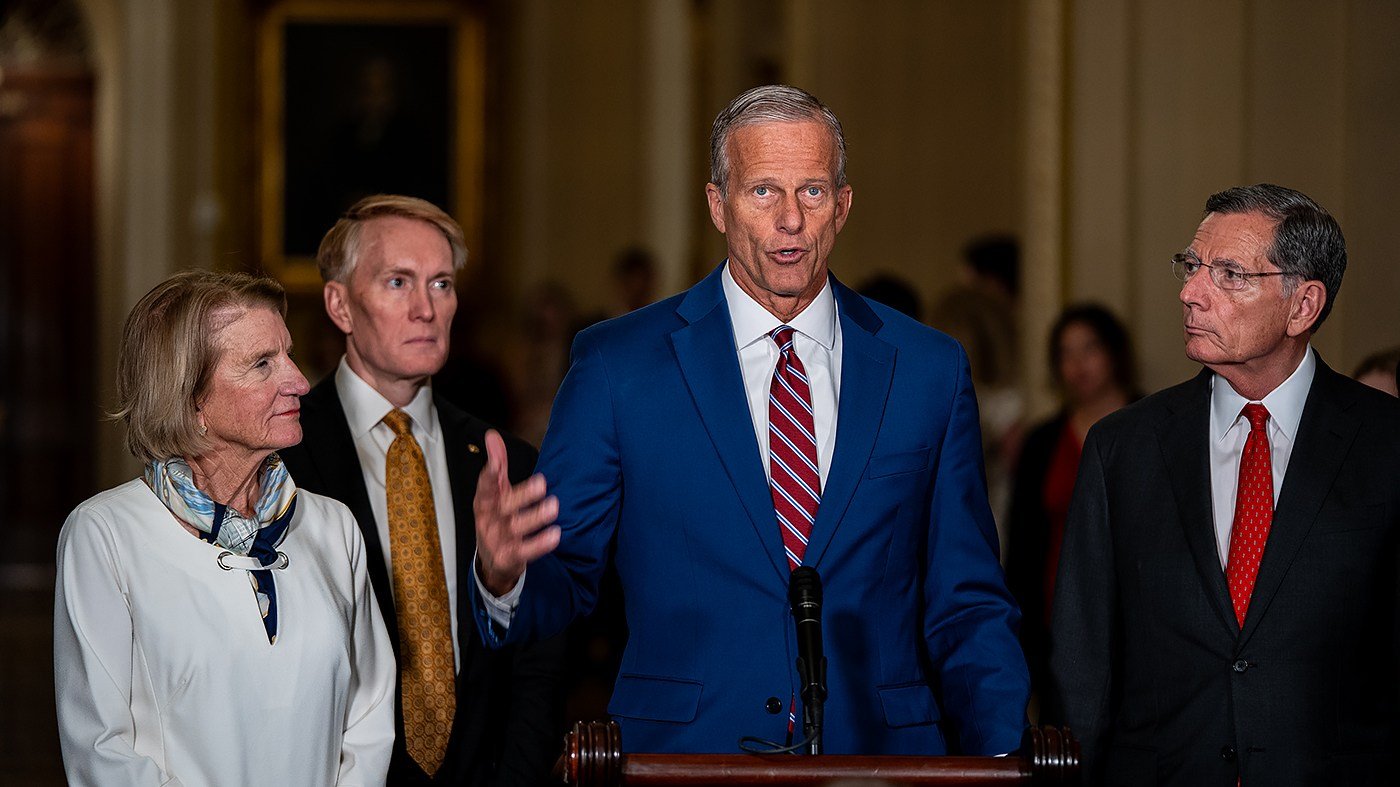
Senate Majority Leader John Thune (R-S.D.) declined to endorse the plan, saying there is no specific proposal on the table and that Congress would have a major role in shaping any such measure. He acknowledged the surprise, telling reporters he received no heads-up before the president's announcement. "There will be discussions around that subject," Thune said, but he stopped short of committing to a vote.
Senator Rand Paul (R-Ky.) was blunt: "Most of the time when you give out dividends, you're running a profit. I'm thinking maybe they just forgot the negative sign. If you lose $2 trillion a year, I guess it would be a negative $5,000 dividend." He dismissed the idea as "borrowing money to send to the public" and predicted it will not come to fruition.
Senator Bill Cassidy (R-La.) said he might support putting $5,000 into Americans' retirement or investment accounts, but only if the money is actually there. "If you're telling me we've got to borrow the money then obviously that's going to negatively impact people's personal finances in the near, intermediate and long term by raising interest rates," he warned.
Other Republicans are suggesting the plan would need to be reshaped as a tax cut for workers. Senate Commerce Committee Chair Ted Cruz (R-Texas) said, "I think we should be incentivizing work. I don't think we should be paying people that are not working," and argued the proposal should be "structured as a tax refund." Senate Appropriations Committee Chair Susan Collins (R-Maine) called the idea "extraordinarily costly."
The political calculus is complicated by market jitters over the national debt. The yield on 10-year Treasurys crossed above 5 percent on Monday before settling just below that level, and Treasury Secretary Scott Bessent has struggled to calm bond markets. Republicans are wary of embracing a plan that could worsen the fiscal outlook ahead of the midterms, especially with voting rules still being litigated.
Paul is pushing an alternative: a budget that cuts six cents from every federal dollar spent, balancing the budget in five years. "If Washington really wanted to tackle affordability, it would rein in the reckless spending that drives inflation," he wrote on X. For now, the $5,000 dividend appears to have little traction in the Senate, with Thune's response summing up the mood: "We'll cross that bridge when we come to it."