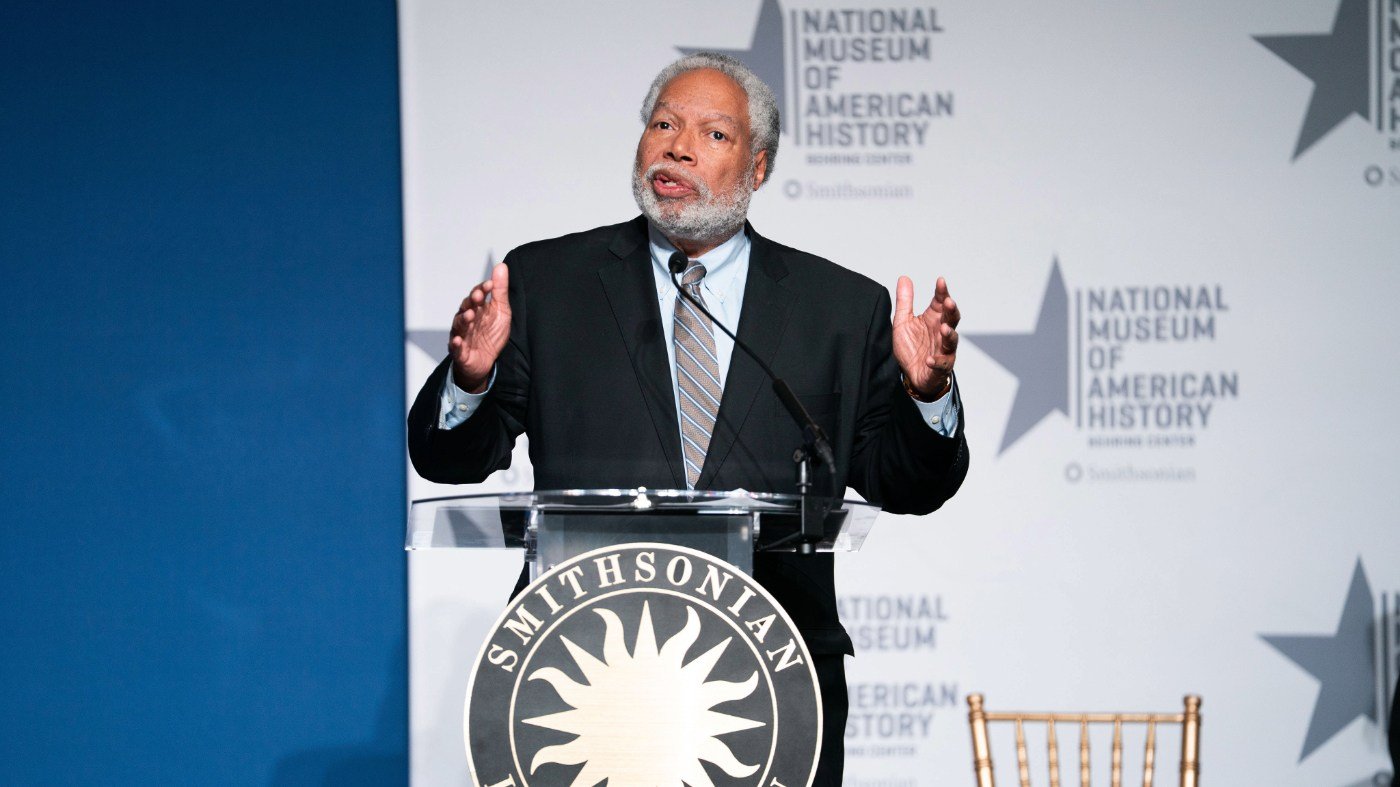
Lonnie G. Bunch III, the first African American to lead the Smithsonian Institution, announced his retirement last week after more than seven years at the helm. His departure comes amid a sustained pressure campaign from President Trump, who has sought to reshape the institution's approach to American history and culture.
Bunch, 73, has been a central figure in American public history for nearly four decades, known for his diplomatic skill, fundraising acumen, and a powerful voice on issues of race. His leadership was particularly prominent after the 2017 Charlottesville violence and the 2020 murder of George Floyd, moments when he pushed the Smithsonian to confront the nation's complex racial legacy.
In a statement, Chief Justice John G. Roberts Jr., who serves as the Smithsonian's chancellor, praised Bunch for his "excellence in the telling of our nation's story," adding that the institution had "benefited greatly from his wisdom, vision and leadership." But behind that formal praise lies a bitter reality: Bunch's departure was orchestrated by the White House, which has waged a relentless assault on the institution's content and leadership.
Trump's campaign against the Smithsonian began in March 2025 with an executive order accusing the institution of promoting a "divisive" and "race-centered" message. The administration then targeted exhibits dealing with slavery, immigration, and transgender identity, threatening to withhold federal funding—which accounts for roughly 62% of the institution's budget—unless the institution fell in line.
The pressure intensified in May 2025, when Trump claimed he had fired Kim Sajet, the longtime director of the National Portrait Gallery, labeling her "highly partisan." The Smithsonian's board of regents pushed back, affirming that personnel decisions rested with Bunch, but Sajet resigned four days later, saying her departure was in the institution's best interest.
Trump's attacks grew more personal and vitriolic. In August 2025, he posted on social media that the Smithsonian "is OUT OF CONTROL," and that it only discusses "how horrible our Country is, how bad Slavery was, and how unaccomplished the downtrodden have been." He added: "We have the 'HOTTEST' Country in the World, and we want people to talk about it, including in our Museums."
Despite the barrage, Bunch remained publicly composed, telling the New York Times that his departure was not due to the Trump freeze-out, though he admitted the role had been "stressful." He offered a characteristically reflective comment: "When you're Black in America, you've got to figure out how to get through, right? You've got to figure out how to build allies, when to stand firm, when to bang the table."
The administration's scrutiny extended to specific museums. A July 4 report accused the National Museum of American History of "radical activist ideology" and undermining "faith in American institutions." The White House ordered warning signs to be placed in the museum, though they never appeared. A subsequent 162-page report accused the museum of portraying American history as one of "regret, tragedy, and shame."
Bunch pushed back forcefully, telling employees the report was "not a fair characterization" and that the museum's work was driven by "scholarship, accuracy, and an uncompromising commitment to tell the fullness of America's story." He declared: "America is not afraid of its own history. My job is always to help the Smithsonian tell complicated stories that really allow us to understand the fullness of the American experience."
Bunch's exit marks a turning point for the Smithsonian, which was created by Congress in 1846 as a trust "for the increase and diffusion of knowledge" and is supposed to operate independently of the executive branch, overseen by a bipartisan board of regents. The administration's campaign has effectively challenged that independence, raising questions about the future of cultural institutions under political pressure.
In an interview with The World Signal, Bunch reflected on his tenure, saying, "Nothing can take that away. So, I'm trying to make sure I don't let this moment steal my joy." His departure leaves a void at the Smithsonian, and his successor will inherit an institution under unprecedented political scrutiny.